Quick Answer: What Does a Building Envelope System Supplier Actually Provide?
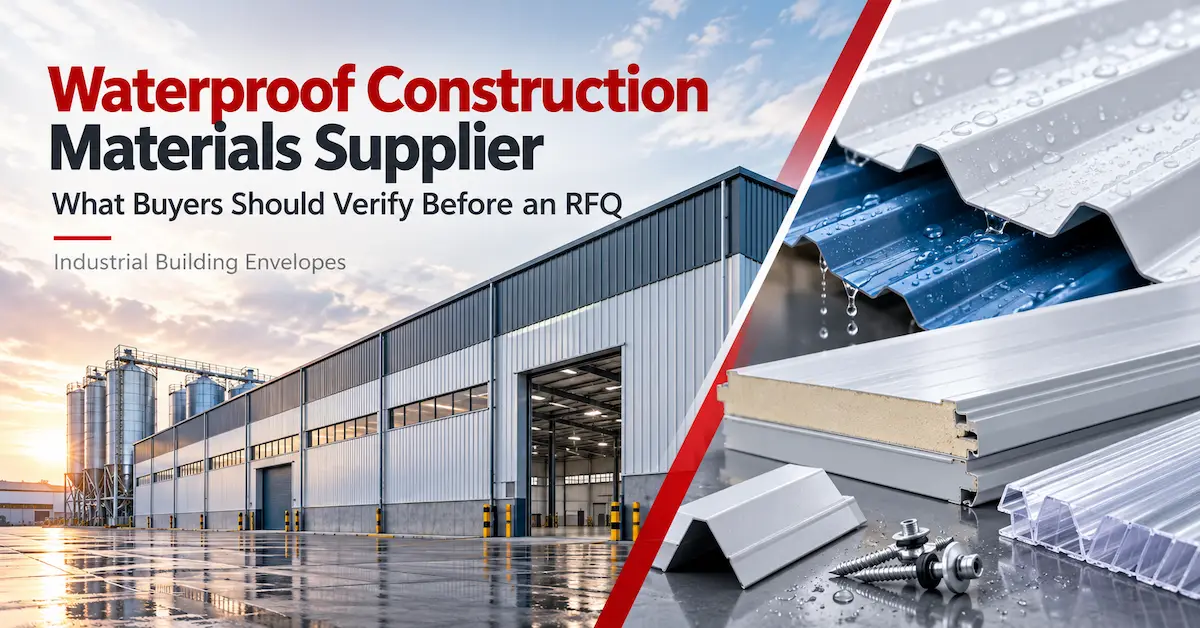
When a project team searches for a building envelope system supplier, it is usually looking for more than a manufacturer of one roof sheet or wall panel. The buyer needs a coordinated set of products and decisions that separate the occupied building from rain, wind, humidity, heat, dust, chemicals, animal gases and temperature changes. A capable supplier should help define the roof, wall, ceiling, insulation, joints, openings, trims, fasteners, packaging and installation assumptions as one procurement scope.
Practical recommendation: Evaluate a building envelope system supplier by the complete supply chain: application review, product construction, roof-to-wall compatibility, insulation and moisture strategy, accessories, quality documents, customization, packaging, delivery and post-quotation support. A supplier is a strong fit when it can explain what each product does, where it should be used, what it does not cover, and how the proposed components work together in the actual industrial, agricultural, livestock or warehouse project.
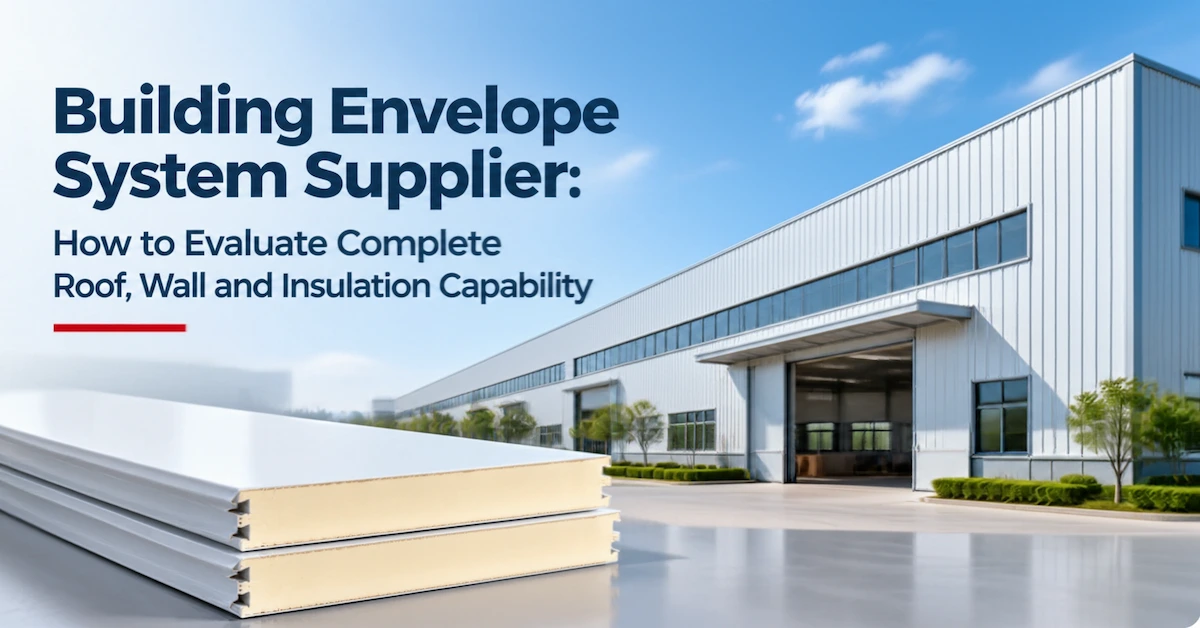
Start With the Building Envelope Problem, Not the Product Catalog
A building envelope is the boundary that controls the relationship between the interior and the outside environment. In a practical project, it includes roofs, walls, ceilings or interior liners, doors, windows, foundations or floor interfaces, penetrations, joints, corners, flashings, fasteners and sealants. The exact scope changes by building, but the principle remains: a panel is only one part of the enclosure.
This matters because project failures often appear at interfaces. A wall panel may be suitable while the roof-to-wall transition leaks. An insulated panel may have a useful core while an unsealed penetration creates a thermal bridge. A corrosion-resistant face may remain intact while a fastener, cut edge or incompatible trim begins to deteriorate. A supplier that sells only the flat panel may leave the most important decisions to the installer without documenting them.
Before comparing suppliers, describe the building in terms of the loads it must control. Is the project a dry warehouse, a humid farm, a poultry house, a pig facility, a cold room, a general factory, a chemical workshop or a coastal building? Is the wall external, internal, partitioning a conditioned space, or exposed to washdown? Does the roof need insulation, corrosion resistance, daylight integration or a specific connection to the wall?
Five questions that define the buying problem
- What indoor condition must the building maintain, and for how many operating hours?
- What water, humidity, salt, chemical, animal-gas, dust and UV exposures will the assembly receive?
- Which surfaces need cleaning, impact protection, hygiene control or low maintenance?
- How will the roof, wall, ceiling, openings and structural supports meet at the actual site?
- Which documents, customization, packaging and delivery controls are required before the order can be accepted?
If the supplier cannot answer these questions with you, the quote may be a product price rather than a building-envelope solution.
| Project condition | Envelope concern | Supplier capability to verify |
|---|---|---|
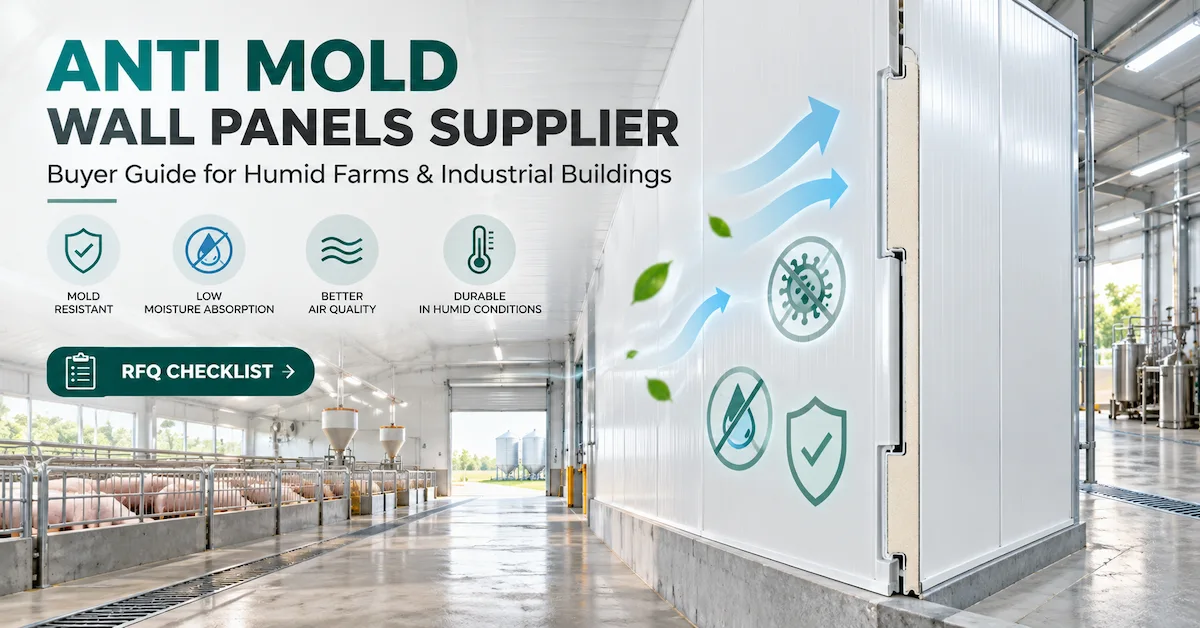
| Livestock or poultry building | Humidity, ammonia, washdown, hygiene, heat and ventilation. | Corrosion-conscious surfaces, insulation options, cleanable joints and farm application knowledge. |
| Industrial factory or workshop | Process heat, chemicals, impact, fire requirements and maintenance access. | Material separation by zone, technical documents and coordination with the process environment. |
| Warehouse or logistics building | Fast enclosure, weather protection, storage temperature and installation efficiency. | Stable dimensions, clear cut lists, packaging, delivery sequencing and compatible roof and wall profiles. |
| Cold or temperature-controlled room | Thermal continuity, condensation, doors, floor edges and penetrations. | Core and thickness data, joint details, thermal assumptions and opening coordination. |
| Coastal or highly humid site | Salt, wind-driven rain, UV, fasteners, cut edges and maintenance. | Face and connection material review, exposure limits and complete accessory scope. |
Define the Supplier Scope Before You Compare Quotations
Two companies may both describe themselves as a building envelope system supplier while offering very different scopes. One may manufacture panels but exclude trims and fasteners. Another may provide roof and wall products but leave the installation details to a third party. A distributor may combine products from several factories without controlling the interfaces. The buyer needs to make the scope visible before comparing price.
Product scope
Ask which products are being proposed for each location. The scope may include UPVC or APVC roofing sheets, PVC wall panels, PVC + PU + PVC insulated wall panels, insulated ceiling panels, ridge or edge components, corners, inside-corner deflectors, fasteners, sealants and packaging. Each product should have an intended position and a stated function.
HONCH's published product system covers roofing, wall, ceiling, insulation and related building-material applications for livestock, industrial, agricultural and light-building projects. Buyers can review the building envelope systems category to see how roof, wall and insulation topics are organized across the website.
Engineering and coordination scope
A supplier may not be the project's structural engineer, but it should be able to explain the product assumptions that affect installation. Ask for panel direction, support spacing assumptions, joint geometry, opening treatment, corner profiles, roof-to-wall transitions and limits on unsupported spans. If the project needs a structural calculation or local code review, make that responsibility explicit rather than assuming it is included.
Commercial and logistics scope
Commercial scope includes quantity basis, price unit, accessories, packaging, loading method, destination, delivery terms, payment terms, MOQ, production schedule and document package. A low panel price may exclude the components needed to close the envelope. A higher quote may include more complete supply. Compare like with like before making a decision.
After-sales and repeat-order scope
For distributors and multi-building projects, the supplier must preserve the approved construction over time. Confirm how product codes, colors, thicknesses, lengths, packaging marks and approved samples are recorded. Ask how a replacement panel or second project can refer back to the original specification. Repeatability is part of supplier quality, not only a production convenience.
Which Material Functions Should a Supplier Coordinate?
A credible building envelope system supplier should separate the functions of each material instead of treating every panel as a universal solution. A PVC face can address moisture-conscious and corrosion-sensitive surface requirements. A PU core can provide an insulation function. A roofing sheet can protect the upper enclosure from weather. A trim or seal can close an interface. None of these functions automatically substitutes for the others.
Thermal control
Thermal control is relevant to cold rooms, poultry houses, pig facilities, enclosed workshops, food-related spaces and warehouses with controlled temperature. The buyer should evaluate the core, thickness, joint continuity, doors, corners, penetrations, roof and floor interfaces. A supplier should identify what thermal data applies to the exact construction rather than presenting a generic value for every panel.
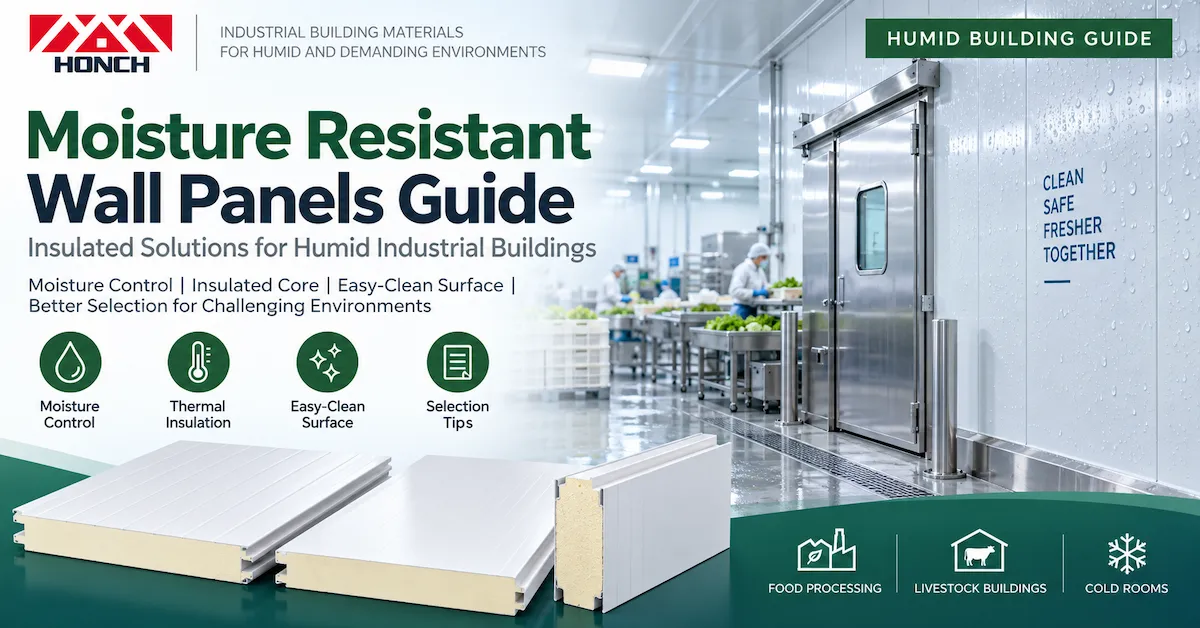
HONCH describes its PU insulation wall panel as a PVC outer layer, PU foam core and PVC inner layer. The published product information positions the construction for insulation, anti-corrosion and moisture-proof applications. It also identifies livestock walls, industrial wall cladding, cold storage and light-duty partitions as application areas. The project team should still request the exact thickness, joint and technical documents for its order.
Moisture and water control
Moisture control begins with the panel surface but ends with drainage, joints and transitions. Ask how the system manages rain, washdown, splash, condensation and water at the base of the wall. Identify the direction of water flow and the location where it leaves the assembly. If the panel is installed inside a livestock or food-related room, consider cleaning water and drying access as part of the wall design.
Corrosion and chemical exposure
Corrosion risk can come from salt, ammonia, hydrogen sulfide, fertilizer dust, disinfectants, process gases or high humidity. The supplier should review the panel face, fasteners, trims, cut edges and sealants as a group. “Anti-corrosion” is a useful product position, but it does not mean every chemical, concentration, temperature or cleaning method is automatically compatible.
Weather and UV exposure
External walls and roofs receive different weather loads from internal partitions. Ask whether the proposed product is intended for the exposed position, what the face material is, and how joints and fasteners are protected. A wall panel described for livestock interiors should not be used as an external facade or roof without a specific supplier confirmation.
Impact and maintenance
Forklifts, gates, feeders, service carts and maintenance equipment can damage lower walls and corners. A supplier should help identify where additional protection, replacement pieces or stronger trim details may be needed. Maintenance is easier when the system has known spare parts, accessible fasteners and a documented way to replace damaged sections.
How to Evaluate a Supplier's Product Platform
For a single small purchase, buyers may focus on the product name. For a complete envelope project, a product platform is more useful. The platform should cover the major building positions without forcing one product into every application. It should also make the differences between products understandable to the contractor and owner.
Roofing capability
Roofing controls rain, wind-driven water, solar exposure and heat gain. The supplier should distinguish weather-facing roofing from wall and ceiling panels, provide the relevant profile and dimensions, and explain overlaps, fasteners, ridges, edges and penetrations. For corrosion-sensitive projects, ask how the roof material and accessories are matched to the environment.
Wall and cladding capability
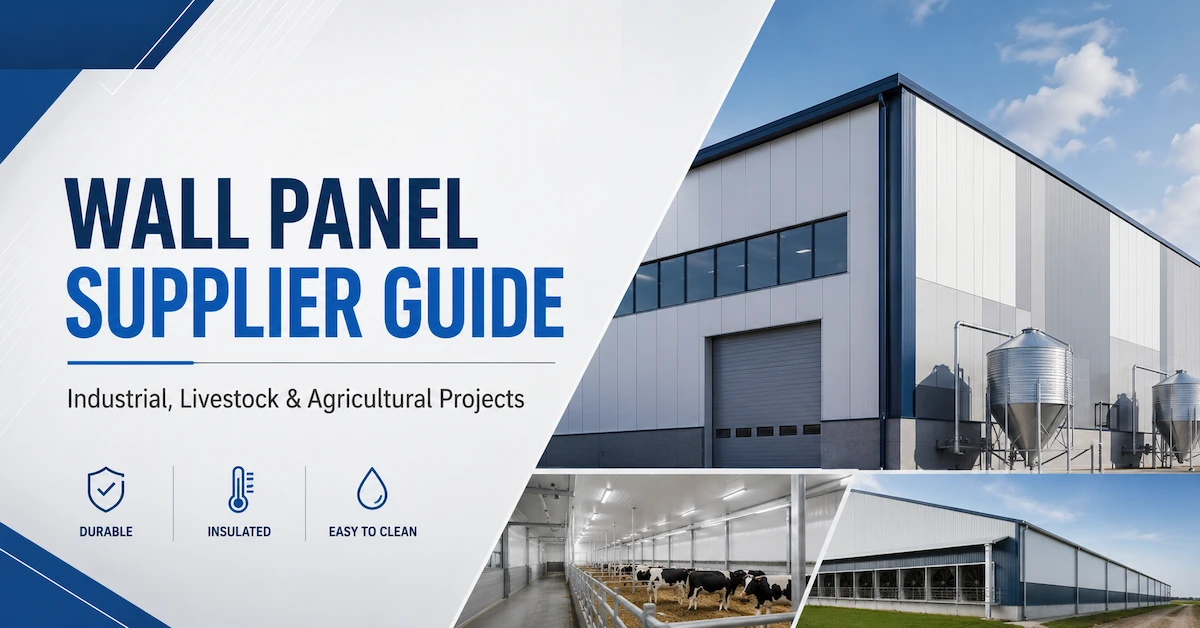
Walls may be external cladding, internal lining, insulated partitions or livestock enclosure surfaces. The supplier should identify which product is intended for each use. A PVC wall panel and a PVC + PU + PVC insulated wall panel may both be called wall panels but perform different functions. The quotation should not hide those differences.
Ceiling and insulation capability
Ceilings and interior liners can influence hygiene, moisture, temperature and maintenance. In livestock buildings, the ceiling may have a different exposure than the exterior roof. Ask the supplier to review roof, ceiling and wall interfaces separately. A coordinated supplier can reduce communication gaps, but product compatibility still needs to be confirmed.
Accessory capability
Accessories are often the least visible part of a quote and one of the most important parts of the finished envelope. Ask for corner profiles, ridge components, end closures, inside-corner parts, fasteners, washers, seals, flashings and spare materials. If accessories are sourced elsewhere, the supplier should state the interface dimensions and material assumptions.
Supplier Evidence: What Should Be Verified Before the Purchase Order?
Supplier claims become useful only when they are connected to an identifiable product and project condition. The evidence request should be proportional to the purchase. A small interior partition may need a different document set from a large livestock, chemical, cold-storage or export project, but every buyer should know what is being confirmed.
Company and factory identity
Verify the legal company name, factory location, contact person, export experience and responsible technical or sales contact. HONCH identifies itself as ZHEJIANG HONCH TECHNOLOGY CO., LTD, founded in Jinhua in 2008, with a focus on anti-corrosion and insulation solutions for farms, factories, roofs, walls and ceilings. The company's About Us page also presents its ISO9001 and EU CE information and self-operated import and export rights.
These public facts establish the supplier entity and its stated capabilities. They do not automatically prove that every product, thickness, market or project has the same certification scope. The buyer should request current documents tied to the selected construction.
Product construction and dimensions
Request a section drawing, material description, thickness range, width, length, tolerances, surface finish, color reference and joint profile. Confirm whether the stated width is full width or effective coverage. For cut-to-length orders, agree on the measurement method and the treatment of cut ends.
Quality control and traceability
Ask how incoming materials, production dimensions, appearance, packaging and final quantities are checked. For repeat orders, confirm how production refers to the approved sample and product code. A concise quality plan is more useful than a general statement such as “strict QC” because it tells the buyer what will actually be inspected.
Certificates and test documents
Certificates should identify the manufacturer, product construction, assessment scope and relevant standard or regulation. Ask whether the document covers the exact face material, core, thickness and intended use. If the destination requires local fire, thermal, structural or environmental documentation, list that requirement before quotation rather than after production.
Application evidence
Project photos, case descriptions, installation records and technical explanations can show whether the supplier understands a real application. Evidence should be specific enough to distinguish a livestock interior wall from a coastal exterior wall or a cold-storage partition. If the supplier offers a case, ask what product was used and what part of the scope it covered.
Compare Suppliers Using a Weighted Procurement Matrix
Price is important, but it should not be the only scoring category. A supplier that responds quickly with a low number may create later costs if the quote omits accessories, documents, packaging or technical coordination. A weighted matrix makes the decision visible to the project team.
| Evaluation area | What a strong supplier response includes | Warning sign |
|---|---|---|
| Application fit | Questions about climate, building position, process, livestock, cleaning and temperature. | Immediate price without an application review. |
| System completeness | Panels, joints, trims, fasteners, seals, openings and interface assumptions are listed. | Only a flat-panel price with no accessory scope. |
| Technical clarity | Face, core, thickness, dimensions, joint and intended position are identifiable. | Generic “sandwich panel” or “premium material” language. |
| Evidence and documents | Current product documents are tied to the ordered construction and destination. | Unrelated certificates or unsupported performance claims. |
| Production and repeatability | Approved sample, product code, tolerances, inspection and change-control process. | Custom details discussed verbally but not recorded. |
| Logistics | Packaging, loading, labels, destination, schedule and damage-handling assumptions. | Delivery promise without quantity, destination or packaging basis. |
| Commercial value | Complete price scope with clear exclusions and a realistic lifecycle discussion. | Lowest unit price presented as the only selection reason. |
For an export project, ask each supplier to answer the same RFQ in the same format. This prevents a complete system quote from being compared with a partial material quote. If one supplier recommends an insulated wall and another recommends a simple lining, ask both to explain the performance assumptions and the building zone they are addressing.
Why Roof, Wall, Ceiling and Openings Must Be Coordinated
A building envelope system becomes reliable at the interfaces. The roof meets the wall. The wall meets the floor. The ceiling meets the wall. Doors, windows, fans, pipes, cables and equipment interrupt the panel field. Each transition can affect water, air, heat, cleaning and maintenance.
Roof-to-wall transitions
Confirm the roof edge, flashing, ridge or closure detail, wall top termination and drainage path. The wall and roof may use different materials and movement characteristics. The supplier should identify which component closes the transition and which party is responsible for installation.
Wall-to-floor transitions
Lower walls in farms, workshops and warehouses receive splash, impact, dirt and cleaning water. A wall panel should not be left with an exposed cut edge or an undefined floor joint. Ask for the base detail, seal, protection and replacement strategy. This is especially important where washing is frequent.
Openings and penetrations
Doors, windows, fans and service penetrations require framed openings, trims, seals and sometimes reinforcement. Mark them on the drawing before ordering. A panel cut list that ignores openings can create waste, delays and improvised site sealing.
Structural support and movement
The supplier should state the support assumptions for the selected panel. The project engineer must confirm the structure, wind loads, spans and local requirements. Thermal movement and installation tolerances should be considered at long runs, corners and dissimilar-material interfaces.
For related guidance, the existing HONCH article on building envelope wall systems explains why wall material, insulation, moisture, corrosion and joint continuity should be reviewed as one assembly. This new page focuses specifically on how to evaluate the supplier behind that assembly.
OEM, ODM and Repeat Supply Requirements
A building envelope system supplier may serve different buyer types: an owner buying one project, a contractor managing several sites, an importer building a regional catalog, or a private-label brand reselling products under its own identity. Each buyer needs a different level of production and documentation control.
For project contractors and EPC companies
Prioritize technical response speed, cut-list control, interface drawings, delivery sequencing and clear responsibility for installation assumptions. Submit the project drawings early and request a consolidated quotation. The objective is to reduce late changes when roofing, wall, ceiling and accessory quantities are already being scheduled.
For importers and distributors
Prioritize stable product codes, repeatable colors and dimensions, packaging labels, replacement availability and a clear application matrix. A distributor should know which product is intended for a livestock interior, a warehouse wall, a cold room or an exterior roof. This protects both the buyer and the downstream customer from using one specification for every building.
For private-label programs
Define branding, packaging, carton marks, documentation language, product naming, approval samples and change control. Confirm whether the supplier can maintain the same construction after the packaging changes. HONCH states that it supports OEM/ODM, bulk purchasing, branding and packaging customization for project and distribution customers.
For multi-building agricultural projects
Use one approved specification sheet for all buildings unless the operating conditions differ. Record the building type, panel position, thickness, color, length, accessories, cleaning requirements and delivery sequence. If a second phase uses another thickness or product, give it a separate product code rather than relying on a verbal variation.
Build an RFQ That a Supplier Can Actually Quote
An RFQ should let a supplier recommend the right system without guessing. It should also allow the buyer to compare responses fairly. A simple request such as “quote building envelope panels for 5,000 square metres” does not define the roof, wall, ceiling, openings, environment or accessory scope.
Project: building type, country, climate, new construction or renovation, drawings and project stage.
Envelope positions: roof, exterior wall, interior wall, ceiling, partition, cold room or service area.
Environment: humidity, salt, ammonia, chemicals, washdown, UV, dust, temperature and impact exposure.
Dimensions: roof and wall areas, elevations, panel direction, support spacing, openings, corners and transitions.
Performance: insulation target, indoor temperature, waterproofing, cleanability, corrosion exposure and required compliance documents.
Materials: requested or recommended face, core, thickness, color, length, profile and joint system.
Commercial scope: quantity, accessories, packaging, destination, MOQ, delivery schedule, payment terms and spare quantity.
Response required: product recommendation, technical documents, assumptions, exclusions, sample plan, quotation validity and next approval step.
Attach photographs of problem areas for a renovation and mark them on the drawing. If the project has a cleaning or disinfection procedure, include the product names and concentrations. If the building is temperature-controlled, include the target temperatures and operating schedule. Better input creates a more useful supplier response.
How HONCH Fits the Building Envelope Supplier Search
ZHEJIANG HONCH TECHNOLOGY CO., LTD presents itself as a manufacturer and supplier of anti-corrosion and insulation solutions for light buildings, factories, farms, roofs, walls and ceilings. The company states that it was founded in Jinhua in 2008 and publishes ISO9001 and EU CE information, along with self-operated import and export rights. Buyers can review the company information on the HONCH About Us page as part of supplier due diligence.
The relevant product platform includes UPVC/APVC roofing sheets, PVC wall and ceiling products, PVC + PU + PVC insulated wall and ceiling panels, and related roofing accessories. The purpose of reviewing this range is not to assume that every item is interchangeable. It is to give the project team a basis for discussing the roof, wall, ceiling, insulation and interface requirements with one coordinated supplier.
HONCH's PU insulation wall panel is described with PVC outer and inner layers around a PU foam core. The product page identifies insulation, anti-corrosion, moisture-proof and interlocking functions, with applications including livestock walls, industrial cladding, cold rooms and light-duty partitions. Thickness, color and length are listed as customizable options. The final selection should still be confirmed against the project environment, local code and required technical documents.
For a broader commercial review of HONCH's industrial applications, buyers can also visit the industrial building solutions category. For an actual quotation, send the building information rather than asking for an unspecified envelope package.
FAQ: Building Envelope System Supplier Selection
What does a building envelope system supplier provide?
A building envelope system supplier may provide roof, wall, ceiling, insulation, joints, trims, fasteners, seals, accessories, packaging, technical documents and project coordination. The exact scope depends on the building. The buyer should request a line-by-line list of included and excluded items rather than assuming that the phrase “complete system” covers every interface.
What is the difference between a panel manufacturer and an envelope system supplier?
A panel manufacturer focuses on producing a defined product. An envelope system supplier should also help the buyer match products to building positions and coordinate joints, accessories, transitions, documents and delivery. Some companies perform both roles, but the buyer should verify the actual scope offered for the project.
Should I buy roof, wall and ceiling materials from one supplier?
One supplier can simplify communication and improve the opportunity for dimensional and interface coordination. It is not a guarantee that products are interchangeable. Review each product's intended use, construction, joint, support and documentation, then coordinate the complete assembly before ordering.
Which products are relevant to a livestock building envelope?
Depending on the building, relevant products may include corrosion-conscious roofing, PVC wall or ceiling panels, PVC + PU + PVC insulated wall panels, insulated ceiling panels, corners, trims and sealing components. Poultry houses, pig farms, cattle buildings and feed stores have different requirements, so the supplier should review humidity, gases, cleaning, temperature and impact before recommending a product.
Are PVC + PU + PVC wall panels suitable for industrial buildings?
They can be suitable when the project needs a PVC-faced surface and PU insulation. HONCH positions its product for industrial walls, livestock farms, agricultural facilities, cold rooms and light-duty partitions. Confirm the exact environment, thickness, joint, fire or conformity documents and installation position before approval.
What should I ask about moisture and condensation?
Ask how the complete assembly manages rain, washdown, humidity, vapor movement, thermal bridges, doors, corners, penetrations and drainage. Insulation can reduce heat transfer, but it does not by itself guarantee a condensation-free building. The supplier should state assumptions and identify what must be completed by the designer or installer.
What technical documents should a supplier provide?
Request product data, material construction, dimensions, tolerances, joint drawings, installation guidance, thermal information, fire or conformity documents where required, cleaning limitations, packaging details and quality records. Confirm that the documents identify the exact product, thickness, face, core, destination and acceptance standard.
How do I compare two envelope supplier quotations?
Compare the same building positions, material functions, thicknesses, dimensions, accessories, packaging, delivery terms and documentation. Separate the panel price from installation assumptions and maintenance risks. A quote that excludes corners, seals, fasteners or opening trims should not be compared directly with a complete-scope quote.
Can a supplier customize building envelope products?
Customization may include thickness, color, length, profile, branding, packaging and product combinations. HONCH states that it supports OEM/ODM and bulk purchasing for project and distribution customers. Confirm available ranges, sample approval, tolerances, product codes and change control before treating a custom requirement as accepted.
What information should I send for a building envelope RFQ?
Send the building type, location, drawings, roof and wall areas, openings, support spacing, environmental exposure, temperature target, cleaning method, requested materials, thickness, color, length, accessories, quantity, destination, packaging and delivery date. Explain which decisions are fixed and where you need a supplier recommendation.
How can I reduce risk when choosing a supplier?
Use a written scope, request a sample or drawing, verify documents, compare complete quotations, record assumptions, confirm packaging and approve the final cut list. Ask the supplier to identify limits rather than promising that one material solves every exposure. Risk is reduced when product, application, interface and commercial responsibilities are visible before production.
Conclusion
The best building envelope system supplier is the one that helps the project team purchase a coordinated enclosure rather than a collection of unrelated panels. The supplier should understand the building use, environmental loads, thermal and moisture requirements, corrosion exposure, joints, openings, accessories, documents, packaging and delivery sequence.
For industrial, agricultural, livestock, warehouse and temperature-controlled projects, begin with the building-envelope functions and then match the product. PVC, PVC + PU + PVC, UPVC/APVC, metal and other systems may each be appropriate in different positions. The decision should follow the actual exposure and required evidence, not a generic “best panel” claim or the lowest unit price.
HONCH is a relevant supplier to evaluate because its public product range covers roofing, walls, ceilings, insulation and accessories, while its company information describes anti-corrosion and insulation support for farms, factories and light buildings. Send the project drawings and RFQ details to confirm the proposed construction, technical documents, customization, packaging, delivery and complete commercial scope before ordering.