How a Wall Cladding Panels Manufacturer Determines Wall Survival in Livestock Buildings
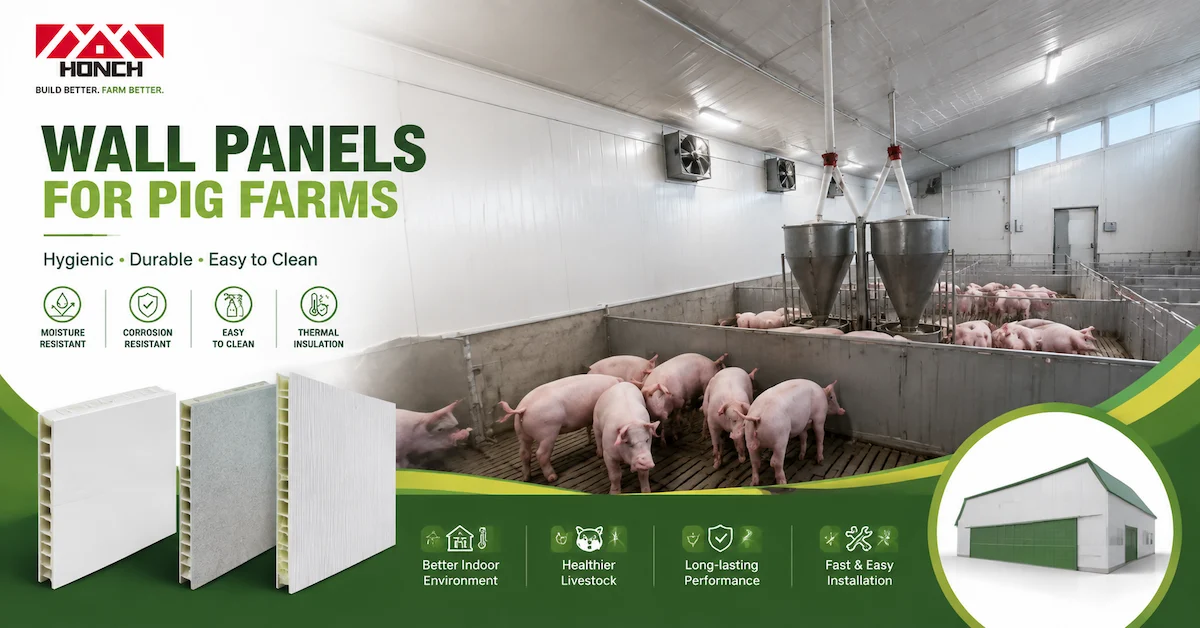
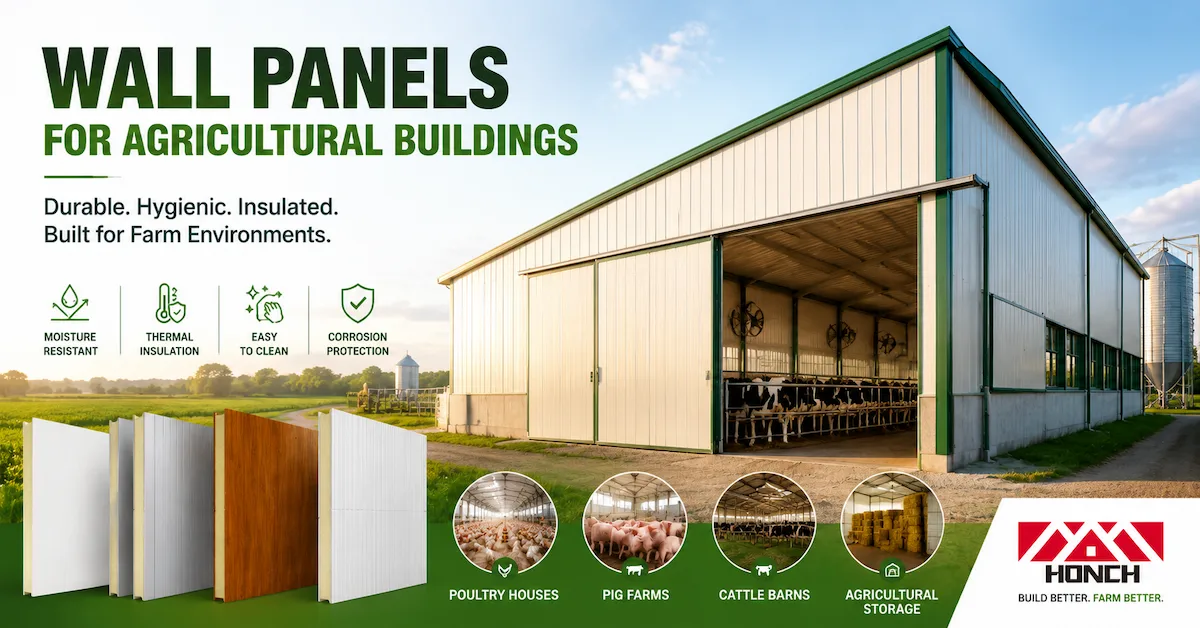
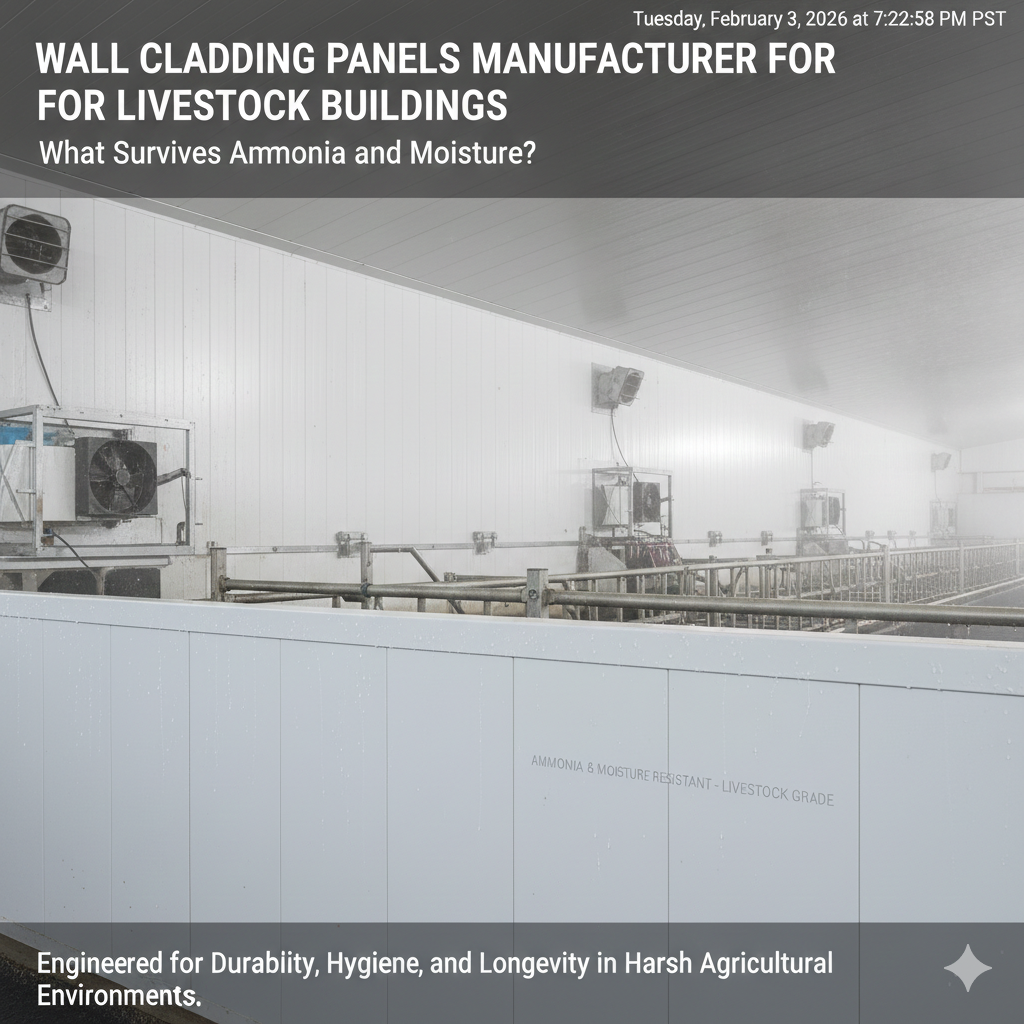
Livestock buildings are among the most aggressive environments for wall systems. High humidity, continuous ammonia release from animal waste, and frequent high-pressure washdown expose wall materials to combined chemical, thermal, and mechanical stress every day. In this context, choosing a Wall Cladding Panels Manufacturer is not about aesthetics or short-term cost—it directly determines whether the walls remain structurally intact, hygienic, and maintainable after years of operation.
In real farms, wall failure rarely happens suddenly. It develops gradually through surface degradation, hidden moisture ingress, joint breakdown, and corrosion-related damage. Once these processes begin, repair is disruptive and costly, often requiring partial shutdown of production areas.
The Livestock Environment: Why Walls Fail Faster Than Expected
Unlike conventional industrial buildings, livestock facilities operate under persistent biological and chemical pressure.
Key stress factors include:
-
Ammonia gas released continuously from manure and bedding
-
High and sustained humidity, often above normal indoor levels
-
Regular washdown cycles using detergents and disinfectants
-
Physical impact from animals, feeding systems, and cleaning equipment
According to the Food and Agriculture Organization of the United Nations (FAO), ammonia concentrations inside intensive livestock housing commonly exceed 20–25 ppm, with poorly ventilated zones reaching even higher localized levels. FAO guidance notes that prolonged exposure to ammonia, especially when combined with moisture, significantly accelerates corrosion and surface degradation of building materials used in walls and enclosures.
This explains why wall systems that perform acceptably in dry industrial warehouses often deteriorate rapidly in pig and poultry buildings. The environment itself is chemically aggressive, not just mechanically demanding.
Reference:
FAO – Good Practices for Biosecurity in the Pig Sector
https://www.fao.org/3/i1435e/i1435e.pdf
Conventional Wall Materials vs Livestock-Specific Wall Systems
Many wall failures in farms originate from inappropriate material selection rather than poor installation.
Conventional coated metal or porous wall boards
These materials rely heavily on surface protection.
-
Coatings blister and peel under ammonia exposure
-
Cut edges and fasteners become corrosion initiation points
-
Porous substrates absorb moisture, supporting bacterial growth
Once degradation begins, maintenance typically involves repainting, patching, or full replacement—often within 8–12 years of operation.
Livestock-grade polymer wall cladding systems
Polymer-based wall panels are designed to resist ammonia and moisture inherently.
-
Non-porous surfaces prevent water and chemical absorption
-
Chemical resistance does not depend on surface coatings
-
Smooth finishes improve cleaning efficiency and hygiene control
An experienced Wall Cladding Panels Manufacturer understands that in livestock buildings, corrosion resistance must be intrinsic to the material, not an added protective layer.
Performance Differences Observed in Real Livestock Projects
| Performance Indicator | Conventional Wall Materials | Livestock-Grade Wall Panels |
|---|---|---|
| Surface degradation after 5 years | 30–45% affected areas | <10% visible change |
| Washdown-related damage | Common | Rare |
| Hygiene-driven wall replacement | Frequent | Minimal |
| Annual maintenance cost ratio* | 100% baseline | ~45–60% |
| Expected service life | 8–12 years | 15–20+ years |
*Maintenance cost ratio based on comparative pig and poultry farm operation feedback where conventional materials are treated as baseline.
These figures reflect why modern livestock projects increasingly specify wall systems engineered specifically for farm environments, even when initial material cost is higher.
Structural Design: Managing Moisture, Impact, and Movement
Material choice alone does not guarantee durability. Structural design determines how walls behave under daily farm operation.
A capable Wall Cladding Panels Manufacturer addresses:
-
Controlled thermal expansion, reducing joint cracking in humid conditions
-
Impact-resistant profiles to withstand animal contact and equipment movement
-
Sealed joint systems that prevent moisture and ammonia accumulation behind panels
In many failed projects, corrosion and odor issues originate behind wall panels, where trapped moisture and gas accelerate hidden degradation.
Hygiene and Cleaning: Walls as Part of Biosecurity
In livestock facilities, walls are not passive surfaces. They are part of the biosecurity system.
Guidance from the U.S. Department of Agriculture (USDA) emphasizes that interior surfaces in livestock buildings should be non-porous, moisture-resistant, and capable of withstanding repeated high-pressure cleaning without material breakdown. Surfaces that absorb moisture or degrade under disinfectants are identified as long-term contamination risks.
This aligns directly with field experience: wall systems that resist washdown and do not trap moisture show measurably lower bacterial buildup and reduced replacement frequency over time.
Reference:
USDA – Biosecurity Guide for Livestock Facilities
https://www.aphis.usda.gov/animal_health/biosecurity
Procurement Reality: What Farm Owners and Contractors Must Clarify
Beyond engineering performance, procurement conditions affect project execution and long-term usability.
Based on HONCH’s livestock project supply practice:
-
MOQ: Flexible quantities aligned with farm size and phased construction
-
Lead time: Standard livestock wall profiles follow stable production cycles
-
Customization: Panel thickness, color, and profile adapted to climate zone, animal type, and cleaning intensity
A Wall Cladding Panels Manufacturer with controlled manufacturing can support these requirements without delaying farm commissioning.
Common Buyer Questions
Q: When should livestock-grade wall panels be specified instead of conventional materials?
A: In buildings with continuous ammonia exposure and frequent washdown. Livestock-grade systems typically reduce wall-related maintenance by 40–55% over the building lifecycle.
Q: Are polymer wall panels safe for long-term animal housing?
A: Yes. Properly formulated polymer panels resist chemical attack and do not absorb moisture, making them suitable for continuous livestock environments.
Q: When should customization be discussed during procurement?
A: During design or early procurement. Early alignment allows the Wall Cladding Panels Manufacturer to adapt profiles and production schedules efficiently.
Final Guidance for Livestock Project Decision-Makers
Selecting a Wall Cladding Panels Manufacturer for livestock buildings is fundamentally a decision about hygiene, durability, and operational continuity. In ammonia- and moisture-heavy environments, material formulation, joint design, and system compatibility determine whether walls age predictably or become a recurring problem.
HONCH supplies wall cladding systems engineered specifically for livestock environments, combining corrosion-resistant materials, sealed joint structures, and project-based customization. This approach helps farms maintain biosecurity standards while reducing maintenance disruption over the facility’s service life.
To review livestock wall system solutions and application experience, visit the HONCH homepage:
https://www.honchroof.com/
If you are planning or upgrading a livestock facility and need guidance on wall system selection, MOQ, lead time, or customization feasibility, contact the technical team via Contact Us:
https://www.honchroof.com/contact-us