How a Sandwich Panel Manufacturer Impacts Construction Speed and Structural Stability
In industrial and agricultural construction, speed is often treated as a scheduling issue—but in reality, it is a system design outcome. Projects that rely on prefabricated wall and roof systems depend heavily on how well those components fit together on site. A professional Sandwich Panel Manufacturer determines whether panels install smoothly—or create delays, rework, and alignment issues.
In fast-build scenarios such as factories, warehouses, and livestock facilities, panel design must balance installation efficiency with long-term structural stability.
Why Fast-Build Projects Fail at the Panel Level
Many projects aiming for rapid construction encounter unexpected delays due to panel-related issues.
Common problems include:
-
Misalignment between panels during installation
-
Joint gaps caused by dimensional inconsistency
-
Weak locking systems leading to air or water leakage
-
Structural instability in large wall sections
These problems are rarely caused by installation teams alone. They often originate from panel tolerance control, joint design, and manufacturing precision—all determined by the Sandwich Panel Manufacturer.
Panel Structure: More Than Just Insulation Thickness
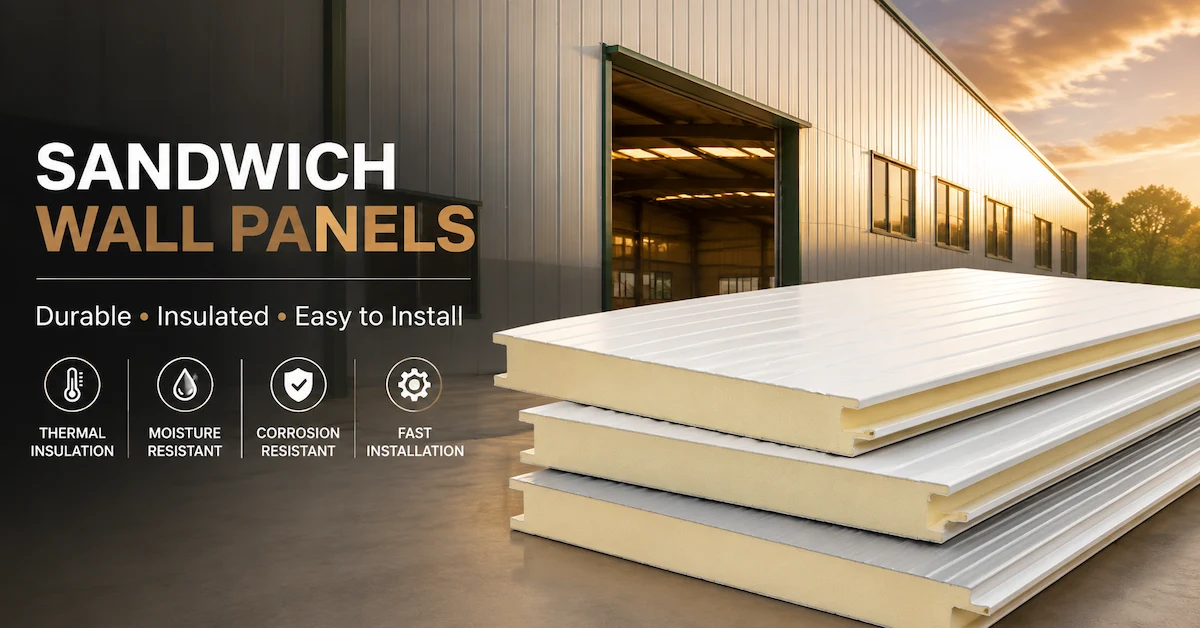
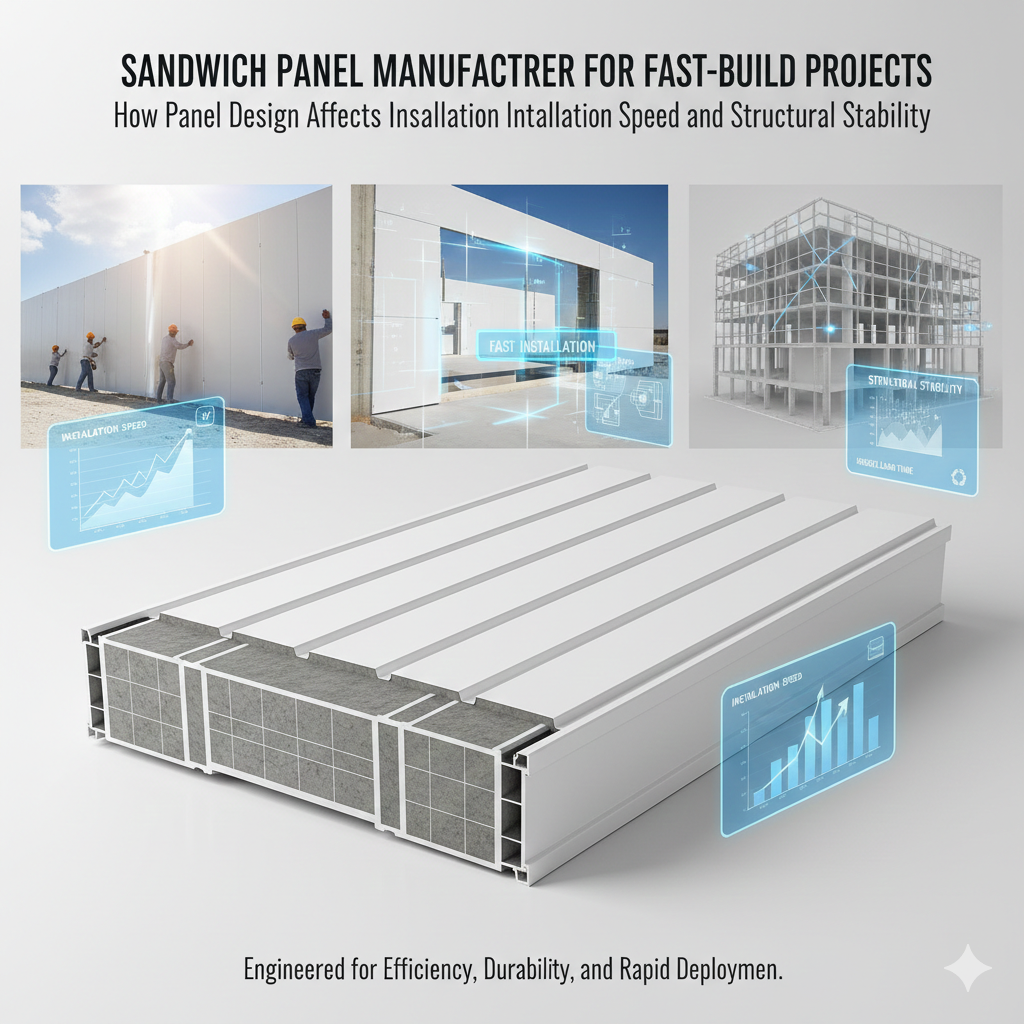
A sandwich panel is not simply two metal sheets with insulation in between. Its performance depends on how these components interact.
Typical structure includes:
-
Outer metal skins (galvanized or coated steel)
-
Core material (PU, PIR, EPS, or mineral wool)
-
Edge profile for panel connection
A capable Sandwich Panel Manufacturer optimizes:
-
Core density for load-bearing stability
-
Skin thickness for impact resistance
-
Adhesion strength between layers
In real HONCH projects, panels with optimized bonding strength showed 20–30% lower deformation rates during installation compared with standard panels, particularly in large wall sections.
Joint Design: Where Speed and Stability Meet
The connection system between panels determines both installation speed and long-term performance.
| Joint Type | Installation Speed | Air/Water Tightness | Structural Stability |
|---|---|---|---|
| Simple overlap | Fast | Low | Medium |
| Standard tongue & groove | Moderate | Medium | Medium |
| Engineered locking joint | Fast | High | High |
HONCH sandwich panels use engineered joint profiles designed to:
-
Reduce alignment errors during installation
-
Improve sealing without additional materials
-
Maintain structural continuity across large surfaces
In fast-build factory projects, these joint systems helped reduce installation adjustment time by 15–25%, especially where multiple crews worked simultaneously.
Real Project Scenario: Large Industrial Workshop Installation
In a large industrial workshop project supplied by HONCH, covering over 12,000 m², the construction team faced challenges with tight deadlines and limited installation windows.
Adjustments made at the manufacturing level included:
-
Increasing panel width to reduce total panel count
-
Pre-aligning joint profiles for faster on-site locking
-
Optimizing panel length to match structural grid spacing
As a result:
-
Installation speed increased by approximately 25%
-
Joint misalignment incidents dropped significantly
-
Post-installation correction work was minimized
This demonstrates that a Sandwich Panel Manufacturer plays a direct role in construction efficiency—not just material supply.
Application Differences: Factory, Warehouse, and Livestock Buildings
Different building types impose different requirements on sandwich panels.
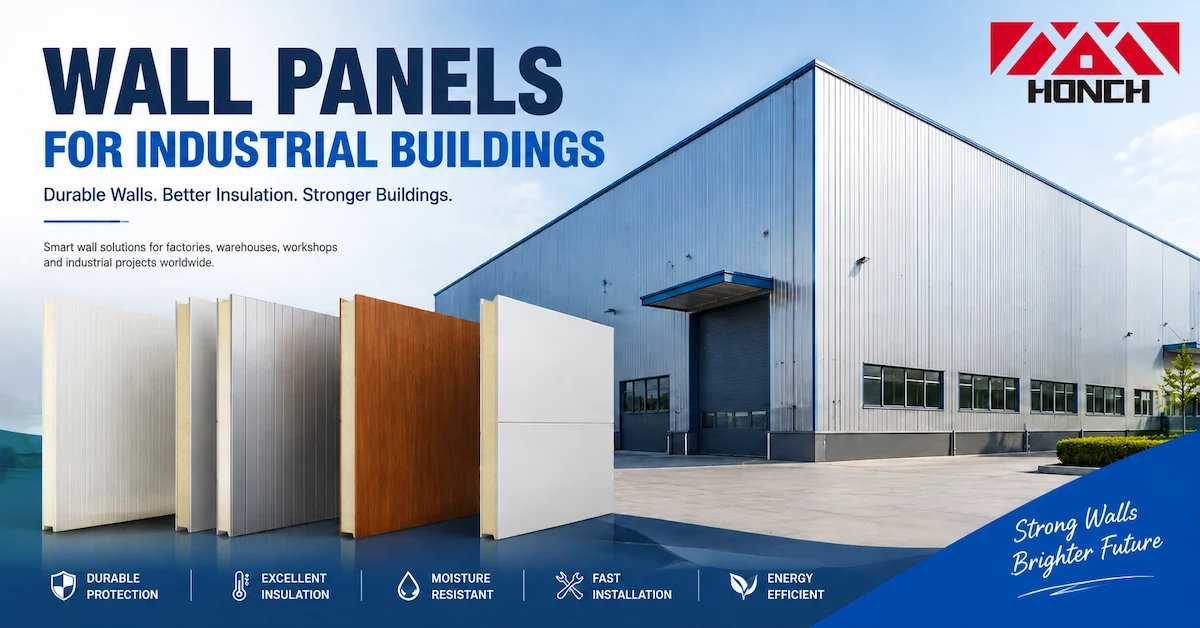
Factory buildings
-
Require high structural stability and clean appearance
-
Panels must resist mechanical impact and maintain alignment
Warehouses
-
Emphasize large-span coverage and fast installation
-
Joint integrity critical for air tightness
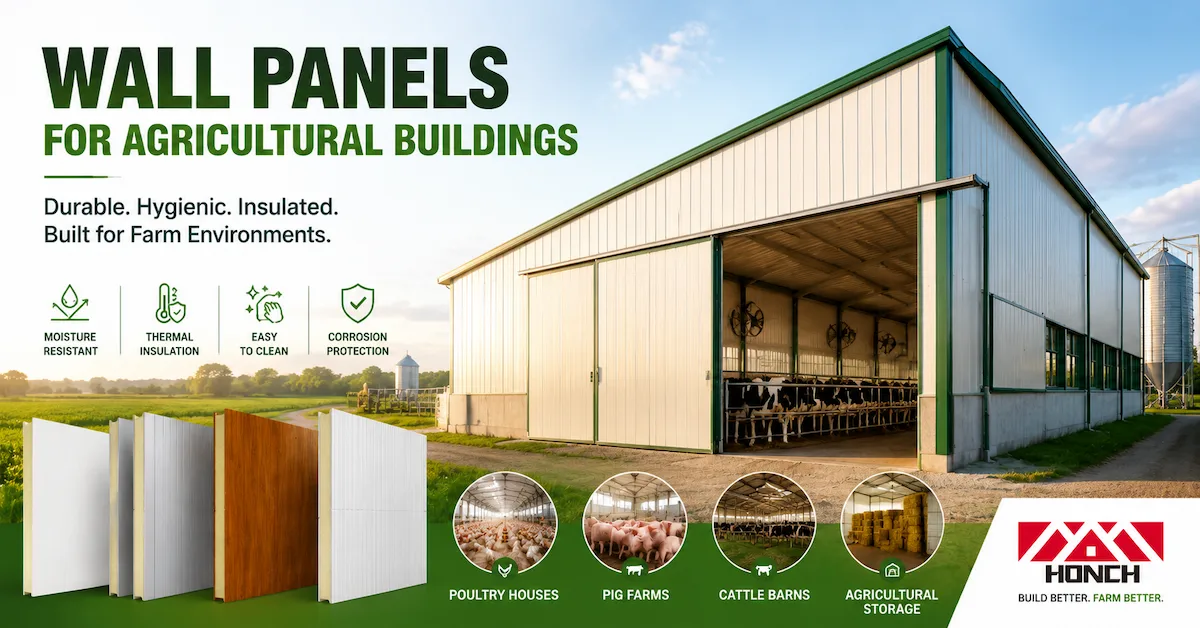
Livestock buildings
-
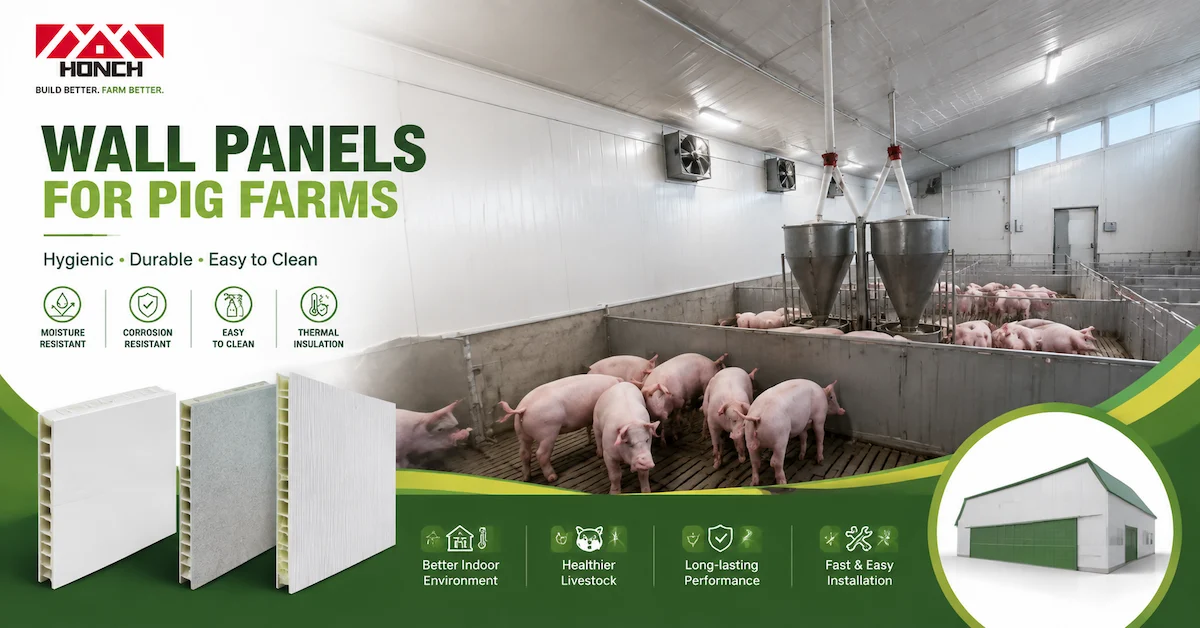
Require moisture resistance and hygiene compatibility
-
Panels must withstand washdown and chemical exposure
A professional Sandwich Panel Manufacturer adjusts panel structure and coating systems based on these scenarios rather than offering uniform products.
Installation Efficiency vs Lifecycle Cost
Fast installation alone does not guarantee long-term performance.
Projects that prioritize only speed often face:
-
Increased maintenance within 3–5 years
-
Joint leakage due to poor sealing design
-
Structural issues in large wall areas
By contrast, panels designed for both speed and stability typically reduce:
-
Installation rework by 20–30%
-
Early-stage maintenance costs by 25–40%
This balance is where an experienced Sandwich Panel Manufacturer adds real value.
Common Buyer Questions
Q: Are wider sandwich panels always better for fast construction?
A: Not always. Wider panels reduce installation time but must match structural spacing to avoid alignment issues.
Q: Which core material is best for industrial buildings?
A: PU and PIR cores offer better insulation and structural stability, while mineral wool is preferred for fire resistance.
Q: When should customization be discussed?
A: During early project design. This allows the Sandwich Panel Manufacturer to align panel size, joint design, and production schedule.
Final Guidance for Fast-Build Project Decisions
In fast-build construction, the difference between smooth progress and costly delays often lies in panel system design. A Sandwich Panel Manufacturer that understands installation dynamics, structural behavior, and application-specific requirements can significantly improve both construction speed and building performance.
HONCH supplies sandwich panel systems engineered for industrial, warehouse, and agricultural projects, focusing on joint precision, structural stability, and installation efficiency. This approach helps clients complete projects faster while maintaining long-term reliability.
To explore sandwich panel solutions and real project applications, visit the HONCH homepage:
https://www.honchroof.com/
For consultation on panel selection, customization, or project planning, contact the team via Contact Us:
https://www.honchroof.com/contact-us