Selecting a Wall Cladding Panels Manufacturer from an Engineering Perspective
In industrial plants, warehouses, and livestock facilities, wall cladding is not a decorative layer. It is part of the building envelope that directly affects corrosion control, internal climate stability, and long-term operating cost. When buyers evaluate a wall cladding panels manufacturer, the real question is not what material looks acceptable today, but which system can survive the next 15–20 years of exposure with predictable performance.
Engineering Reality: Environment, Load, and Service Life
Industrial and agricultural wall systems operate under harsher conditions than most commercial buildings. In livestock housing, continuous ammonia exposure accelerates metal corrosion. In processing plants, humidity and cleaning chemicals attack surface coatings. In logistics warehouses, large wall spans face repeated wind load and thermal cycling.
From an engineering standpoint, a wall cladding panels manufacturer must design for:
-
Chemical exposure tolerance, not just short-term corrosion resistance
-
Dimensional stability, accounting for daily and seasonal temperature swings
-
Structural rigidity, especially in large wall panels exposed to wind suction
-
Service life predictability, not just initial strength
Panels that perform well in residential environments often fail early when moved into these conditions.
Material and Process: Why Some Panels Last Longer Than Others
Material choice alone does not guarantee durability. The manufacturing process and internal structure are equally critical.
Polymer-based wall cladding panels (UPVC systems)
In corrosive and high-humidity environments, UPVC wall panels are widely adopted because corrosion resistance is inherent to the material, not dependent on surface coatings. However, long-term performance depends on formulation stability, UV additives, and extrusion control.
HONCH’s wall cladding panels are produced using controlled extrusion processes, ensuring uniform wall thickness and stable density. This reduces internal stress and limits deformation over time, particularly in large panel applications.
Structural profile design
Panel geometry influences both rigidity and thermal movement. Profiles designed with controlled expansion zones reduce stress at fixing points, lowering the risk of cracking or joint failure after repeated temperature cycles.
A qualified wall cladding panels manufacturer designs profiles and accessories together, rather than sourcing generic fasteners that may not match panel behavior.
Measured Performance Differences Between Wall Systems
The decision to move away from metal or FRP wall systems is often driven by measurable performance differences observed on real projects.
| Performance Factor | Metal Panels | FRP Panels | Polymer-Based Wall Panels |
|---|---|---|---|
| Corrosion-related maintenance after 5 years | 35–45% panel area requires repair | 20–30% surface aging | <10% visible degradation |
| Thermal expansion impact on joints | High stress concentration | Moderate | Controlled through profile design |
| Cleaning efficiency in livestock use | Moderate | High | High |
| Expected service life in corrosive sites | 8–12 years | 10–15 years | 15–20+ years |
| Annual maintenance cost ratio* | 100% baseline | ~70% | ~45–55% |
*Maintenance cost ratio based on comparative project feedback where metal panels are treated as baseline.
These figures explain why many buyers deliberately select polymer-based systems when long service life and low maintenance are primary objectives.
From Factory to Site: How Panels Are Actually Used
A wall cladding panels manufacturer with project experience understands that performance is determined on site, not in the factory.
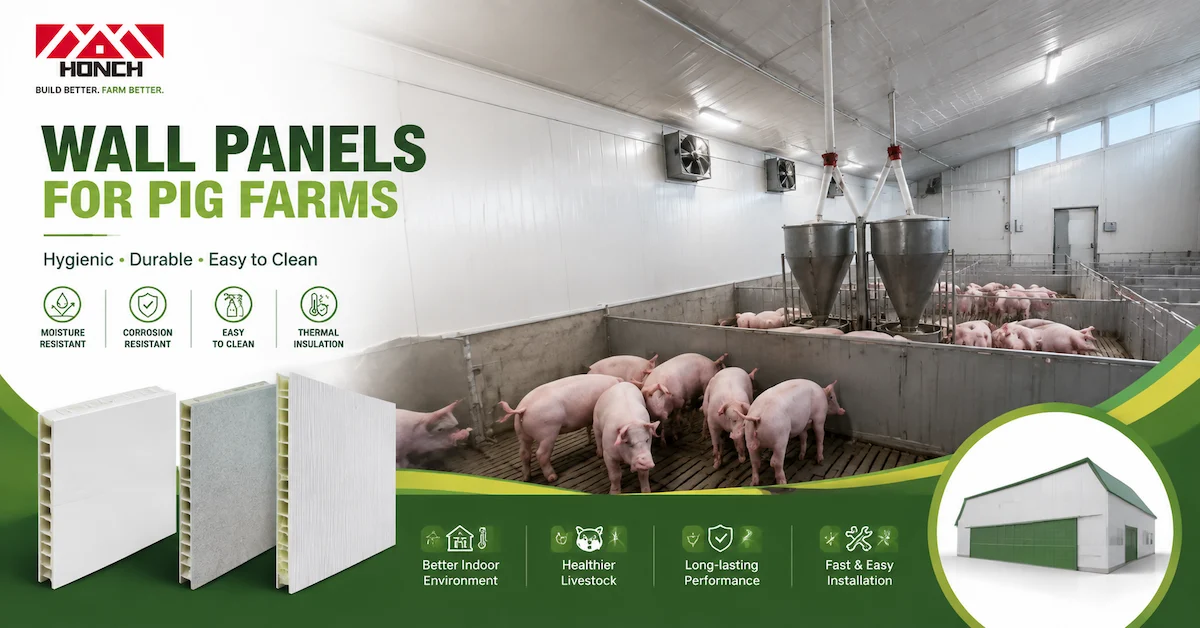
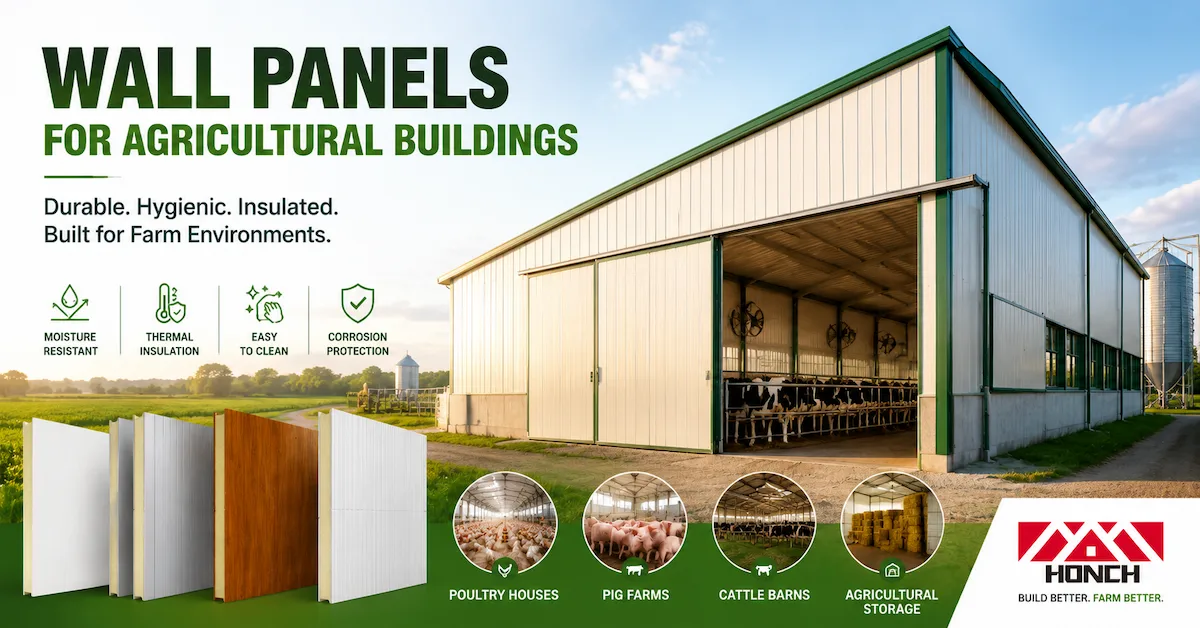
In livestock housing projects supplied by HONCH, wall cladding panels are typically installed with:
-
Matched fixing accessories to accommodate thermal movement
-
Overlapping joint designs to prevent water ingress during washdown
-
Surface finishes optimized for frequent cleaning cycles
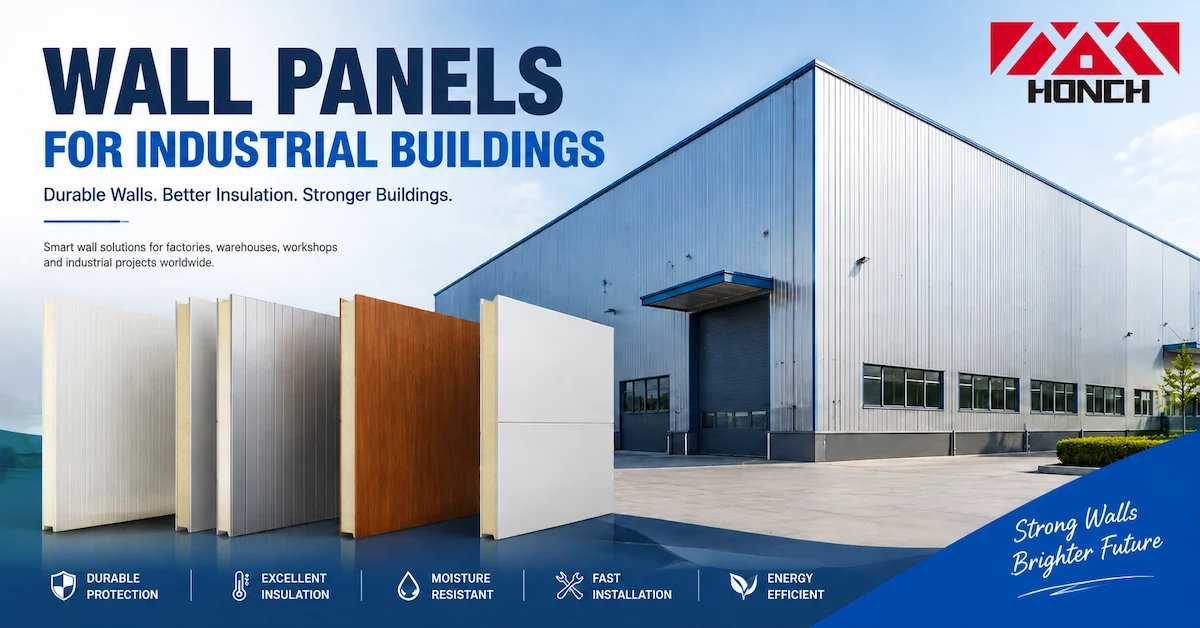
In industrial warehouses, panels are often specified with increased thickness and reinforced profiles to improve impact resistance and reduce vibration noise under wind load.
These configurations are based on repeated project application rather than theoretical assumptions.
Procurement Details That Affect Project Execution
Technical suitability must align with procurement reality.
Based on HONCH’s standard project supply practices:
-
MOQ: Typically flexible and aligned with project scale rather than fixed pallet quantities, supporting both contractors and distributors.
-
Lead time: Standard profiles and colors follow predictable production schedules, while customized profiles or colors require additional planning time.
-
Customization: Panel thickness, profile geometry, and color options are adjusted according to environmental exposure and building use, especially in industrial and agricultural applications.
A wall cladding panels manufacturer that controls its own production process can support these adjustments without compromising consistency.
Common Buyer Questions
Q: How should buyers choose between metal panels and polymer wall cladding systems?
A: The choice depends on exposure conditions. In humid or chemically aggressive environments, polymer-based systems typically reduce corrosion-related maintenance by 40–55% over the building lifecycle compared with coated metal panels.
Q: Can polymer wall cladding panels handle large industrial walls and wind load?
A: Yes, when profile geometry and fixing systems are engineered correctly. Reinforced profiles and controlled thermal expansion design are more critical than material type alone.
Q: When is the right time to discuss customization such as thickness or profile design?
A: During the design or early procurement stage. Early alignment avoids production delays and reduces installation risk, especially on time-sensitive industrial projects.
Making a Confident Manufacturer Selection
Choosing a wall cladding system is ultimately a decision about risk control over the building’s service life. In corrosive, high-humidity, or high-usage environments, material formulation, profile structure, and system compatibility matter more than short-term material cost.
HONCH works with industrial contractors, agricultural project owners, and distributors by supplying wall cladding panels as part of a complete system rather than isolated components. With controlled manufacturing, compatible accessories, and project-based customization support, HONCH helps reduce installation uncertainty and long-term maintenance exposure across demanding applications.
To understand how different wall cladding systems perform in real projects, you can explore application examples and system solutions on the homepage: https://www.honchroof.com/
If you are evaluating wall cladding panels for a specific project and need guidance on material selection, system configuration, MOQ, lead time, or customization feasibility, the technical team can be reached directly via the Contact Us page:
https://www.honchroof.com/contact-us