Insulated Roofing Panels for Temperature-Controlled Buildings: How an Insulated Roofing Panels Manufacturer Improves Energy Stability
In many industrial plants, cold storage facilities, and livestock buildings, one issue shows up again and again—temperature instability.
During the day, internal heat builds up. At night, temperature drops lead to condensation. Equipment keeps running, yet energy consumption continues to rise. Operators often focus on upgrading machinery, but overlook a critical factor—the roof system itself.
In reality, the problem often starts from above.
Traditional single-layer roofing struggles to handle thermal differences. Heat transfer becomes frequent, condensation begins to form, and over time this leads to higher maintenance costs and reduced building efficiency.
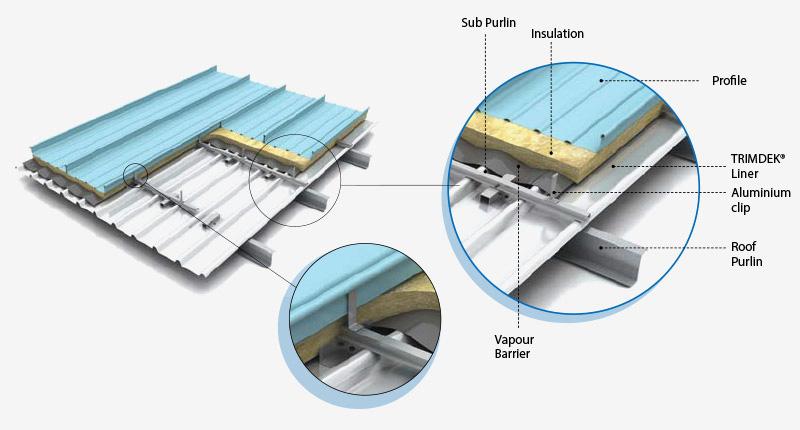
This is where a professional Insulated Roofing Panels Manufacturer makes a real difference. At HONCH, roofing systems are designed as part of the building’s environmental control strategy. Through integrated insulation structures, optimized sealing systems, and environment-specific materials, the roof becomes an active component in stabilizing internal conditions.
Continuous Impact of Temperature Differences on Roofing Systems
Temperature difference is not just a number—it is a continuous stress on the building.
When external and internal temperatures vary significantly, several issues emerge:
- thermal bridging causing localized heat loss
- condensation forming on internal surfaces
- gradual degradation of insulation layers
According to research from ASHRAE (American Society of Heating, Refrigerating and Air-Conditioning Engineers), building envelope performance directly affects overall energy consumption, especially in temperature-controlled environments.
A qualified Insulated Roofing Panels Manufacturer addresses these issues at the structural level, rather than relying solely on mechanical systems.
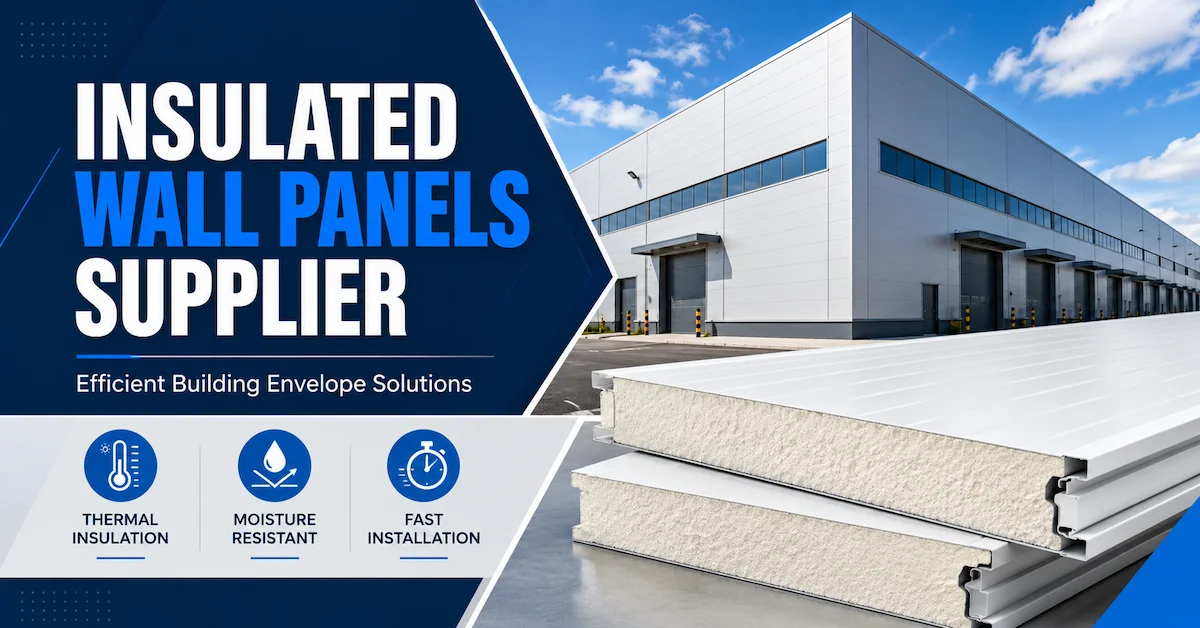
Insulation Structure and Its Influence on Energy Performance
Insulated roofing is not simply about adding thickness—it is about system design.
Key factors include:
- type of insulation core
- density and dimensional stability
- joint connection performance
| Insulation System | Thermal Conductivity (W/m·K) | Condensation Control | Energy Performance |
|---|---|---|---|
| Single-layer roofing | 0.040–0.050 | Low | High energy loss |
| PU insulated panels | 0.022–0.026 | Moderate | Medium |
| PIR insulated roofing system | 0.020–0.023 | High | 15–25% improved |
In HONCH cold storage and industrial projects, optimized insulated roofing systems have reduced energy consumption by approximately 15–25%, while also limiting condensation formation.
Sealing Performance and Vapor Control
Condensation is not only caused by temperature—it is also influenced by air infiltration.
When warm, humid air enters the roofing system:
- moisture condenses inside insulation layers
- insulation efficiency decreases
- structural integrity weakens over time
A professional Insulated Roofing Panels Manufacturer integrates sealing design into the panel system:
- tighter joint connections
- reduced air leakage paths
- consistent sealing across large surfaces
HONCH roofing panels use engineered joint systems that maintain airtight performance over long-term operation.
Project Application: Cold Storage Roofing System
In a cold storage project supported by HONCH, the client faced several challenges:
- strict temperature control requirements
- frequent condensation issues
- increasing energy costs
The solution included:
- high-performance insulated roofing panels
- optimized joint sealing
- panel dimensions matched to structural layout
After installation:
- condensation was significantly reduced
- internal temperature remained stable
- energy usage showed a measurable decline
This demonstrates how an Insulated Roofing Panels Manufacturer contributes directly to building performance and operational efficiency.
Application Strategies Across Different Environments
Insulated roofing systems must be adapted based on application scenarios.
Cold Storage / Refrigerated Warehouses
- focus on thermal resistance and airtightness
- minimize condensation
Food Processing Facilities
- combine insulation with hygiene requirements
- resist washdown conditions
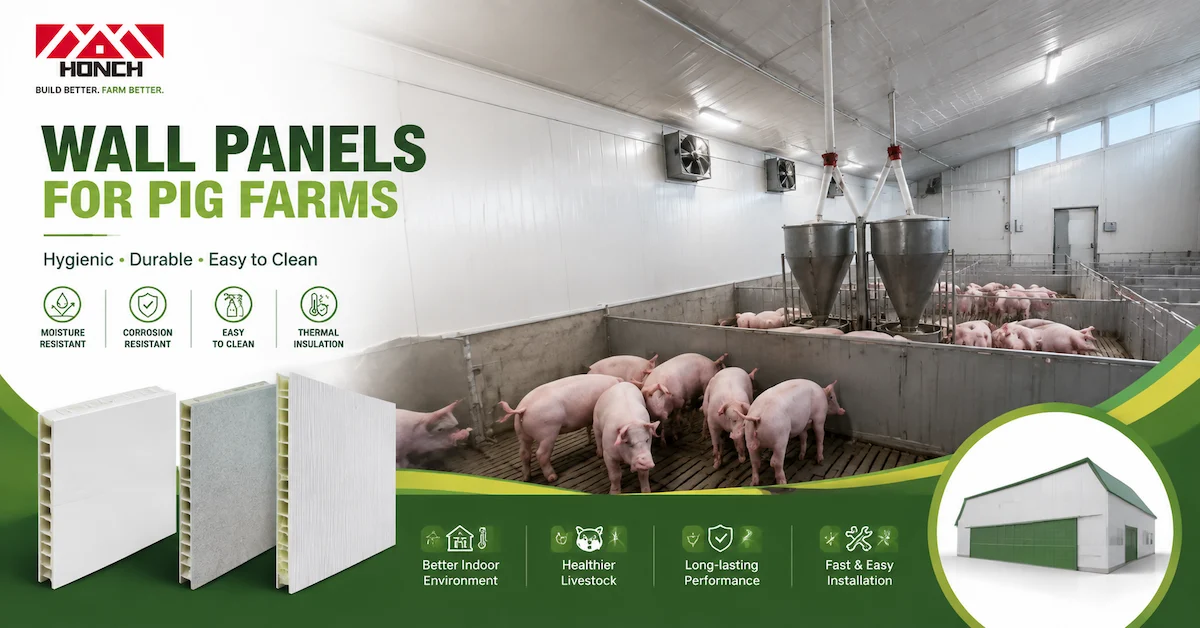
Livestock Buildings
- operate under high humidity
- require corrosion resistance alongside insulation
HONCH adjusts roofing systems based on these conditions to ensure long-term performance.
Installation Accuracy and Long-Term Performance
Even well-designed materials can underperform if installation quality is inconsistent.
Critical factors include:
- precise panel alignment
- continuous insulation layer
- proper sealing at joints
HONCH provides installation guidance aligned with system design, helping contractors achieve consistent results.
In multiple projects, this approach has improved installation efficiency by 20–30% while reducing future maintenance needs.
Common Buyer Questions
Q: Does thicker insulation always mean better performance?
A: Not necessarily. Structural design and sealing quality are equally important.
Q: Why does condensation occur in insulated roofs?
A: It is typically caused by temperature differences combined with air infiltration.
Q: When should a project involve an Insulated Roofing Panels Manufacturer?
A: During the design stage to ensure proper system integration.
Roofing Systems That Support Long-Term Building Stability
Temperature-controlled buildings rely heavily on stable roofing systems.
A professional Insulated Roofing Panels Manufacturer provides solutions that go beyond basic coverage—supporting energy efficiency, condensation control, and long-term durability.
HONCH offers insulated roofing systems designed for industrial, agricultural, and cold storage applications, helping clients maintain stable environments and reduce operational costs.
To learn more about roofing solutions and real applications, visit:
https://www.honchroof.com/
For project consultation and customized solutions, contact:
https://www.honchroof.com/contact-us