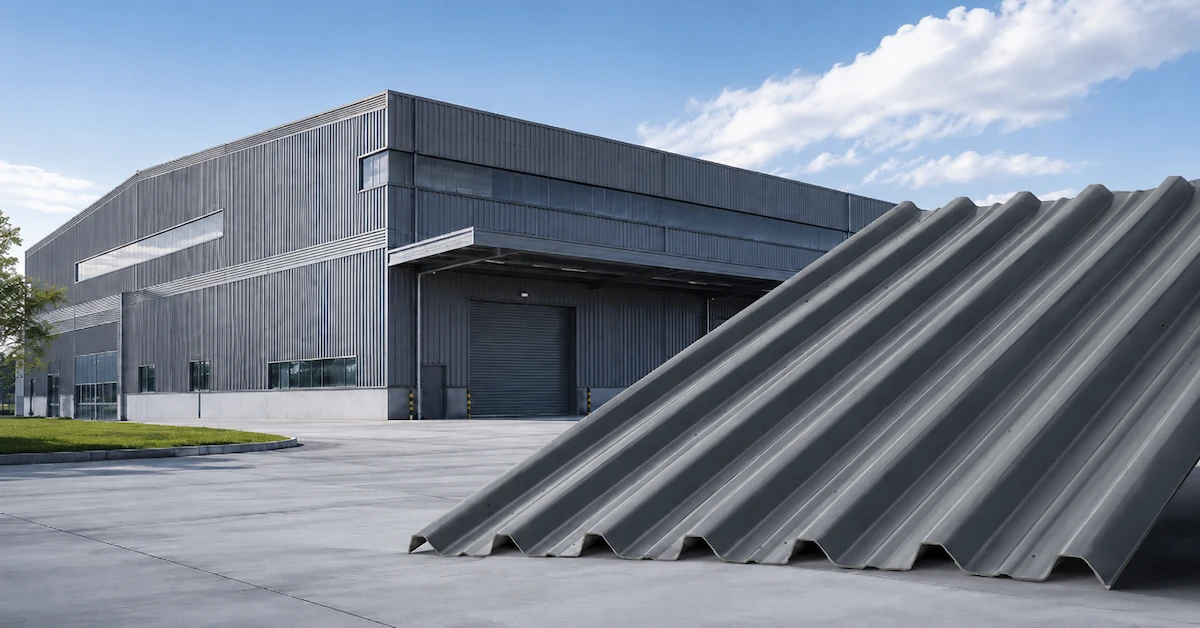
Modern construction projects are placing increasing importance on energy efficiency, faster installation, and long-term building performance. For factories, warehouses, livestock buildings, agricultural facilities, and commercial structures, wall systems are no longer only about separating indoor and outdoor spaces. They also influence temperature control, moisture protection, maintenance costs, and overall building efficiency.
Choosing the right insulated wall panels supplier allows project owners and contractors to build stronger and more efficient building envelopes. High-quality insulated wall panels can help reduce heat transfer, improve indoor comfort, protect structures from moisture, and simplify installation.
HONCH Technology provides wall, roof, and ceiling solutions for industrial, agricultural, and commercial applications. Its product range includes PU insulation wall panels, PVC wall panels, PVC ceiling panels, and matching roofing systems designed for demanding environments.
Why Insulated Wall Panels Are Becoming More Popular
Traditional wall construction methods often require multiple steps, including structural preparation, insulation installation, moisture protection, and surface finishing. This can increase labor requirements and create more opportunities for quality problems.
Insulated wall panels combine multiple functions into one integrated solution.
Modern projects choose insulated wall panels because they offer:
- Faster installation
- Better thermal insulation
- Improved moisture resistance
- Cleaner construction processes
- Reduced material waste
- More consistent factory-controlled quality
- Easier maintenance
For industrial and agricultural buildings, these advantages can directly improve project efficiency and operating costs.
What Are Insulated Wall Panels?
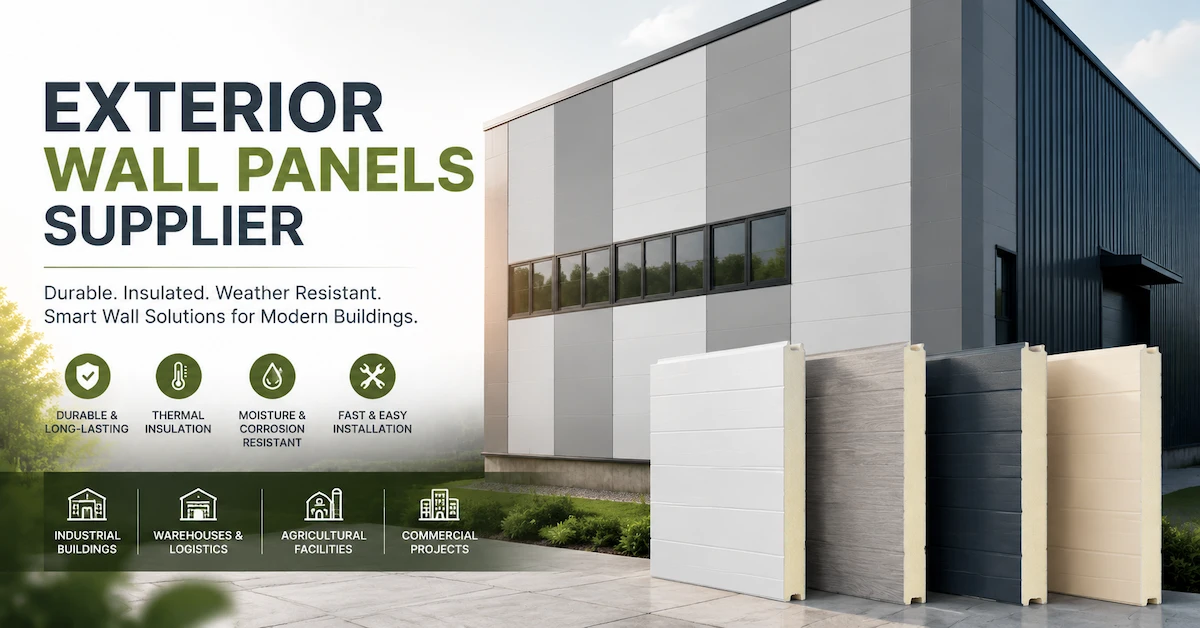
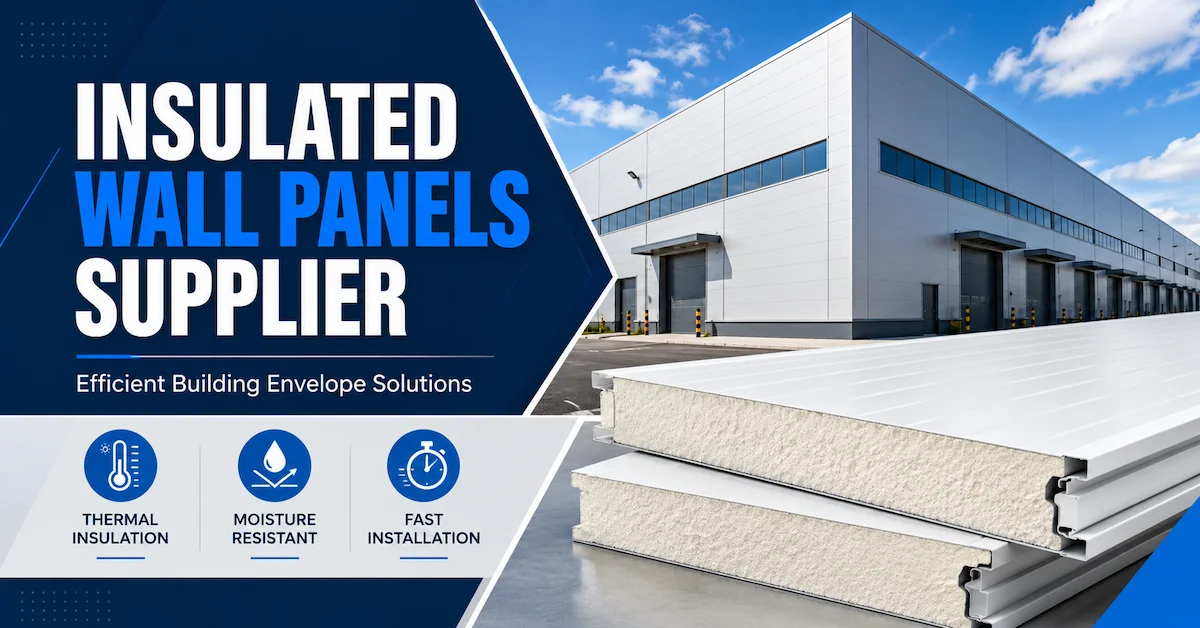
Insulated wall panels are composite building panels designed with insulation materials inside a protective outer layer. The structure allows the panel to provide both wall protection and thermal performance.
A typical insulated wall panel system may include:
- Outer protective surface
- Insulation core layer
- Inner protective layer
- Connection structure
- Sealing accessories
HONCH PU insulation wall panels use a PVC + PU + PVC structure, combining protective PVC surfaces with a PU insulation core to support thermal insulation, moisture resistance, and corrosion protection.
Applications of Insulated Wall Panels
Different industries have different requirements for wall systems. A professional insulated wall panels supplier should understand these application differences.
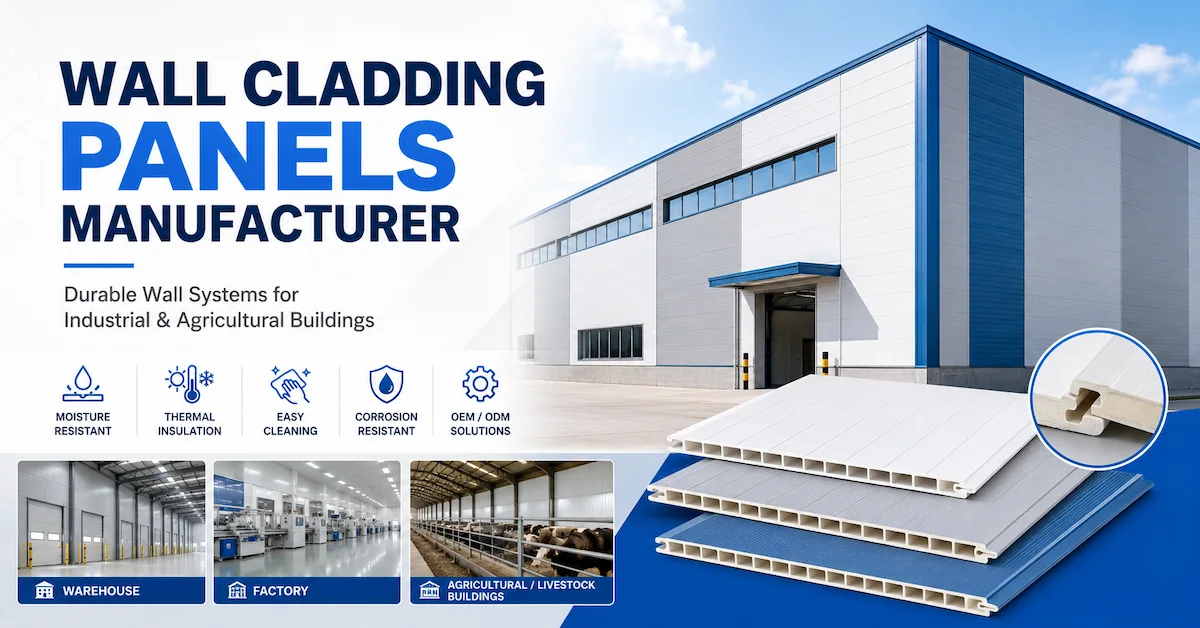
Industrial Buildings and Factories
Factories often require wall systems that can handle:
- Temperature changes
- Dust
- Humidity
- Production environments
- Long-term outdoor exposure
Insulated wall panels can help improve indoor temperature stability while reducing heat exchange between indoor and outdoor environments.
For industrial projects, buyers should consider:
- Insulation performance
- Panel thickness
- Surface durability
- Installation method
- Compatibility with roofing systems
Warehouses and Logistics Buildings
Warehouses often store valuable goods, packaging materials, machinery, or temperature-sensitive products. Poor wall insulation can increase energy consumption and affect indoor conditions.
Insulated wall panels help warehouses achieve:
- Better temperature control
- Reduced condensation risk
- Improved moisture protection
- Cleaner internal environments
For logistics and storage projects, wall panels should be selected according to local climate, storage requirements, and building usage.
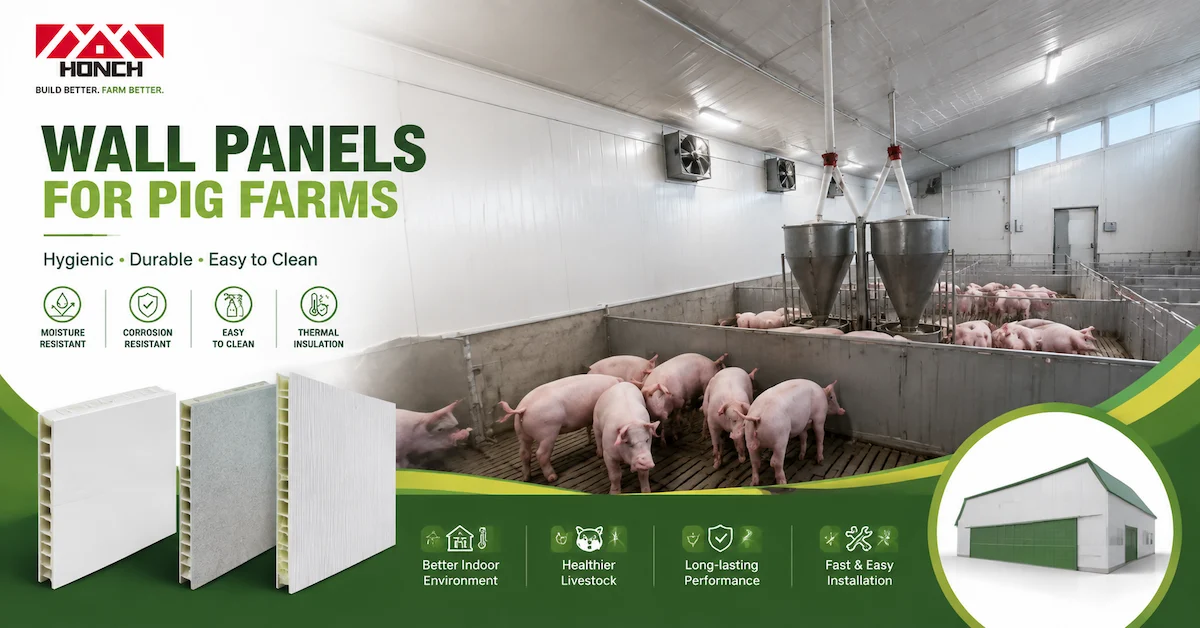
Livestock Farms and Agricultural Buildings
Livestock buildings are among the most demanding applications for wall materials. Poultry houses, pig farms, and cattle buildings face:
- High humidity
- Ammonia exposure
- Cleaning water
- Temperature fluctuations
Traditional wall materials may absorb moisture or become difficult to maintain.
Insulated wall panels provide advantages including:
- Moisture resistance
- Easy cleaning
- Thermal control
- Corrosion resistance
- Long-term durability
When combined with roofing panels and ceiling systems, they can create a more complete livestock building envelope.
Food Processing and Clean Facilities
Food processing facilities require wall systems that are easy to clean and resistant to moisture.
Insulated wall panels can support:
- Smooth wall surfaces
- Better hygiene control
- Temperature stability
- Reduced maintenance requirements
For these applications, buyers should pay attention to surface quality, panel joints, sealing performance, and cleaning requirements.
Key Advantages of Insulated Wall Panels
1. Thermal Insulation Performance
One of the main reasons buyers choose insulated wall panels is improved thermal performance.
A suitable insulation system can help:
- Reduce heat loss in cold conditions
- Reduce heat gain in hot climates
- Improve indoor comfort
- Reduce cooling and heating pressure
For warehouses, factories, and farms, this can contribute to better operating efficiency.
2. Moisture and Corrosion Resistance
Buildings in humid or agricultural environments need wall materials that resist moisture.
PVC and PU-based wall panels can provide:
- Water resistance
- Moisture protection
- Corrosion resistance
- Easier cleaning
This makes them suitable for livestock buildings, industrial facilities, and agricultural projects.
3. Faster Installation
Compared with traditional wall construction, prefabricated wall panels can reduce installation complexity.
Benefits include:
- Shorter construction time
- Less on-site processing
- Reduced labor requirements
- More consistent installation quality
4. Cleaner Building Appearance
Modern wall panels provide smooth and uniform surfaces, improving both appearance and maintenance efficiency.
They are suitable for:
- Factories
- Warehouses
- Agricultural buildings
- Commercial facilities
Insulated Wall Panels vs Traditional Wall Construction
| Comparison | Insulated Wall Panels | Traditional Wall Construction |
|---|---|---|
| Installation Speed | Faster modular installation | Longer construction process |
| Thermal Performance | Integrated insulation structure | Requires separate insulation work |
| Moisture Protection | Better with suitable panel materials | Depends on wall treatment |
| Construction Waste | Lower | Higher |
| Maintenance | Easier replacement and cleaning | More complicated repairs |
| Customization | Flexible thickness and finishes | More limited |
For modern industrial projects, insulated wall panels provide a more efficient building envelope solution.
How to Choose an Insulated Wall Panels Supplier
Choosing the right supplier is important because wall panel quality directly affects building performance.
A reliable supplier should provide:
1. Suitable Material Options
The supplier should explain:
- PVC wall panels
- PU insulation wall panels
- Composite structures
- Surface options
2. Technical Specifications
Buyers should confirm:
- Panel thickness
- Width
- Length
- Insulation core
- Connection method
- Surface finish
3. Application Experience
A professional supplier should understand different applications:
- Factories
- Warehouses
- Livestock buildings
- Agricultural projects
- Commercial buildings
4. OEM/ODM Capability
International buyers often need customized solutions.
Customization may include:
- Panel dimensions
- Colors
- Surface designs
- Packaging
- Project-specific combinations
Why Choose HONCH as Your Insulated Wall Panels Supplier?
HONCH Technology specializes in roofing, wall, ceiling, and building material solutions for industrial and agricultural applications.
HONCH provides:
- PU insulation wall panels
- PVC wall panels
- PVC ceiling panels
- UPVC/APVC roofing systems
- Matching accessories
- OEM/ODM customization
- Project-based material solutions
For customers building factories, warehouses, farms, and agricultural facilities, HONCH can provide coordinated wall and roofing solutions instead of isolated products.
Buyers can review complete product solutions through the Products page and contact HONCH for project consultation.
OEM/ODM Solutions for Insulated Wall Panels
Different markets and projects require different specifications.
HONCH supports customization including:
- Panel thickness
- Panel length
- Color selection
- Surface requirements
- Packaging
- Product combinations
For example:
- A livestock farm may require insulated walls, ceilings, and roofing together.
- A warehouse project may require specific insulation performance.
- A distributor may need customized packaging for local markets.
A professional insulated wall panels supplier should support both standard products and customized project solutions.
FAQ
1. What are insulated wall panels?
Insulated wall panels are composite wall systems designed to provide wall protection and thermal insulation in one integrated product.
2. Where are insulated wall panels used?
They are commonly used in factories, warehouses, livestock farms, agricultural buildings, food processing facilities, and commercial projects.
3. Are PU insulation wall panels suitable for farms?
Yes. PU insulation wall panels are suitable for livestock buildings because they provide moisture resistance, insulation, and easy maintenance.
4. Can insulated wall panels be customized?
Yes. Manufacturers can customize thickness, length, color, surface, packaging, and project requirements.
5. What should I check when choosing a supplier?
Buyers should evaluate material quality, technical specifications, application experience, customization ability, and after-sales support.
Conclusion
Insulated wall panels are becoming an important solution for modern industrial, agricultural, and commercial buildings. They help improve thermal performance, moisture resistance, installation efficiency, and long-term building value.
Choosing the right insulated wall panels supplier allows buyers to reduce construction risks and create more efficient building environments.
HONCH Technology provides PU insulation wall panels, PVC wall panels, ceiling panels, roofing systems, and accessories for global building projects. Contact HONCH to discuss your project requirements, specifications, and customized solutions.