How to Choose a Ceiling Panels Supplier for Industrial Factory Projects
Selecting the right ceiling panels supplier for industrial factory projects requires more than comparing product prices. Industrial buildings may include manufacturing workshops, warehouses, storage areas, processing rooms, utility spaces, and temperature-controlled zones, and each area can have different requirements for insulation, moisture resistance, maintenance, and installation.
Before purchasing ceiling panels, buyers should first define the purpose of the ceiling system. Some factories need thermal separation between indoor and outdoor environments, while others need internal ceiling panels for functional separation, improved working conditions, or easier maintenance.
HONCH provides industrial building materials and insulation panel solutions designed for industrial applications. Buyers can evaluate different panel types according to their actual installation location, environmental conditions, and project requirements.
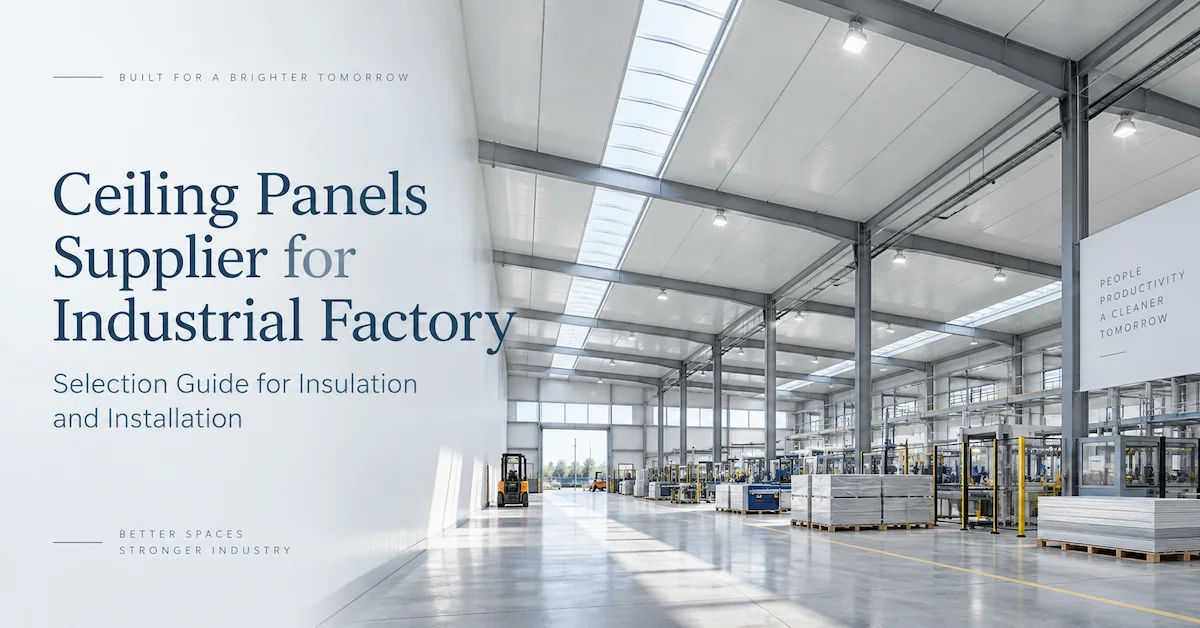
Why Industrial Factory Ceiling Selection Requires More Than Price Comparison
Industrial projects usually involve large quantities of materials, long service expectations, and complex installation conditions. A low-price quotation may not represent the same product scope as another supplier if the following factors are different:
- Panel construction
- Insulation core
- Panel thickness
- Connection system
- Accessories
- Packaging method
- Technical documents
- Installation requirements
A professional supplier should help buyers understand the complete solution instead of only providing a product catalogue or unit price.
Understand the Application Requirements Before Selecting Ceiling Panels
The first step in choosing industrial factory ceiling panels is identifying the working environment.
Different factory areas may require different ceiling solutions:
| Application Area | Main Considerations |
|---|---|
| Manufacturing workshop | Working environment, thermal comfort, durability |
| Warehouse area | Temperature separation and maintenance |
| Processing room | Cleaning requirements and moisture exposure |
| Agricultural building | Humidity and corrosion conditions |
| Internal insulated room | Thermal separation and enclosure performance |
Questions Buyers Should Answer Before Requesting a Quote
Before contacting a ceiling panel supplier, prepare the following information:
- Factory location
- Building dimensions
- Ceiling installation area
- Indoor temperature requirements
- Humidity conditions
- Cleaning requirements
- Lighting and ventilation openings
- Supporting structure
- Required panel quantity
- Delivery destination
Providing this information allows suppliers to recommend products based on actual conditions rather than general assumptions.
What Is the Difference Between Standard Ceiling Panels and Insulated Ceiling Panels?
Not all ceiling panels provide the same function. A standard decorative ceiling panel and an insulated ceiling panel may look similar but have different structures and purposes.
HONCH's PU insulation ceiling panel uses a PVC+PU+PVC composite construction. The product combines PVC surface layers with a PU insulation core, creating a panel structure designed for applications where both surface protection and insulation performance need to be considered.
How Does an Insulated Ceiling Panel Work?
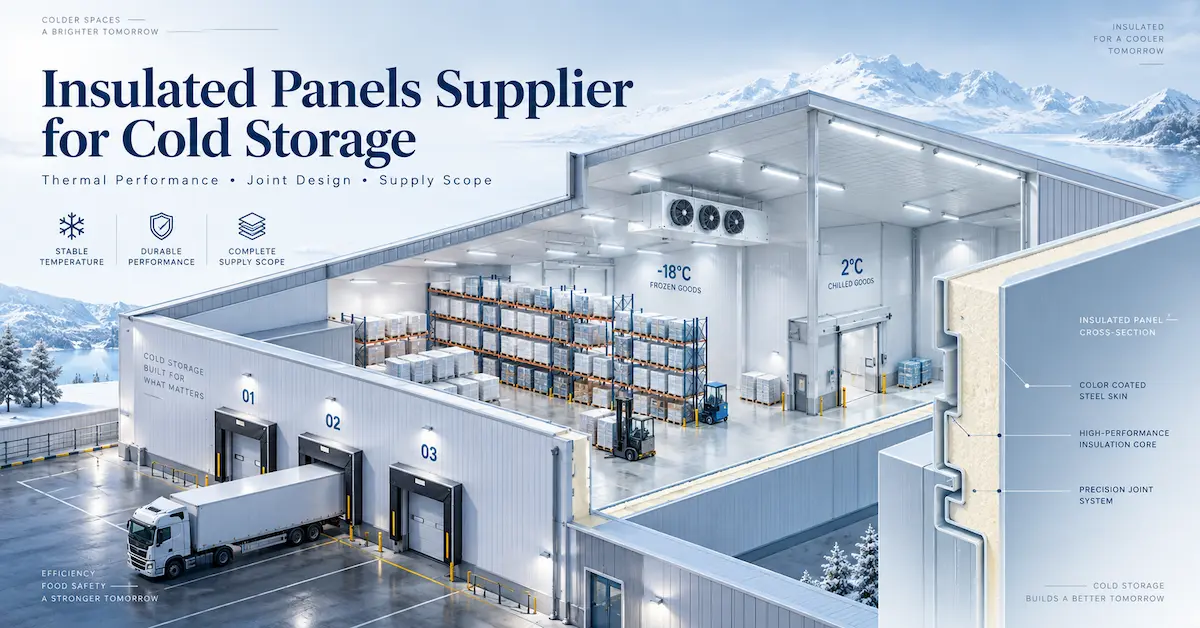
An insulated ceiling panel generally consists of several functional layers:
| Component | Function |
|---|---|
| Surface layer | Provides surface protection and appearance |
| Insulation core | Supports thermal separation requirements |
| Connection system | Helps maintain panel installation continuity |
Each part affects the final application performance. Buyers should evaluate the complete panel structure rather than focusing only on thickness.
Why Material Names Are Not Enough
Terms such as PVC, PU, insulated, or corrosion-resistant describe product characteristics, but they do not automatically confirm:
- Specific thermal performance
- Fire classification
- Chemical compatibility
- Load capacity
- Suitability for every factory environment
The supplier should provide information related to the exact product configuration being considered.
What Specifications Should Buyers Confirm With a Ceiling Panels Supplier?
A reliable ceiling panels supplier for industrial factory projects should provide a clear specification sheet before production.
The following items should be confirmed:
| Specification | Buyer Requirement | Supplier Confirmation |
|---|---|---|
| Product application | Ceiling function and installation area | Recommended application |
| Material structure | Required insulation and surface requirements | Panel construction |
| Thickness | Project requirements | Available thickness options |
| Dimensions | Ceiling size and layout | Width, length, tolerance |
| Joint system | Installation requirements | Connection method |
| Environmental conditions | Temperature, humidity, cleaning | Product limitations |
| Openings | Lights, ventilation, equipment | Interface solutions |
| Accessories | Required supporting materials | Included scope |
| Documentation | Project requirements | Available technical information |
| Packaging | Installation sequence | Packing method |
A detailed specification reduces misunderstandings between suppliers, contractors, and installation teams.
Why Joint Design Is Important for Industrial Ceiling Panels
Many buyers focus on the visible surface of ceiling panels but overlook the connection system. However, joints influence installation quality, appearance, moisture control, and long-term maintenance.
HONCH describes a tongue-and-groove connection structure for its insulation ceiling panel. Buyers should review the connection details and understand how panels are installed together.
Check the Complete Ceiling System
Industrial ceiling installation may involve:
- Panel connections
- Edge finishing
- Supporting structures
- Lighting openings
- Ventilation systems
- Cable penetrations
- Equipment interfaces
These details should be considered before finalizing production drawings.
Why Sample Approval Should Include Connected Panels
A single panel sample only shows surface appearance. A connected sample provides more useful information about:
- Joint alignment
- Edge quality
- Installation compatibility
- Surface consistency
For industrial projects, approving the complete connection method is often more valuable than approving only the panel appearance.
How Should Industrial Factories Evaluate Insulation Requirements?
Insulation requirements depend on the purpose of the factory space.
A general workshop may focus on worker comfort, while a temperature-controlled room may require stricter thermal separation.
Before selecting insulated ceiling panels, buyers should consider:
- Indoor temperature requirements
- Outdoor climate
- Factory operating hours
- Heat sources
- Ventilation system
- Building structure
Do Not Select Ceiling Thickness Only by Rule of Thumb
Panel thickness is only one part of the evaluation process. The final building performance depends on:
- Panel construction
- Insulation core
- Joint quality
- Installation accuracy
- Surrounding building conditions
The supplier should provide available product information, while the project team evaluates the complete building requirement.
Compare Ceiling Panels With Other Industrial Building Materials
Industrial buildings often require multiple material systems. Ceiling panels, wall panels, and roofing products have different functions and should not automatically replace each other.
HONCH provides PU insulation wall panels and industrial roofing products in addition to ceiling panel solutions.
| Product Type | Main Function | Application Direction |
|---|---|---|
| PU insulation ceiling panel | Insulated ceiling solution | Internal ceiling applications |
| PU insulation wall panel | Insulated wall enclosure | Industrial wall applications |
| UPVC/APVC roofing sheet | External roof protection | Industrial roofing projects |
Ceiling Panels and Roofing Panels Have Different Roles
A factory roof must deal with outdoor weather exposure, drainage, and roof structure requirements. A ceiling panel usually focuses on internal enclosure, insulation, and environmental separation.
Selecting products according to their actual function helps avoid unsuitable substitutions.
How to Compare Different Ceiling Panel Suppliers?
When comparing suppliers, buyers should evaluate more than the initial quotation.
Compare Equivalent Product Information
Confirm that suppliers are quoting the same:
- Material structure
- Thickness
- Dimensions
- Surface requirements
- Joint design
- Accessories
A cheaper quotation may represent a different product scope.
Evaluate Complete Project Cost
The final project cost may include:
- Panels
- Accessories
- Packaging
- Transportation
- Installation requirements
- Technical support
A complete comparison helps buyers understand the actual value of each proposal.
Quality Control and Documentation for Industrial Ceiling Panels
Industrial buyers should request clear product information and avoid relying only on general marketing descriptions.
Useful documents may include:
- Product specification
- Dimensions
- Material information
- Approved sample reference
- Inspection requirements
- Available technical documents
If a project requires specific performance documentation, buyers should confirm that the documents apply to the exact product configuration being purchased.
Why Product-Level Verification Matters
A document for one panel construction should not automatically represent all products from the same supplier. Material type, thickness, structure, and application should match the ordered product.
OEM and Customized Industrial Ceiling Panels
Industrial projects may require customized ceiling panels due to building dimensions, design requirements, or distribution needs.
HONCH provides customization options for selected insulation panel products, including requirements related to dimensions, colors, and packaging.
Common Customization Requirements
Customers may request:
- Specific panel lengths
- Color options
- Packaging requirements
- Project-based quantities
Confirm Custom Details Before Production
Before manufacturing, buyers should confirm:
- Final drawings
- Product specifications
- Approved samples
- Packaging requirements
- Delivery arrangements
Clear documentation helps maintain consistency between approval and production.
What Information Should You Send a Ceiling Panels Supplier for Industrial Factory Projects?
A complete inquiry helps suppliers provide more accurate recommendations.
Prepare:
- Factory drawings
- Ceiling area
- Installation height
- Environmental conditions
- Temperature requirements
- Panel quantity
- Required dimensions
- Opening locations
- Packaging requirements
- Delivery location
Buyers can review HONCH's industrial product solutions and submit project requirements through the HONCH contact page.
Frequently Asked Questions
What should I consider when choosing a ceiling panels supplier for industrial factory projects?
Consider the supplier's ability to provide suitable panel structures, clear specifications, customization support, technical information, and complete quotation details. The right choice depends on matching the ceiling system with the factory environment.
Are insulated ceiling panels suitable for every factory?
No. Different factories have different temperature, humidity, cleaning, and operational requirements. The application environment should be evaluated before selecting a panel system.
What is PVC+PU+PVC ceiling panel construction?
It is a composite structure consisting of PVC surface layers and a PU insulation core. HONCH uses this structure in its insulation ceiling panel products.
How do I choose the correct ceiling panel thickness?
Thickness should be selected according to project requirements, insulation goals, and building conditions. It should not be selected only by general recommendations.
Can factory ceiling panels be customized?
Selected HONCH ceiling panel products support customization options. Buyers should provide project requirements, dimensions, colors, and quantities for confirmation.
Can ceiling panels replace industrial roofing sheets?
No. Ceiling panels and roofing sheets serve different building functions. Roofing focuses on external weather protection, while ceiling panels usually serve internal enclosure purposes.
What information should suppliers provide before ordering?
Suppliers should provide product construction, dimensions, available technical information, customization details, accessory scope, and delivery-related information.
How should industrial ceiling panel quotations be compared?
Compare the same material structure, dimensions, accessories, documentation, packaging, and delivery conditions instead of comparing only unit prices.
Can ceiling panels be used for warehouse projects?
Application depends on the warehouse environment and project requirements. Industrial ceiling panels should be selected according to insulation needs and building conditions.
How can I request a quotation from HONCH?
Prepare your factory drawings, ceiling requirements, quantity information, and project conditions, then contact HONCH through the contact page.
Conclusion
Choosing a ceiling panels supplier for industrial factory projects requires a complete evaluation of application requirements, panel construction, insulation needs, installation details, documentation, and supply scope. Buyers should define the factory environment first, then compare ceiling solutions according to their actual function rather than selecting products only by price or appearance. HONCH provides industrial ceiling panels, wall panels, and roofing material solutions that can be evaluated according to different factory applications. For industrial construction, renovation, or expansion projects, contact HONCH with your drawings, specifications, and project requirements to discuss a suitable ceiling panel solution.