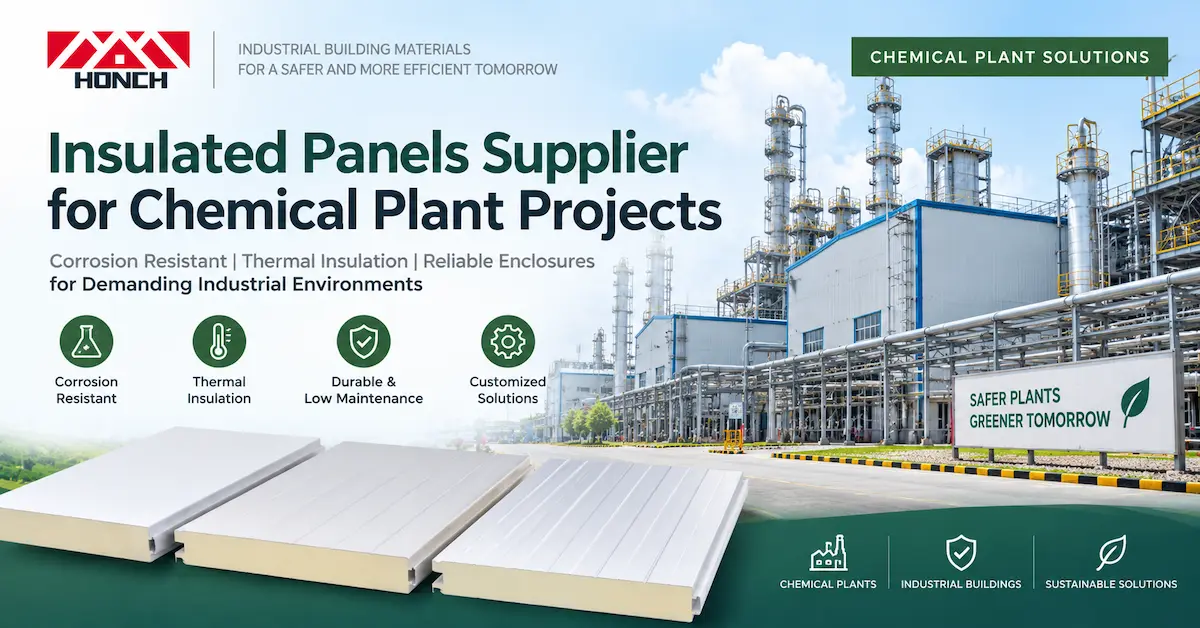
How Should Buyers Choose an Anti Corrosion Panels Supplier for Industrial Factory Projects?
Choosing an Anti Corrosion Panels for Industrial Factory
construction should begin with the actual environment in which the material will be installed. An industrial factory may include an external roof, exterior walls, internal partitions, ceilings, production rooms, warehouses, utility spaces, washing areas, and sections exposed to moisture or airborne contaminants. These locations do not necessarily require the same material or panel structure, even when corrosion resistance is an important purchasing consideration.
HONCH supplies industrial building materials, including industrial roofing products as well as insulated wall and ceiling solutions. For procurement teams, the first task is therefore to separate the building into functional zones and determine what each panel must do. A weather-facing roof needs to address outdoor exposure and roof construction, while an internal ceiling or wall may require insulation, cleaning resistance, moisture management, or separation between working areas.
A professional supplier proposal should identify the proposed product construction, installation position, dimensions, connection system, customization scope, available documentation, packaging, and technical limitations instead of simply describing every product as “anti-corrosion.”
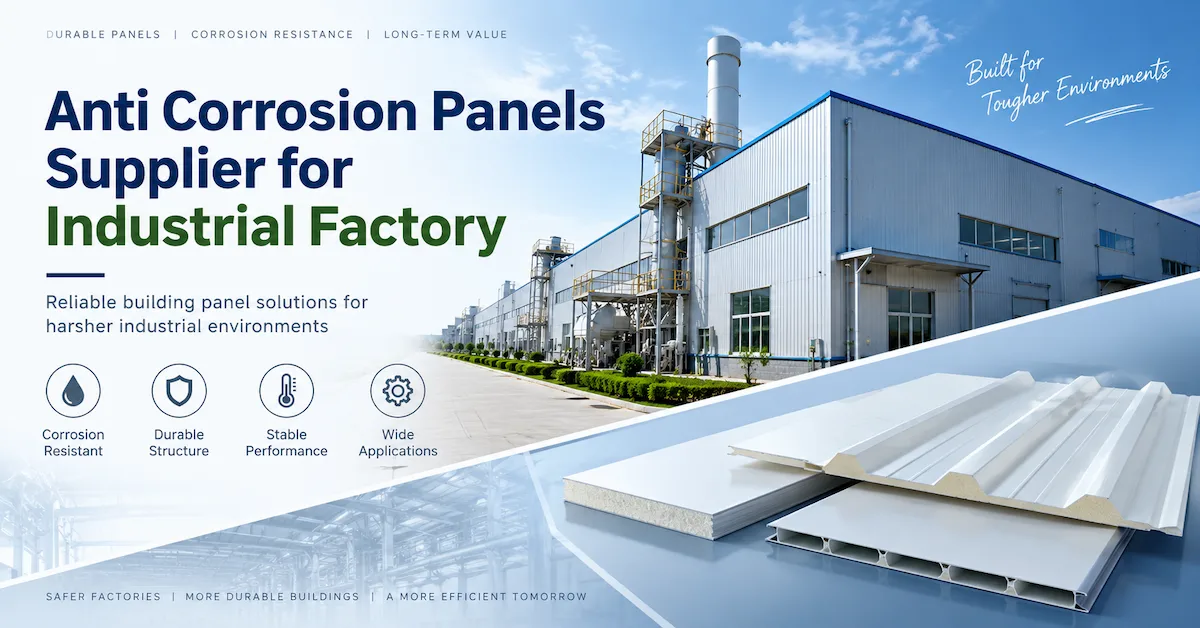
Start With the Factory Corrosion Environment Before Selecting Panels
Industrial corrosion conditions can vary substantially from one factory to another. A humid workshop, food-processing area, chemical production zone, coastal factory, agricultural processing building, and dry warehouse may all expose the building envelope to different combinations of moisture, cleaning water, salt, chemicals, dust, condensation, or outdoor weather.
Create an Exposure Map for the Building
Before requesting prices, divide the project into exposure zones. For each area, record the installation position, environmental conditions, and main performance concern. This makes it easier to decide whether the project needs an industrial roofing sheet, an insulated wall panel, an insulated ceiling panel, or another enclosure material.
A useful exposure schedule can include the following information:
| Project Condition | Information to Provide | Why It Matters |
|---|---|---|
| Installation position | Roof, external wall, internal wall, ceiling or partition | Different products serve different building functions |
| Moisture exposure | Humidity, condensation, wash water or outdoor rain | Helps evaluate surface and joint requirements |
| Chemical exposure | Chemical name, concentration and contact method where known | “Corrosion resistant” does not mean resistant to every chemical |
| Temperature | Normal operating range and nearby heat sources | May affect material and insulation requirements |
| Cleaning method | Water, detergent or other cleaning agents | Surface and accessory compatibility may need checking |
| Outdoor environment | UV, rainfall, coastal conditions or pollution | Relevant to external roofing and wall materials |
| Maintenance access | Frequency and method of inspection | Helps determine practical enclosure details |
Avoid Using “Industrial Factory” as the Only Environmental Specification
The term industrial factory describes a building type, not a corrosion condition. Two factories producing different products can expose their roofs and walls to completely different environments. Buyers should therefore provide actual operating information rather than expecting the supplier to infer material compatibility from the industry name alone.
When the Environment Is Not Yet Fully Defined
If the project team does not yet know the exact chemical concentration, humidity, or cleaning procedure, these items should be marked for confirmation. It is safer to leave a technical question open than to convert an unknown condition into an unsupported material claim.
Understand What “Anti Corrosion Panels” Means in Industrial Procurement
The phrase anti-corrosion panel can refer to several different product functions. Some buyers are looking for external roofing that performs better in humid or corrosive environments, while others need an internal wall or ceiling surface combined with thermal insulation.
HONCH's product structure includes both industrial roofing sheets and PVC+PU+PVC insulation panels, so buyers should distinguish these categories before comparing quotations.
Industrial Roofing Panels
HONCH's industrial product range includes UPVC/APVC roofing products for industrial building applications. Products such as the T920 UPVC/APVC roofing sheet are designed around external roofing functions rather than the same composite structure used in insulated wall or ceiling panels.
For industrial roofs, buyers should consider weather exposure, roof layout, panel profile, effective coverage, thickness, supporting structure, fixing method, accessories, and the actual corrosive environment.
Insulated Wall Panels
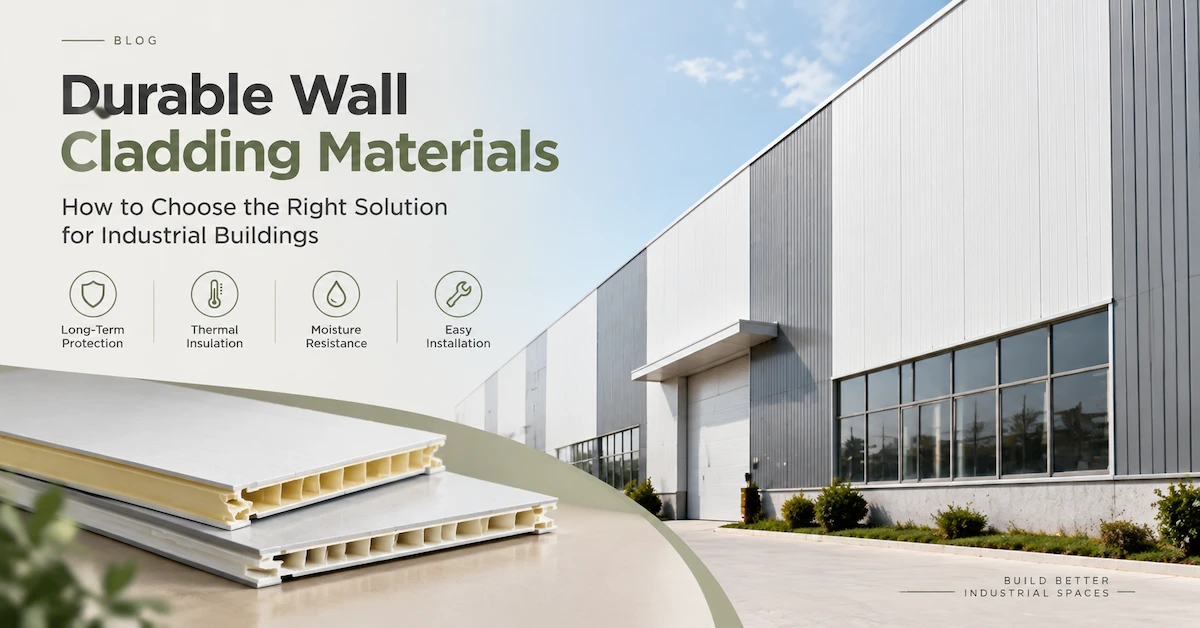
HONCH's PU insulation wall panel uses a PVC+PU+PVC composite construction. The PVC surface layers and PU insulation core perform different functions, making this type of panel relevant where the wall needs both an enclosure surface and thermal insulation.
A buyer evaluating this product for a factory should confirm its installation position, thickness, joint details, opening treatment, cleaning conditions, and available technical information rather than assuming that the same configuration is appropriate for every industrial wall.
Insulated Ceiling Panels
The PU insulation ceiling panel also uses a PVC+PU+PVC composite structure and is positioned for ceiling applications. Where an industrial factory requires an insulated internal ceiling, the project team should evaluate the panel's connection system, support arrangement, penetrations, perimeter details, and operating environment.
These Product Categories Are Not Automatically Interchangeable
An industrial roof sheet should not automatically be treated as an insulated wall panel, and a ceiling panel should not automatically be specified as external roofing. Similar materials or corrosion-related positioning do not mean that products perform the same building function.
What Should an Anti Corrosion Panel Specification Include?
A reliable anti corrosion panels supplier for industrial factory projects should be able to respond to a defined specification rather than only provide a general brochure and price.
| Specification Item | Buyer Should Define | Supplier Should Confirm |
|---|---|---|
| Panel application | Roof, wall, ceiling or partition | Product intended for the requested position |
| Environmental exposure | Humidity, chemicals, cleaning, outdoor weather | Available material information and limitations |
| Material structure | Required surface and insulation functions | Actual panel construction |
| Thickness | Project or performance requirement | Available thickness options |
| Dimensions | Building dimensions and layout | Width, effective width where relevant, length and tolerances |
| Connection | Required installation arrangement | Joint or profile design |
| Supporting structure | Structural layout | Installation interface requirements |
| Openings | Doors, pipes, ventilation and equipment | Required trims and detailing |
| Accessories | Ridge, flashing, trims, seals or other items | Included and excluded scope |
| Documentation | Project-required information | Available product-specific documents |
| Packaging | Site sequence and storage requirements | Packing and identification method |
| Delivery | Construction schedule | Order-specific production and shipment plan |
The purpose of this specification is not to make the buyer perform the supplier's engineering work. It is to ensure that all quotations refer to comparable products and that important project assumptions are visible before the order is confirmed.
How Should Buyers Evaluate Material Corrosion Resistance?
Corrosion resistance should be linked to an identified environment. A general statement such as “resistant to acid and alkali” is not sufficient for a demanding industrial project unless the relevant chemical conditions and supporting data are understood.
Define the Contact Condition
Where chemicals are present, provide as much information as possible about:
- Chemical name
- Approximate concentration
- Operating temperature
- Vapor, splash, mist, condensation, or direct contact
- Exposure duration
- Cleaning frequency
The same material may behave differently under occasional cleaning exposure and continuous high-temperature chemical contact.
Check the Complete Assembly
The flat panel surface is only one part of the installed building system. Buyers should also consider:
- Panel edges
- Joints
- Fasteners
- Sealants
- Trims
- Flashing
- Penetrations
- Supporting components
Do Not Extend One Material Property to Every Component
A corrosion-resistant polymer panel does not automatically mean that every metal fastener, seal, trim, or accessory used with it has identical environmental resistance. The project team should review these interfaces when the factory operates under demanding conditions.
Why Roof, Wall, and Ceiling Functions Must Be Separated
Industrial factory projects often purchase several building-envelope materials at the same time, which can create confusion when suppliers use broad terms such as corrosion-resistant panels.
External Roofing
External roofing must address rain, sunlight, wind, drainage, overlapping, fixing, and supporting conditions. HONCH industrial roofing products can be reviewed through the industrial materials category, but final selection should be tied to the specific building and structural requirements.
Internal or External Walls
Wall systems need to accommodate corners, doors, windows, machinery openings, and connections to floors and ceilings. Where insulation is also required, PVC+PU+PVC wall panels may be evaluated separately from single-layer roofing materials.
Internal Ceilings
Factory ceilings may be required for insulation, internal enclosure, environmental separation, or easier surface maintenance. Their supporting and connection requirements are different from those of roofing sheets.
One Factory May Need Several Product Families
A practical industrial project may use one material for the external roof, another construction for insulated internal walls, and another for the ceiling. Choosing one universal panel solely to simplify purchasing may create unnecessary technical compromises.
How Do HONCH Product Types Compare for Industrial Factory Applications?
The following table compares product roles rather than ranking products as better or worse.
| HONCH Product Type | Published Product Role | Industrial Application to Evaluate | Main Purchasing Check |
|---|---|---|---|
| UPVC/APVC industrial roofing sheet | External industrial roofing | Factory roof in demanding outdoor environments | Profile, support, exposure and fixing |
| PVC+PU+PVC insulation wall panel | Composite insulated wall | Insulated walls and partitions | Environment, thickness, joint and openings |
| PVC+PU+PVC insulation ceiling panel | Composite insulated ceiling | Internal insulated ceiling | Support, joint, penetrations and insulation requirement |
| Roofing accessories | Roof junction and finishing components | Ridge, transition and roof detailing | Compatibility with selected roofing profile |
Select by Function First and Material Second
The most efficient selection process is:
- Identify the building function.
- Define the environmental exposure.
- Determine whether insulation is required.
- Select the appropriate product category.
- Confirm technical and commercial details.
This sequence prevents buyers from choosing a material based solely on the phrase “anti-corrosion.”
How Important Are Joints, Fasteners, and Accessories?
Panels can occupy most of the visible roof, wall, or ceiling area, but failures or maintenance problems often begin at interfaces rather than at the center of the panel.
Review Joint Profiles Before Production
Ask the supplier to provide the relevant profile or connection information. Where practical, evaluate joined samples instead of approving only a small flat material sample.
The review should consider alignment, edge condition, dimensional consistency, and how additional accessories connect with the panel.
Plan Penetrations Before the Cut List Is Finalized
Industrial buildings commonly include exhaust ducts, ventilation equipment, pipes, cables, skylights, doors, machinery interfaces, and other openings. Identifying these details before production can reduce uncontrolled cutting and improvisation during installation.
Confirm Accessory Scope in the Quotation
Clarify whether the quotation includes the required trims, roofing accessories, closures, packaging, and other components. HONCH also offers other building materials and accessories, which can be considered as part of a broader project package where relevant.
How Should Buyers Compare Anti Corrosion Panel Suppliers?
The lowest square-metre price is not necessarily the lowest project cost, but a higher price is not automatically evidence of better performance either. The key is to normalize the scope before comparing quotations.
Compare Equivalent Product Construction
Make sure each supplier is quoting the same or clearly comparable:
- Application
- Material construction
- Thickness
- Dimensions
- Surface requirement
- Joint system
- Accessory scope
- Packaging
- Documentation
- Delivery terms
Check Quantity Definitions
For profiled roofing materials, nominal width and effective coverage may differ. If one supplier calculates price using gross sheet area while another quotes based on usable coverage, the apparent price comparison may be misleading.
Calculate the Complete Supply Scope
A complete commercial review should consider panel material together with accessories, packaging, shipping basis, documentation, replacement provisions where agreed, and any additional project-specific requirements.
Record Technical Assumptions Beside the Price
If chemical compatibility, fire requirements, thermal performance, or installation details are still awaiting confirmation, record these items instead of treating the quotation as a fully approved technical solution.
What Quality Information Should Industrial Buyers Request?
Industrial buyers should focus on traceability and product-specific evidence rather than broad marketing statements.
Useful information may include:
- Approved product specification
- Material construction
- Dimensional requirements
- Sample reference
- Inspection criteria
- Order or batch identification
- Available technical documents
- Packaging identification
Match Technical Documents to the Product
If a test report or certificate is important to the project, confirm that it relates to the product configuration being purchased. Check the product description, construction, relevant thickness, test method, and stated scope.
One Report Should Not Automatically Be Applied to the Entire Product Range
A report relating to one sandwich panel configuration should not automatically be used as evidence for an unrelated roofing sheet or another customized construction. Product-level verification helps prevent procurement documents from making claims broader than the supporting evidence.
How Should Factory Buyers Handle OEM and Customized Panel Requirements?
Industrial contractors and distributors may need customized lengths, colors, packaging, labels, or other product details. HONCH describes customization capabilities for selected insulation and roofing products, but customization should be handled through a controlled specification.
Project-Based Customization
For construction projects, customization may involve:
- Panel lengths
- Quantities by building zone
- Color requirements
- Package identification
- Installation sequence
Distributor and Private-Label Requirements
For distributors, requirements may include branding, packaging, repeat-order identification, or standardized configurations for local customers.
Confirm Whether Custom Changes Affect Technical Documentation
Changing material structure, thickness, profile, or other important construction details may affect which technical information remains applicable. Buyers should therefore review significant modifications rather than assuming all custom versions have identical performance.
How Should Production and Delivery Be Confirmed?
An Anti Corrosion Panels for Industrial Factory
projects should confirm production and delivery against the final order rather than rely on a generic lead-time promise.
Factory buyers should finalize:
- Product type
- Dimensions
- Quantity
- Color
- Accessories
- Customization
- Packaging
- Delivery destination
- Installation sequence
For large projects, packaging by roof zone, elevation, or construction phase can make site handling more efficient.
Separate Production Time From Total Delivery Time
Sample approval, specification confirmation, production, inspection, packaging, dispatch, and transport are separate stages. Buyers should clarify these milestones when building the project schedule.
What Should Buyers Send When Requesting an Industrial Factory Panel Quote?
A useful RFQ should give the supplier enough information to identify which products should be evaluated. Include factory drawings, project location, roof and wall dimensions, ceiling requirements if applicable, quantity, environmental conditions, humidity, known chemical exposure, temperature, cleaning method, support information, openings, required documentation, packaging, destination, and project schedule.
Buyers can review HONCH's industrial product range, browse the wider product catalogue, examine available industrial project cases, and submit project information through the HONCH contact page.
Frequently Asked Questions
What should I check when choosing an Anti Corrosion Panels for Industrial Factory projects?
Check whether the supplier can match the product to the real installation environment, distinguish roof, wall, and ceiling applications, provide clear construction and dimensional information, explain available documentation, and define the complete quotation scope. Corrosion resistance should be discussed against actual exposure conditions rather than as a universal claim.
What type of panel is suitable for a corrosive factory environment?
The answer depends on where the panel is installed and what causes the corrosion risk. External roofs, internal walls, and ceilings have different functional requirements. Provide humidity, chemical, temperature, cleaning, and outdoor exposure information before selecting a product.
Are UPVC/APVC roofing sheets the same as insulated panels?
No. HONCH's UPVC/APVC roofing products are industrial roofing materials, while its PVC+PU+PVC wall and ceiling products are composite insulation panels. They serve different building functions and should not automatically replace one another.
Can PVC+PU+PVC panels be used in industrial factories?
HONCH positions its PVC+PU+PVC wall and ceiling products for industrial and insulated building applications. Suitability for a specific factory still depends on installation position, environmental exposure, insulation requirements, joints, and project documentation.
Does corrosion resistance mean resistance to every chemical?
No. Chemical compatibility varies according to the substance, concentration, temperature, contact method, and exposure time. Buyers should provide actual process or cleaning conditions rather than relying only on a general corrosion-resistant description.
What should be checked on a panel sample?
Check the surface, cross-section where relevant, dimensions, thickness, edge quality, connection profile, and joined condition. For roofing products, also review profile and accessory compatibility where representative samples are available.
How should anti-corrosion panel quotations be compared?
Compare the same material construction, dimensions, quantity basis, accessories, packaging, documentation, and delivery terms. Record technical assumptions and exclusions beside the price so offers can be evaluated on a comparable basis.
What documents should an industrial factory project request?
Request the documents required by the project and confirm that they relate to the product being offered. Depending on the application, this can include product specifications, dimensional information, applicable test reports, inspection information, and installation-related documentation.
Can HONCH customize panels for industrial projects?
Selected HONCH products support customization in parameters such as dimensions, color, and packaging. Buyers should provide drawings and exact requirements so feasibility, commercial conditions, and applicable documentation can be confirmed for the requested configuration.
How can I request a quotation from HONCH?
Prepare the factory drawings, panel locations, dimensions, quantities, environmental conditions, chemical exposure where relevant, customization requirements, destination, and required documentation, then submit the project through the HONCH contact page.
Conclusion
Choosing an Anti Corrosion Panels for Industrial Factory projects requires more than searching for a product described as corrosion resistant. Buyers should define the installation position and actual exposure conditions first, separate roofing, wall, and ceiling functions, and then compare material construction, joints, fasteners, accessories, documentation, customization, packaging, and total supply scope. HONCH offers industrial building materials, including UPVC/APVC roofing solutions and PVC+PU+PVC insulation panels that can be evaluated according to different factory environments rather than treated as one universal panel system. For a new industrial factory, renovation, roof replacement, or enclosure project, contact HONCH with your drawings, environmental conditions, quantities, and specification requirements to discuss an appropriate product and supply scope.