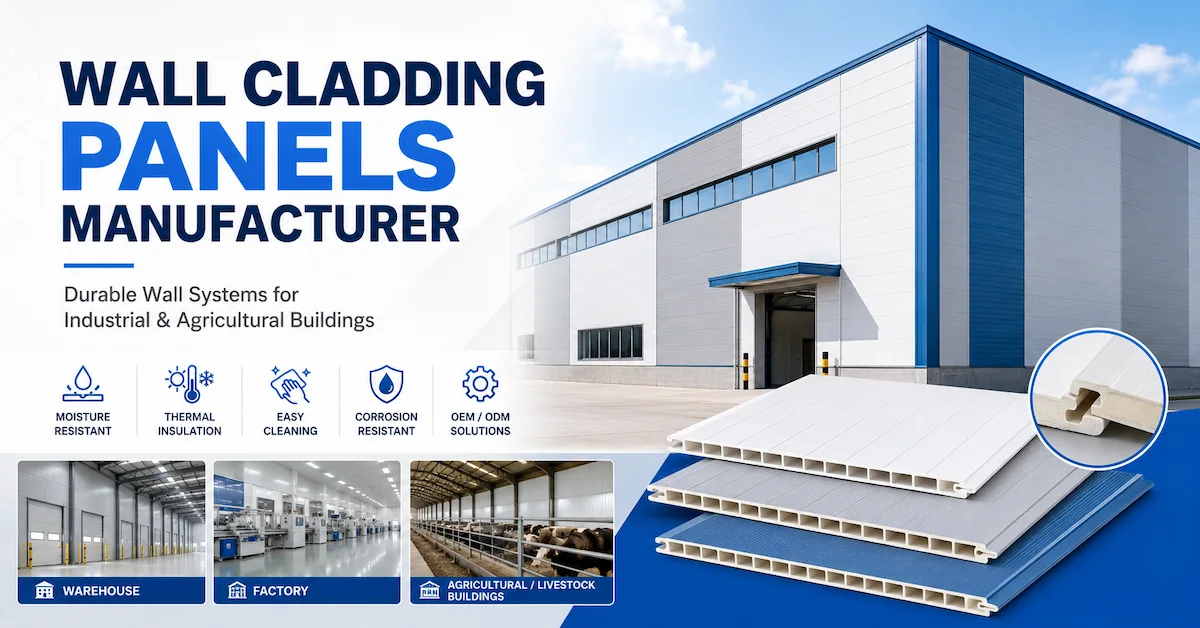
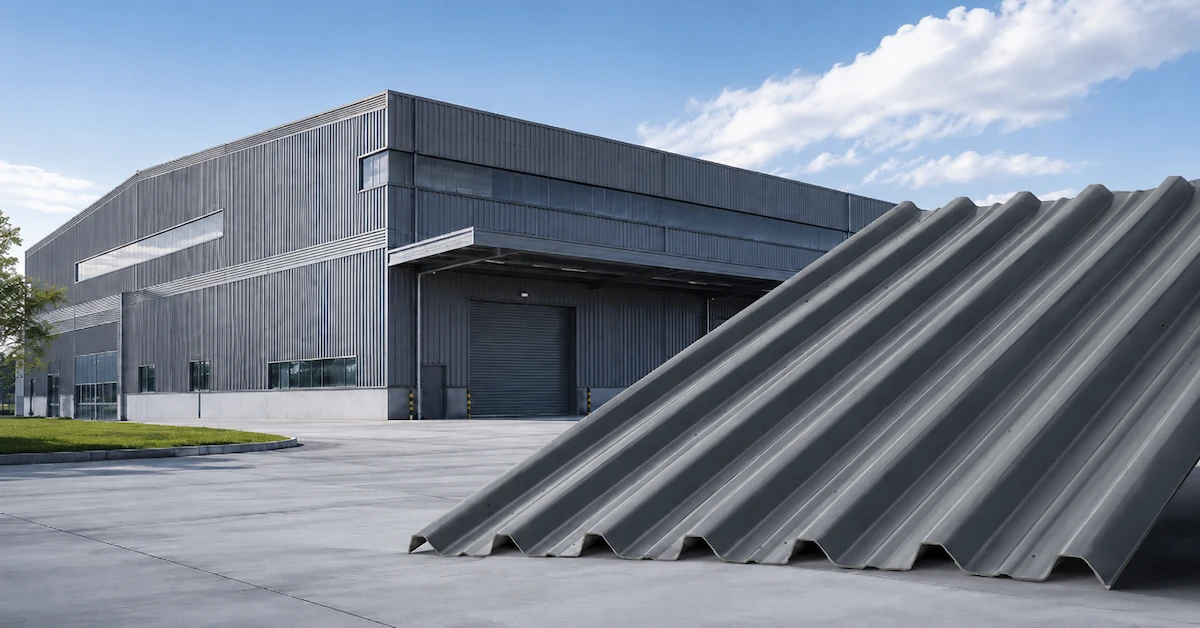
Choosing the right roofing panels for livestock farms is not only a construction decision. It affects animal comfort, building hygiene, ventilation efficiency, corrosion resistance, and long-term maintenance cost. Poultry houses, pig farms, cattle barns, and breeding facilities are very different from ordinary warehouses or residential buildings because they face moisture, ammonia, cleaning water, heat, and constant indoor air movement.
For farm owners, contractors, and livestock building suppliers, the roof must do more than stop rain. It should resist corrosion, reduce leakage risk, support temperature control, and stay stable in harsh farm environments. That is why many project buyers choose UPVC/APVC roofing panels, PVC ceiling panels, PU insulation panels, and matching accessories instead of relying only on ordinary metal sheets.
HONCH Technology supplies roofing, wall, ceiling, and accessory systems for farms, factories, warehouses, and agricultural buildings. Buyers can review product options through the Products page or learn more about the company through the About Us page.
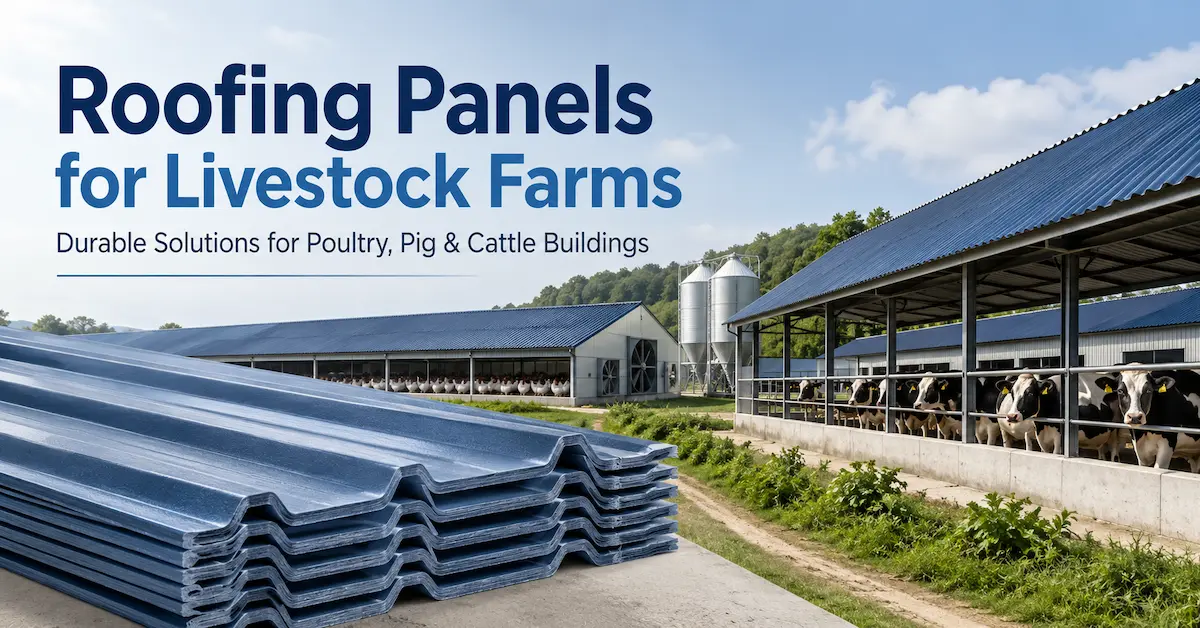
Why Livestock Farms Need Special Roofing Panels
Livestock buildings create a demanding environment for roof materials. In poultry houses and pig farms, the air often contains ammonia, moisture, and heat. During cleaning, water and disinfectants may increase humidity. In poorly ventilated areas, condensation can also form under the roof.
If the wrong roof material is used, buyers may face:
- Roof corrosion or rust
- Water leakage
- Fastener damage
- Mold or moisture problems
- Higher indoor temperature
- More frequent roof repair
- Shorter building service life
- Higher maintenance cost
Ordinary metal roofing can work in many general buildings, but in high-moisture farm environments, coating damage and fastener corrosion may become long-term risks. This is why roofing panels for livestock farms should be selected based on farm conditions, not only price.
Best Material Options for Livestock Farm Roofs
A professional farm roofing supplier should explain material differences clearly. For livestock buildings, buyers usually compare waterproofing, anti-corrosion performance, heat resistance, weight, and installation efficiency.
| Material Type | Main Feature | Best For |
|---|---|---|
| UPVC Roofing Sheet | Waterproof, lightweight, corrosion resistant | Poultry houses, pig farms, farm sheds |
| APVC Roofing Panel | Better performance for harsher environments | Large livestock farms, humid farms, industrial farm buildings |
| PVC Ceiling Panel | Moisture resistant and easy to clean | Interior farm ceilings |
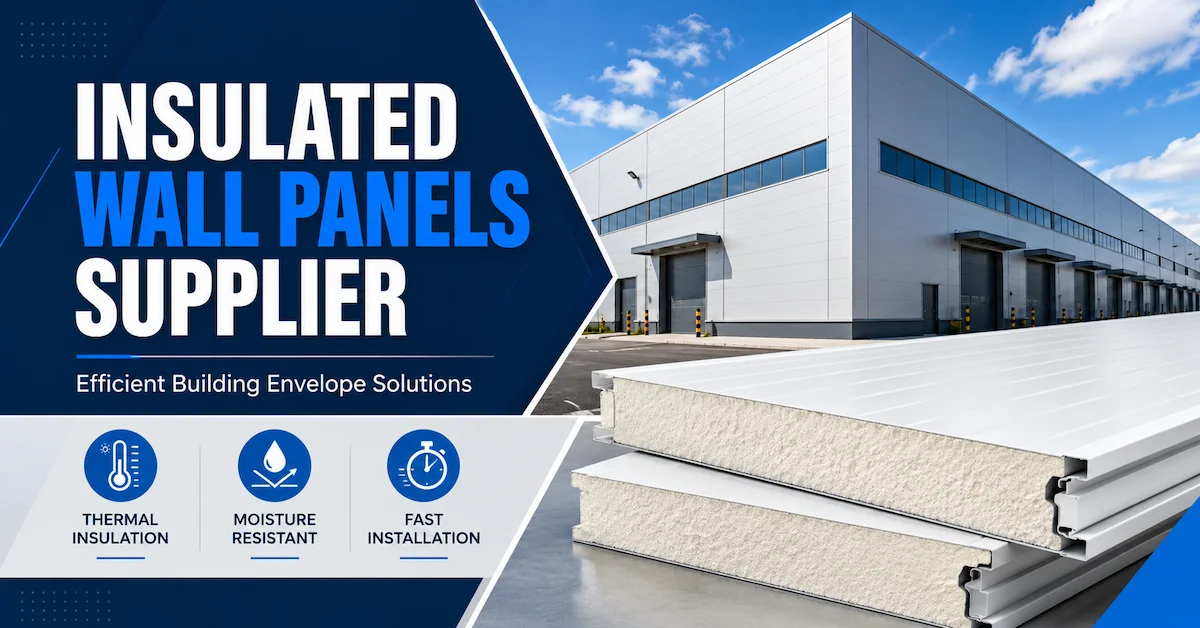
| PU Insulation Panel | Better temperature control | Insulated poultry and pig house systems |
| FRP Transparent Panel | Light transmission | Daylighting areas and agricultural structures |
| Metal Roofing Sheet | Strong but coating-dependent | Dry farm buildings with low corrosion exposure |
For many livestock projects, UPVC/APVC roofing sheets offer a practical balance of anti-corrosion, waterproofing, lightweight installation, and low maintenance.
Key Benefits of UPVC/APVC Roofing Panels for Farms
1. Anti-Corrosion Performance
Animal houses often contain ammonia and humid air. These conditions can accelerate corrosion on metal materials, especially around fasteners and overlaps. UPVC/APVC roofing panels are more suitable for corrosive farm environments because they do not rust like ordinary metal sheets.
2. Waterproof Roof Protection
Roof leakage can affect bedding, feed storage, electrical equipment, and animal comfort. Corrugated UPVC/APVC roof panels, when installed with proper overlap and matching ridge caps, help improve water drainage and reduce leakage risk.
3. Heat Resistance and Indoor Comfort
In hot climates, roof heat transfer can increase ventilation pressure inside poultry houses and pig farms. PVC-based roofing materials generally transfer less heat than many metal sheets. When combined with PU insulation panels or PVC ceiling panels, they can support better indoor temperature control.
4. Lightweight Installation
Large livestock buildings often require fast installation across wide roof areas. Lightweight roof panels can reduce handling difficulty and improve construction efficiency. This is especially useful for farm contractors working on multiple buildings or large breeding facilities.
5. Lower Maintenance Cost
A suitable roof system can reduce rust repair, leakage repair, coating maintenance, and early replacement. For livestock farm investors, lower maintenance means better long-term project value.
Application Scenarios
Poultry Houses
Poultry houses require stable ventilation, moisture control, and heat management. The roof should resist ammonia, humidity, and cleaning water. UPVC/APVC roof panels can be combined with PVC ceiling panels to create a more practical enclosure system.
Pig Farms
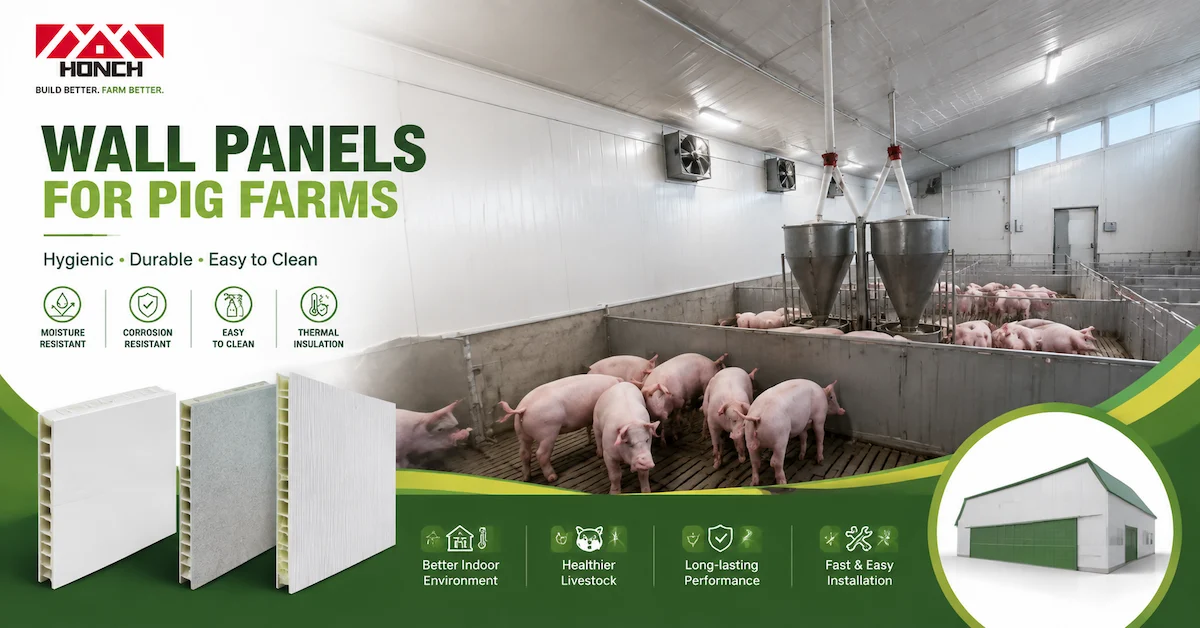
Pig farms often have stronger humidity and ammonia exposure. Roofing panels should be corrosion resistant, waterproof, and easy to maintain. For better results, buyers should consider roof sheets, ceiling panels, wall panels, and accessories together.
Cattle Barns
Cattle barns usually require large-span roof coverage and good ventilation. Roofing panels should be durable, lightweight, and stable under outdoor exposure. Custom panel length can help reduce overlap and improve installation efficiency.
Feed Storage and Farm Warehouses
Farm warehouses need waterproof and low-maintenance roofing to protect feed, tools, packaging, and equipment. UPVC/APVC roofing panels are suitable for humid agricultural environments where rust prevention matters.
Specifications Buyers Should Confirm
Before ordering roofing panels for livestock farms, buyers should prepare clear project information. This helps suppliers recommend suitable products and provide accurate quotations.
| Item | What to Confirm |
| Building Type | Poultry house, pig farm, cattle barn, feed storage, farm warehouse |
| Material | UPVC, APVC, PVC, PU insulation panel, or FRP |
| Thickness | Based on roof span, climate, and project requirement |
| Full Width | Total sheet width before overlap |
| Effective Width | Actual coverage width after installation |
| Length | Standard length or custom project length |
| Color | White, grey, blue, brick red, or custom color |
| Roof Profile | Corrugated, trapezoidal, or project-specific profile |
| Accessories | Ridge cap, flashing, side trim, corner deflector, fasteners |
| Environment | Ammonia, humidity, heat, rain, UV exposure |
| Packaging | Export bundle packing or private label packaging |
A reliable supplier should not simply offer a price. They should ask about building size, livestock type, roof slope, local climate, and ventilation conditions.
Roofing Accessories Matter for Farm Buildings
A roof system is not complete without accessories. Even good roof panels may leak if ridge, side, corner, and fastener details are poorly matched.
Important farm roofing accessories include:
- Hip ridge caps for roof peak sealing
- Side trims and flashing for edges
- Inside corner deflectors for wall-to-roof transitions
- Fasteners and sealing washers
- Matching panels for walls and ceilings
HONCH supplies roofing accessories such as hip ridge caps and inside corner deflectors to support complete roof system matching. Buyers can also review practical project applications through the Engineering Case page.
UPVC/APVC Roofing Panels vs Metal Roofing for Livestock Farms
| Comparison Item | UPVC/APVC Roofing Panels | Metal Roofing Sheets |
| Corrosion Resistance | Strong in ammonia and humid environments | Depends on coating quality |
| Rust Risk | No rust like metal sheets | Possible rust at coating damage or fasteners |
| Heat Transfer | Lower than many metal sheets | Higher thermal conductivity |
| Rain Noise | Better noise reduction in many applications | Often louder during rain |
| Maintenance | Lower rust-related maintenance | May need coating and fastener maintenance |
| Best For | Poultry houses, pig farms, cattle barns, humid farms | Dry farm buildings with lower corrosion exposure |
Metal roofing may still be suitable for some buildings. But for livestock farms with moisture, ammonia, and cleaning water, UPVC/APVC panels often provide better long-term value.
OEM/ODM Support for Farm Roofing Projects
Many livestock farm contractors, distributors, and importers need customized roofing products. HONCH supports OEM/ODM customization for project and market needs.
Customization options may include:
- Custom thickness
- Custom panel length
- Custom color
- Corrugated or trapezoidal profile
- Surface texture
- Packaging design
- Private label support
- Matching accessories
- Roof, ceiling, and wall product combinations
For example, a poultry farm project may need roof panels, PVC ceiling panels, wall panels, ridge caps, and corner accessories in one order. A distributor may need standard colors and branded packaging for local market sales.
Why Choose HONCH for Livestock Farm Roofing Panels?
HONCH Technology focuses on roofing, wall, ceiling, and accessory materials for demanding environments. For livestock farm buyers, HONCH offers:
- UPVC/APVC roofing sheets for humid and corrosive environments
- PVC ceiling panels for farm interiors
- PU insulation panels for better temperature control
- Roofing accessories for system matching
- OEM/ODM customization for project and distributor needs
- Export-oriented service for international buyers
- Product matching for poultry houses, pig farms, cattle barns, and agricultural buildings
Buyers can contact HONCH through the Contact Us page to discuss roof area, livestock type, panel thickness, color, accessories, and bulk purchasing requirements.
FAQ
1. What are the best roofing panels for livestock farms?
UPVC/APVC roofing panels are commonly used for livestock farms because they are waterproof, corrosion resistant, lightweight, and suitable for humid environments.
2. Are UPVC roofing panels suitable for poultry houses?
Yes. UPVC roofing panels are suitable for poultry houses because they resist moisture, ammonia, and rust-related problems better than many ordinary metal sheets.
3. Can roofing panels be used for pig farms?
Yes. APVC or UPVC roofing panels can be used for pig farms, especially where humidity, ammonia, and cleaning water create corrosion risks.
4. Do livestock farm roofs need insulation?
In hot or cold climates, insulation can improve indoor comfort. PU insulation panels or PVC ceiling panels can be used together with roof panels for better performance.
5. What accessories are needed for farm roofing?
Common accessories include ridge caps, flashing, side trims, inside corner deflectors, fasteners, and sealing washers.
6. Can HONCH customize livestock roofing panels?
Yes. HONCH supports OEM/ODM customization for thickness, length, color, profile, surface, packaging, and accessory matching.
7. How do I request a quotation?
Prepare building type, roof area, livestock type, local climate, required material, thickness, length, color, quantity, accessories, and destination port before contacting HONCH.
Conclusion
Choosing the right roofing panels for livestock farms helps improve waterproofing, corrosion resistance, heat control, building hygiene, and long-term maintenance performance. For poultry houses, pig farms, cattle barns, and agricultural buildings, roof materials should be selected according to ammonia exposure, humidity, temperature, roof slope, and installation requirements.
HONCH supplies UPVC/APVC roofing panels, PVC ceiling panels, PU insulation panels, wall panels, and roofing accessories for livestock farm projects. If you need farm roofing panels for a new building, renovation project, or OEM/ODM supply, contact HONCH to request specifications, samples, and a project quotation.