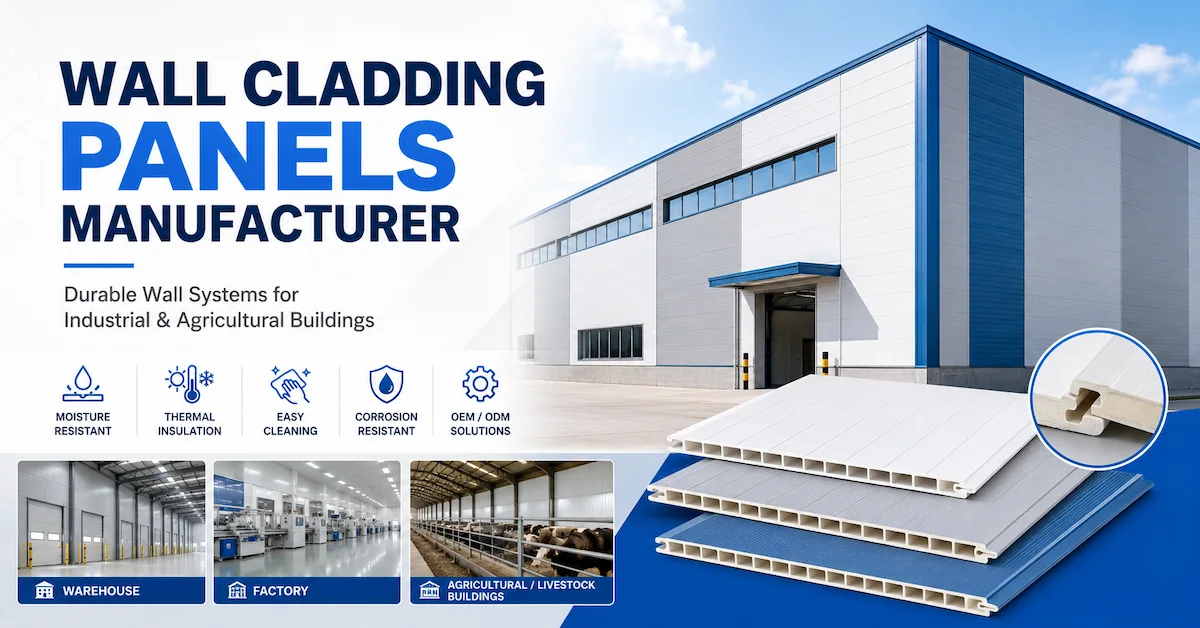
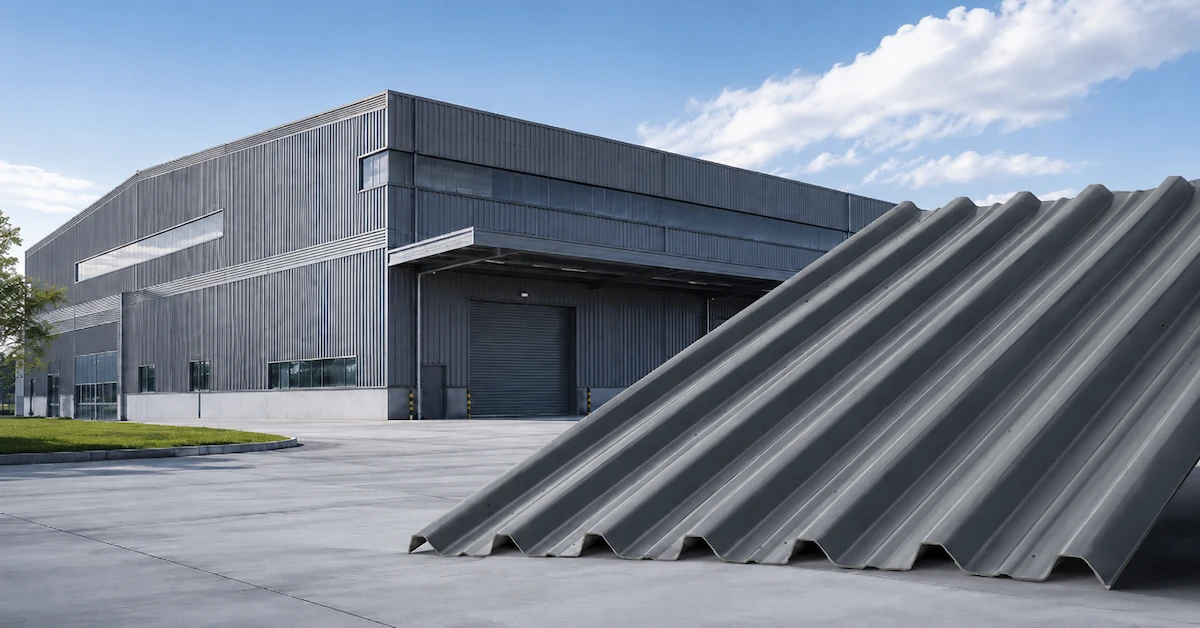
Choosing the right insulated roofing panels manufacturer is essential for industrial facilities, warehouses, and agricultural buildings where temperature control, energy efficiency, and long-term durability are critical. Unlike traditional roofing materials, insulated roofing systems are designed to reduce heat transfer while maintaining structural stability in demanding environments.
Learn more about HONCH company profile:
HONCH About Us
Explore product systems:
HONCH Roofing Products
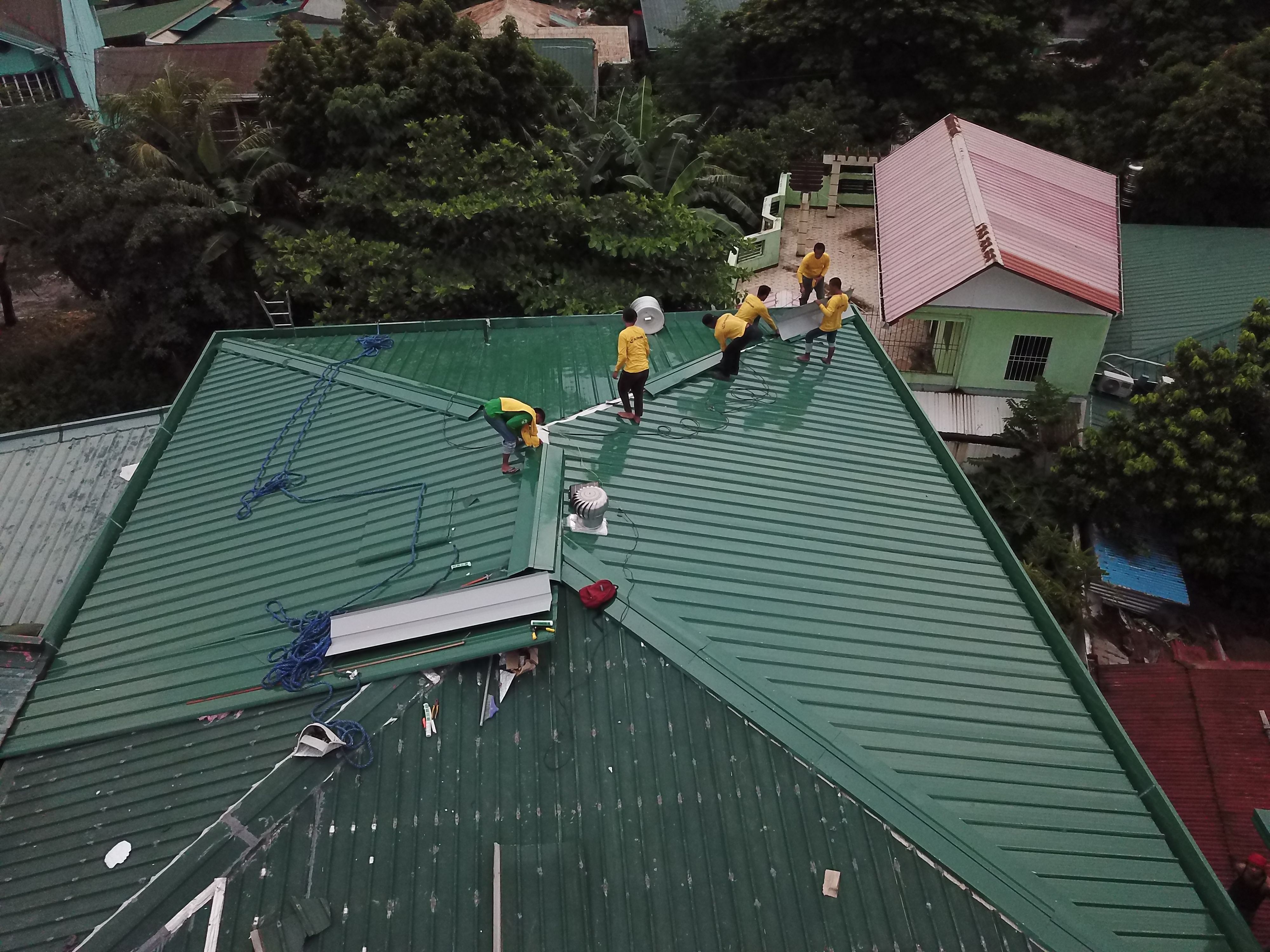
Why Industrial Buildings Lose Energy Through Roofing Systems
In many industrial and agricultural buildings, the roof is the largest surface exposed to solar radiation. Without proper insulation, heat easily penetrates the structure, increasing indoor temperature and forcing higher energy consumption for cooling systems.
Traditional metal roofing systems worsen this problem due to high thermal conductivity. As a result, factories, warehouses, and livestock facilities often experience unstable indoor climates and rising operational costs.
How Insulated Roofing Panels Work
A professional insulated roofing panels manufacturer develops multi-layer systems that combine structural strength with thermal insulation.
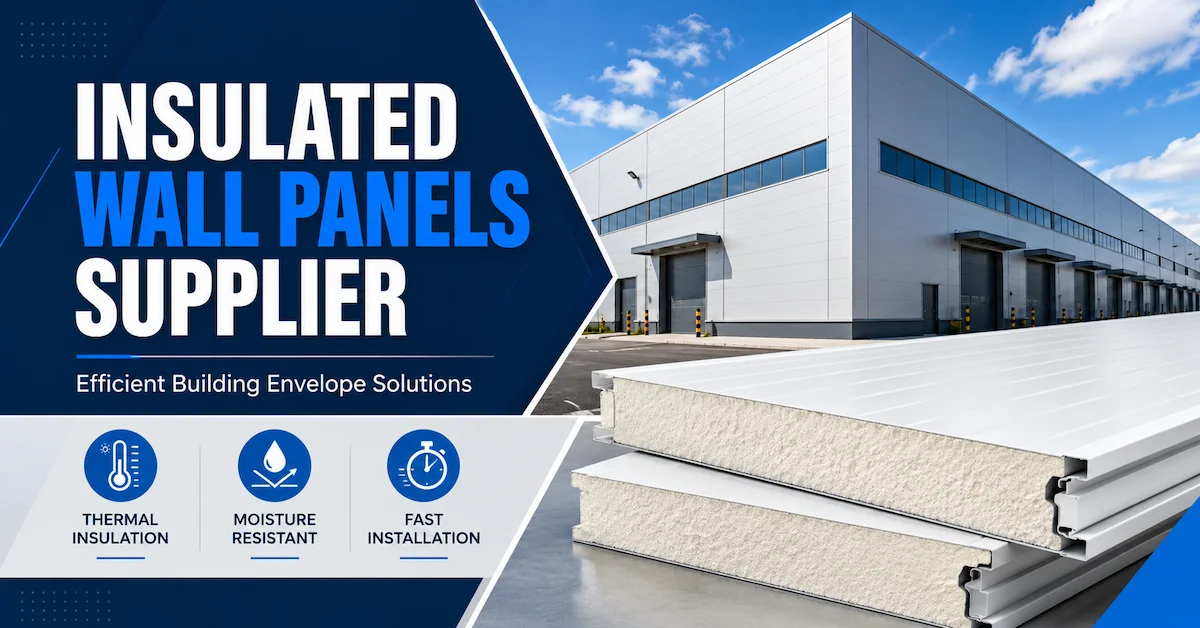
Most insulated roofing panels use a composite structure such as PVC + PU + PVC or metal + PU core systems. The outer layer protects against UV radiation and environmental exposure, while the inner core significantly reduces heat transfer.
This engineered structure creates a thermal barrier that stabilizes indoor temperatures and improves energy efficiency across the entire building lifecycle.
Insulated Roofing Panels Manufacturer vs Traditional Roofing Systems
When comparing a modern insulated roofing panels manufacturer solution with traditional roofing materials, the difference is primarily in thermal performance and lifecycle efficiency.
Metal roofing systems quickly absorb and transfer heat, causing overheating inside buildings. This increases dependency on air conditioning systems and leads to higher energy costs.
In contrast, insulated roofing panels reduce heat transfer and maintain stable internal environments. Over time, this results in lower energy consumption and reduced maintenance requirements, making them a more cost-effective long-term solution.
Engineering Advantages of Insulated Roofing Panels
Insulated roofing systems offer multiple engineering benefits for industrial applications. They provide strong thermal insulation, reducing heat gain in summer and heat loss in winter.
They also improve structural stability by reducing thermal expansion stress, which helps prevent leakage and deformation over time. In addition, many systems offer sound insulation, which is particularly valuable in industrial environments with high noise levels.
Another advantage is corrosion resistance, especially when combined with UPVC or coated surface materials, making them suitable for humid or chemically aggressive environments.
Application Scenarios for Insulated Roofing Systems
A reliable insulated roofing panels manufacturer serves a wide range of applications.
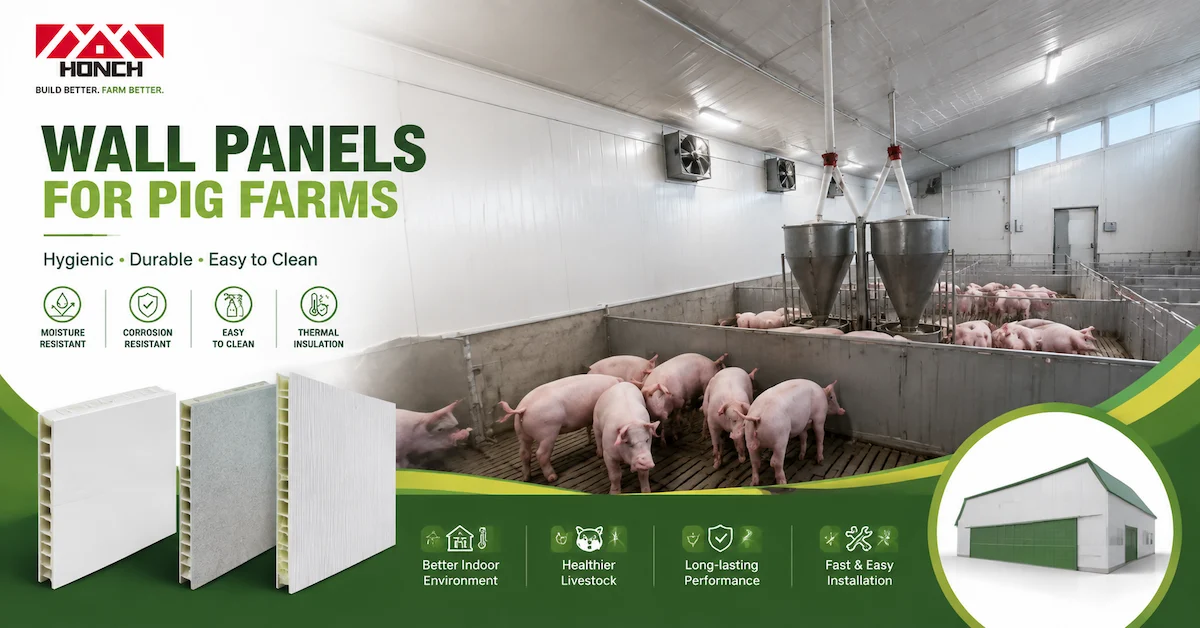
In industrial facilities such as warehouses and factories, insulated panels help maintain stable indoor temperatures and reduce cooling costs. In agricultural environments like poultry and pig farms, insulation is critical for controlling heat stress and improving animal comfort.
In logistics and storage centers, insulated roofing systems help protect temperature-sensitive goods and improve overall building efficiency.
View engineering application cases:
HONCH Engineering Cases
How to Choose the Right Insulated Roofing Panels Manufacturer
When selecting an insulated roofing panels manufacturer, buyers should evaluate material composition, insulation thickness, and structural design.
PU core density and panel thickness directly impact thermal performance. Customization capability is also important for large-scale industrial projects that require specific dimensions or installation systems.
Finally, proven engineering experience ensures the supplier can deliver stable performance in real industrial environments rather than only providing standard products.
FAQ
Q1: What is the lifespan of insulated roofing panels?
High-quality insulated roofing panels typically last longer than traditional roofing systems, especially in environments with high temperature variation.
Q2: Are insulated roofing panels suitable for warehouses?
Yes, they are widely used in warehouses to improve energy efficiency and stabilize indoor temperature.
Q3: Do insulated roofing panels reduce cooling costs?
Yes, they significantly reduce heat transfer, lowering air conditioning demand and energy consumption.
Q4: What materials are used in insulated roofing systems?
Common materials include PU foam cores combined with PVC or coated outer layers for insulation and protection.
Conclusion
Selecting the right insulated roofing panels manufacturer is a strategic decision that directly impacts building energy efficiency, operational cost, and long-term durability. Insulated roofing systems provide superior thermal performance, corrosion resistance, and structural stability compared to traditional materials.
For project consultation or technical support, contact HONCH here:
Contact HONCH Engineering Team
Modern insulated roofing is not just a material upgrade—it is a complete energy-efficient building solution designed for long-term industrial performance.