How Should Buyers Select Durable Wall Cladding Materials for Industrial Buildings?
Selecting durable wall cladding materials for industrial buildings requires evaluating more than surface appearance or purchase price. Industrial walls are exposed to different conditions depending on the building function, location, production process, climate, cleaning methods, and maintenance plan. A factory workshop, warehouse, agricultural building, processing area, and utility room may all require different wall protection strategies.
The right wall cladding system should balance several factors, including environmental resistance, insulation requirements, installation efficiency, maintenance expectations, and long-term project value. HONCH provides industrial building materials, including wall panels, roofing materials, and insulation solutions designed for different industrial applications.
For procurement teams, the first step is not choosing a material name but defining what the wall needs to achieve: protection from external weather, internal separation, thermal control, moisture management, easier cleaning, or improved building durability.
Understand the Purpose of Wall Cladding Before Choosing Materials
Wall cladding serves different functions depending on the building environment. Some projects mainly require an exterior protective layer, while others need an insulated enclosure system that helps separate indoor and outdoor conditions.
Before selecting durable wall cladding materials, buyers should define:
- Building application
- Installation location
- Indoor and outdoor exposure conditions
- Temperature requirements
- Humidity level
- Cleaning frequency
- Chemical or environmental exposure
- Required maintenance cycle
A material that performs well in a dry warehouse may not be the best choice for a humid production environment or a building exposed to aggressive cleaning conditions.
Common Industrial Wall Cladding Applications
| Application | Main Evaluation Factors |
|---|---|
| Manufacturing factories | Durability, thermal requirements, installation efficiency |
| Warehouses | Weather protection, maintenance, enclosure performance |
| Agricultural buildings | Moisture resistance and environmental exposure |
| Processing facilities | Cleaning requirements and surface protection |
| Insulated rooms | Thermal performance and joint continuity |
The best wall cladding solution depends on the actual operating conditions rather than only the industry category.
What Makes Wall Cladding Materials Durable?
Durability is usually the result of multiple design factors working together. A wall panel is not durable only because of one material characteristic. Buyers should evaluate the complete construction, including surface layer, core structure, joints, accessories, and installation method.
Key Factors That Influence Wall Cladding Durability
| Factor | Why It Matters |
|---|---|
| Surface material | Influences appearance, protection and environmental resistance |
| Core structure | Affects insulation and panel stability |
| Joint design | Influences connection quality and enclosure continuity |
| Edge treatment | Helps protect vulnerable areas |
| Installation method | Determines long-term system performance |
| Accessories | Supports complete wall protection |
A professional supplier should explain how each component contributes to the final wall system instead of only highlighting one material feature.
Avoid Selecting Materials Based Only on Marketing Terms
Terms such as “durable,” “anti-corrosion,” or “high performance” provide general direction but do not define exact project suitability. Buyers should request product-specific information related to:
- Material structure
- Thickness
- Application conditions
- Installation requirements
- Available technical documents
This approach helps avoid selecting a product based on claims that are not connected to the actual building environment.
Evaluate Different Types of Industrial Wall Cladding Materials
Industrial wall cladding materials can be divided into different categories depending on their construction and purpose. The correct choice depends on whether the project requires insulation, external protection, internal separation, or a combination of functions.
PVC+PU+PVC Insulated Wall Panels
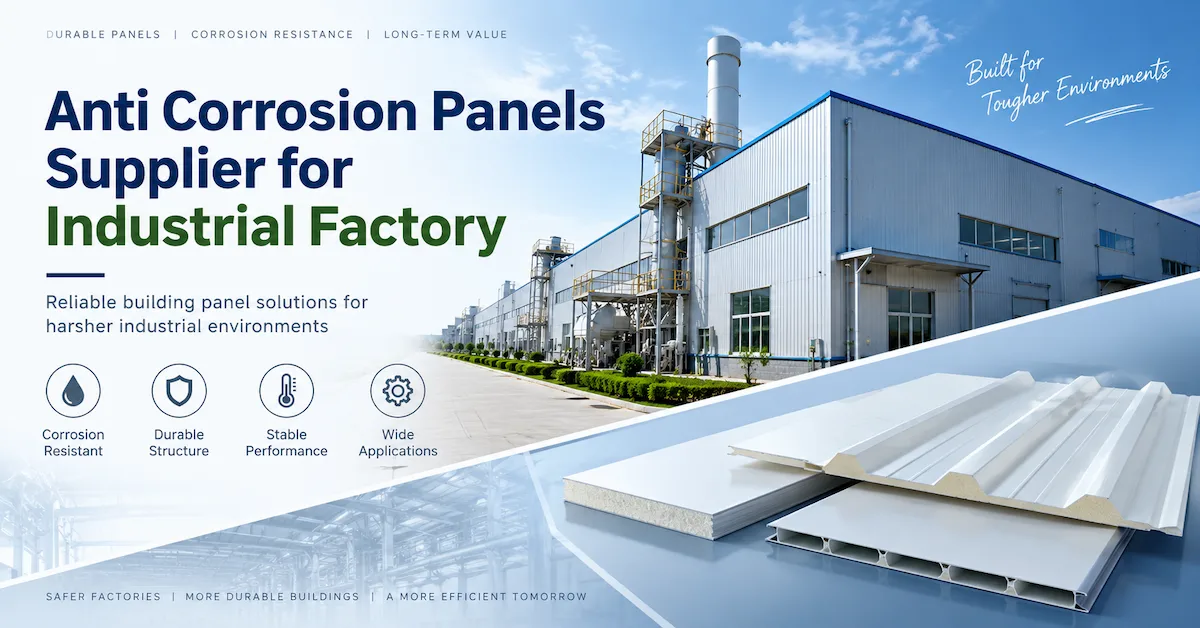
HONCH's PU insulation wall panel uses a PVC+PU+PVC composite structure. The product combines PVC surface layers with a PU insulation core, creating a panel system where different layers provide different functions.
For industrial applications, buyers may evaluate this type of wall panel when the project requires:
- Insulated wall construction
- Internal or external enclosure evaluation
- Surface protection requirements
- Customized dimensions or appearance
Before ordering, confirm the actual thickness, dimensions, joint structure, installation position, and available technical information for the selected configuration.
Industrial Roofing and Building Envelope Materials
Some industrial projects require a complete building envelope solution rather than wall panels alone. HONCH provides industrial roofing materials that can be evaluated together with wall systems.
Roofing and wall products should be selected according to their specific functions. A roof material designed for external weather exposure does not automatically replace an insulated wall panel, and a wall panel does not automatically become a roofing solution.
How Should Buyers Compare Wall Panel Specifications?
A reliable supplier should provide detailed specifications before production. This allows buyers to compare products accurately and reduce project risks.
| Specification | Buyer Should Confirm | Supplier Should Provide |
|---|---|---|
| Application | Wall location and building function | Recommended product use |
| Structure | Required insulation and surface function | Actual panel construction |
| Thickness | Project requirement | Available thickness options |
| Dimensions | Wall area and layout | Width, length and tolerance |
| Joint system | Installation expectations | Connection details |
| Environmental conditions | Moisture, temperature and exposure | Applicable product information |
| Openings | Doors, windows and equipment interfaces | Edge and connection solutions |
| Accessories | Required trims and supporting parts | Included supply scope |
| Documentation | Project requirements | Available technical information |
A complete specification reduces misunderstandings between the buyer, supplier, and installation team.
Why Joint Design Is Important for Durable Wall Systems
The durability of wall cladding depends not only on the panel surface but also on how panels connect with each other and with surrounding building components.
Industrial walls often include:
- Doors
- Windows
- Ventilation openings
- Pipe penetrations
- Electrical routes
- Corner transitions
- Roof-wall connections
These areas should be considered during design because they can influence installation quality and maintenance requirements.
Review the Complete Wall Assembly
When evaluating wall cladding samples, buyers should check:
- Surface quality
- Panel edges
- Connection method
- Joint alignment
- Dimensional consistency
- Compatibility with accessories
A flat panel sample shows only part of the final system. A connected sample provides more useful information about installation performance.
How Do Environmental Conditions Affect Wall Cladding Selection?
Industrial environments vary significantly. A building located in a humid region, coastal area, chemical-related environment, or agricultural facility may face different challenges compared with a standard dry warehouse.
Moisture and Humidity
High humidity can influence building maintenance requirements. Buyers should evaluate:
- Water exposure
- Condensation conditions
- Cleaning methods
- Drainage details
- Joint protection
Chemical or Industrial Exposure
If the building is exposed to chemicals, provide:
- Chemical name
- Concentration
- Temperature
- Contact method
- Exposure frequency
A general corrosion-resistant description should not automatically be interpreted as compatibility with every chemical environment.
The Complete System Should Be Evaluated
Wall panels, joints, sealants, fasteners, trims, and other accessories may experience different conditions. Long-term durability depends on the entire installed system, not only the central panel surface.
How Should Durable Wall Cladding Materials Be Compared for Cost?
Industrial buyers often compare wall cladding materials based on initial price, but the lowest purchase price may not represent the lowest project cost.
Compare Equivalent Product Scope
Before comparing suppliers, confirm that quotations include the same:
- Panel structure
- Thickness
- Dimensions
- Surface requirements
- Accessories
- Packaging
- Delivery terms
Different specifications can make price comparisons misleading.
Consider Long-Term Maintenance Requirements
A durable wall system should also be evaluated based on:
- Cleaning requirements
- Replacement difficulty
- Maintenance frequency
- Expansion possibilities
- Future availability
A slightly different initial price may create different long-term project outcomes depending on the building environment.
How Should Buyers Evaluate Supplier Capability?
Choosing durable wall cladding materials also means evaluating whether the supplier can provide consistent production and technical support.
A capable supplier should help buyers confirm:
- Product selection
- Technical specifications
- Custom requirements
- Sample approval
- Production details
- Packaging
- Delivery arrangement
HONCH supports industrial building material projects through its product range, including wall, ceiling, and roofing solutions.
Why Specification Control Matters
For repeated projects or distributor purchasing, maintaining a controlled product specification helps reduce differences between orders.
Important information may include:
- Approved product version
- Dimensions
- Color
- Material structure
- Packaging requirements
- Installation references
This creates a more reliable basis for future purchasing.
OEM and Customized Wall Cladding Requirements
Industrial projects may require customized wall panels because of building dimensions, design preferences, or regional market requirements.
HONCH's insulation wall panel information includes customization options related to selected product requirements.
Common Customization Areas
Customers may request:
- Panel dimensions
- Color selection
- Packaging requirements
- Project-based quantities
Confirm Custom Details Before Production
Before production begins, buyers should confirm:
- Final drawings
- Approved specifications
- Sample reference
- Delivery requirements
- Packaging details
Clear documentation helps ensure that customized products match the approved project requirements.
What Information Should Buyers Send to a Wall Cladding Supplier?
A complete inquiry helps suppliers recommend suitable durable wall cladding materials.
Prepare:
- Building drawings
- Wall dimensions
- Application environment
- Indoor and outdoor conditions
- Temperature requirements
- Humidity conditions
- Chemical exposure if applicable
- Required insulation level
- Quantity
- Delivery location
Buyers can review HONCH's industrial product solutions, explore available materials, and submit project details through the HONCH contact page.
Frequently Asked Questions
What are durable wall cladding materials used for?
Durable wall cladding materials are used to protect industrial buildings, improve enclosure performance, support insulation requirements, and provide suitable surfaces for different operating environments. The correct material depends on the building function and exposure conditions.
How do I choose durable wall cladding materials for a factory?
Evaluate the factory environment, wall location, moisture conditions, temperature requirements, cleaning process, insulation needs, and installation requirements before selecting a product.
Are PVC+PU+PVC wall panels suitable for industrial buildings?
HONCH provides PVC+PU+PVC insulation wall panels for industrial applications. Specific suitability depends on the project environment, installation position, required performance, and technical confirmation.
What affects the durability of industrial wall panels?
Durability depends on surface material, core structure, joints, accessories, installation quality, and environmental exposure.
Can wall cladding materials be customized?
Selected HONCH wall panel products support customization options. Buyers should provide dimensions, colors, quantities, and project requirements for confirmation.
Do wall cladding materials need insulation?
Not every building requires insulated wall systems. Insulation requirements depend on indoor conditions, building function, climate, and project objectives.
How should I compare different wall panel suppliers?
Compare product structure, specifications, environmental suitability, accessories, documentation, customization ability, and total supply scope rather than only price.
Can industrial wall panels resist all chemicals?
No. Chemical compatibility depends on the specific substance, concentration, temperature, and exposure method. Buyers should provide actual environmental information for evaluation.
What information should I prepare before requesting a quotation?
Prepare building drawings, wall dimensions, application conditions, insulation requirements, quantity, delivery location, and any customization requirements.
How can I request durable wall cladding materials from HONCH?
Submit your project requirements, drawings, specifications, and application conditions through the HONCH contact page for further discussion.
Conclusion
Selecting durable wall cladding materials requires buyers to evaluate the complete wall system rather than focusing only on appearance or initial cost. Industrial projects should consider building function, environmental exposure, panel construction, insulation requirements, joints, accessories, customization, and long-term maintenance needs before making a decision. HONCH provides industrial wall panel solutions including PVC+PU+PVC insulation panels and related building materials that can be evaluated according to different factory, warehouse, agricultural, and industrial applications. For new construction, renovation, or customized wall projects, contact HONCH with your drawings and project requirements to discuss a suitable wall cladding solution.