HONCH supports OEM/ODM and wholesale requirements for its insulation wall panels, including customized specifications, thickness, color, length, branding, packaging, bulk purchasing, and long-term engineering-project supply.
For distributors, the evaluation should go beyond customization availability.
A useful supplier should also be able to explain where each wall system should—and should not—be used.
This helps distributors avoid selling the same panel specification into livestock, warehouse, coastal, chemical, and cold-storage applications without considering different environmental requirements.
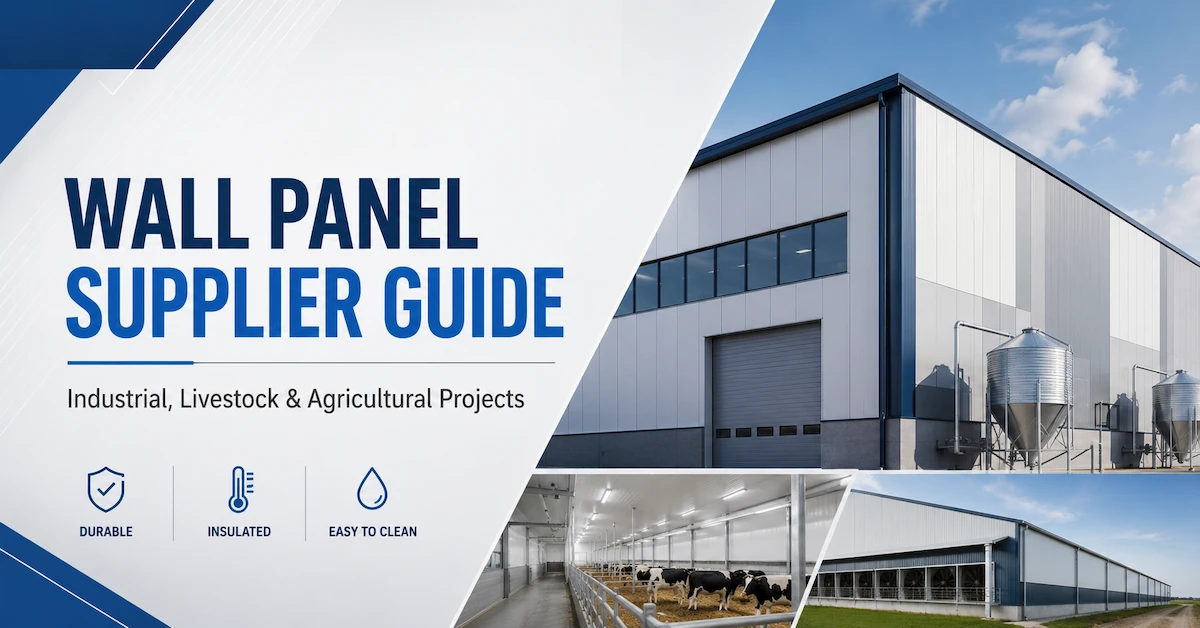
How to Evaluate a Building Envelope Wall Systems Supplier
For B2B procurement, supplier capability is part of the system specification.
Buyers should confirm whether the manufacturer understands the intended environment, can explain panel structure and material differences, can coordinate walls with roofing and accessories, can provide relevant technical documentation, supports project-specific customization, has a practical quality-control process, provides export packaging, and can support installation or engineering questions.
Zhejiang HONCH Technology was founded in 2008 and focuses on anti-corrosion and insulation solutions for farms, factories, light buildings, roofs, walls, and ceilings. The company states that it has ISO9001 and EU CE certifications and self-operated import/export rights.
Those capabilities are particularly relevant to contractors, building-material distributors, livestock project companies, and industrial project buyers looking for more than a standalone panel.
FAQ About Building Envelope Wall Systems
1. What are building envelope wall systems?
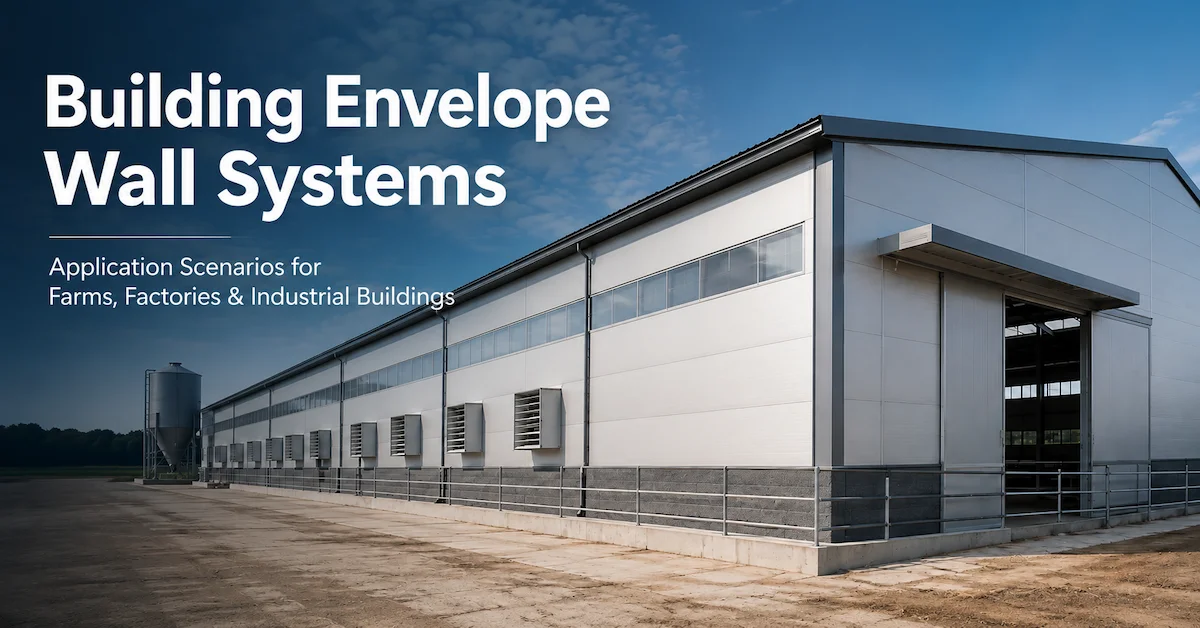
Building envelope wall systems are the wall assemblies forming part of the boundary between indoor and outdoor environments. Depending on the project, they can provide weather protection, thermal insulation, moisture control, corrosion resistance, structural support, and interior protection.
2. What is the difference between wall cladding and a building envelope wall system?
Wall cladding usually refers primarily to the exterior or interior covering material. A building envelope wall system considers the complete assembly, including panels, insulation, joints, sealing, corners, connections, structural supports, and interfaces with roofs and openings.
3. Are PU insulation wall panels suitable for industrial buildings?
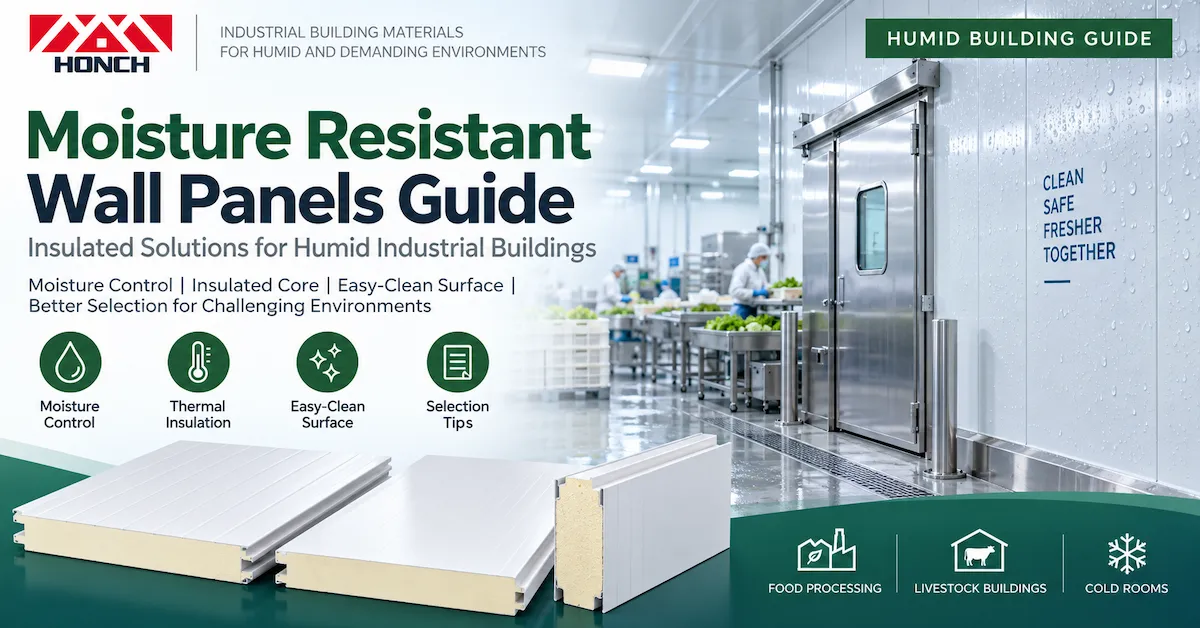
Yes, they can be suitable when thermal insulation and corrosion resistance are important. HONCH's PVC+PU+PVC wall panel is designed for industrial buildings, livestock facilities, agricultural structures, cold rooms, and selected corrosive environments.
4. Are PVC wall panels suitable for livestock farms?
PVC-based wall panels can be useful in livestock facilities because moisture and corrosion resistance are important in these environments. Final material and panel construction should be selected according to insulation requirements, cleaning methods, building design, and farm conditions.
5. What wall system is suitable for a pig farm?
Pig-farm walls generally require particular attention to humidity, ammonia exposure, wash-down conditions, cleanability, and thermal management. PVC or PVC+PU composite systems can be considered where these requirements align with the project specification.
6. Can building envelope wall systems reduce energy consumption?
Insulated walls can reduce unwanted heat transfer through the building enclosure. Actual energy performance depends on the complete building design, insulation level, joint continuity, roof system, openings, HVAC operation, climate, and construction quality rather than the wall panel alone.
7. Is a thicker insulated wall panel always better?
No. Panel thickness should be selected according to climate, indoor temperature requirements, thermal targets, structural design, application, and project budget. Buyers should request relevant technical data rather than selecting thickness only by assumption.
8. What causes failures in insulated wall systems?
Common risks include inappropriate material selection, poorly sealed joints, incorrect corner details, water penetration, discontinuous insulation, unsuitable fasteners, incompatible materials, inadequate structural support, and improper installation.
9. Can HONCH customize building envelope wall panels?
HONCH states that its PU insulation wall panels can be customized in thickness, color, and length, with OEM/ODM, branding, packaging, bulk-order, and engineering-project supply support.
10. What information should I send when requesting a quotation?
Provide the building type, project location, wall area, environmental exposure, required panel structure, insulation requirements, dimensions, color, quantity, accessories, certification requirements, and estimated delivery schedule. For project evaluation, you can contact HONCH with your wall, roof, ceiling, or complete building-envelope requirements.
Conclusion
Selecting building envelope wall systems is not simply a decision between PVC, insulated panels, or metal cladding. The correct solution comes from understanding how the wall must manage heat, moisture, corrosion, weather, joints, maintenance, and interaction with the rest of the building envelope.
For livestock farms, chemical facilities, industrial workshops, warehouses, agricultural structures, cold rooms, and other demanding projects, buyers should define the operating environment before comparing panel prices or specifications.
HONCH provides wall, roof, ceiling, insulation, and accessory solutions for industrial, agricultural, livestock, and light-building applications. Its PVC+PU+PVC insulation wall panels are designed to combine thermal insulation, moisture protection, corrosion resistance, and modular installation within a coordinated wall system.
Explore the HONCH product range, review completed engineering applications, or contact HONCH to discuss panel structure, project environment, customization, specifications, and OEM/ODM requirements for your next building-envelope project.