How an Insulated Roofing Panels Manufacturer Shapes Real Thermal Performance
In factories, warehouses, cold storage buildings, and livestock facilities, roofs are the primary source of heat gain and loss. Under these conditions, selecting an Insulated Roofing Panels Manufacturer is not about published R-values alone—it determines whether indoor temperatures remain stable, energy consumption stays predictable, and condensation problems are controlled over the building’s service life.
Operating Conditions Where Insulated Roofing Is Tested
Insulated roofing panels are typically specified where temperature control directly affects operating cost or production stability.
-
Industrial plants exposed to high solar radiation
-
Cold storage and food facilities requiring strict thermal separation
-
Livestock buildings where heat stress impacts animal health
-
Warehouses seeking lower HVAC demand
A qualified Insulated Roofing Panels Manufacturer designs panels to perform under these real operating conditions, not just laboratory tests.
Insulated Roofing vs Single-Layer Roofing: Practical Differences by Scenario
The advantage of insulated roofing becomes clear only after extended operation.
Single-layer roofing systems
Single-layer metal or plastic roofs rely on ventilation or internal insulation added later.
-
Rapid heat transfer through the roof
-
Higher internal temperature fluctuation
-
Increased condensation risk
Insulated roofing panel systems
Integrated insulated panels combine structural skins with thermal cores.
-
Slower heat transfer and more stable indoor climate
-
Reduced condensation at the roof surface
-
Lower HVAC load throughout the year
An experienced Insulated Roofing Panels Manufacturer engineers these systems to work as a complete thermal barrier rather than a patchwork solution.
Core Materials and Their Real-World Impact
Insulation performance depends on core material behavior over time.
PU / PIR insulation cores
PU and PIR cores provide high thermal resistance with relatively thin panels. In controlled environments, these systems often reduce roof-related heat gain by 40–55% compared with non-insulated roofs.
EPS insulation cores
EPS cores offer cost efficiency but lower thermal performance. They are suitable for mild climates or buildings with limited temperature control requirements.
Mineral wool cores
Mineral wool offers fire resistance and acoustic benefits, though higher density increases panel weight and installation load.
A capable Insulated Roofing Panels Manufacturer guides buyers to the correct core based on climate, fire requirements, and operating cost targets.
Structural Design: Insulation Alone Is Not Enough
Thermal performance fails if structural design is weak.
Key design factors include:
-
Panel joint integrity to prevent thermal bridging
-
Profile geometry that supports load without compressing insulation
-
Sealing systems that limit air leakage and moisture ingress
Manufacturers supplying complete roofing systems reduce the risk of insulation loss at joints and fasteners.
Performance Differences Observed in Real Projects
| Performance Indicator | Non-Insulated Roofing | Insulated Roofing Systems |
|---|---|---|
| Roof-related heat gain | High | Reduced by 40–55% |
| Indoor temperature fluctuation | Large | Controlled |
| Condensation risk | Medium to high | Low |
| Annual energy cost ratio* | 100% baseline | ~55–65% |
| Expected service life | 8–12 years | 15–25+ years |
*Energy cost ratio based on comparative industrial building feedback where non-insulated roofing is treated as baseline.
These differences explain why insulated roofing panels are increasingly specified in energy-sensitive projects.
From Manufacturing to Installation: How Insulated Roofs Are Applied
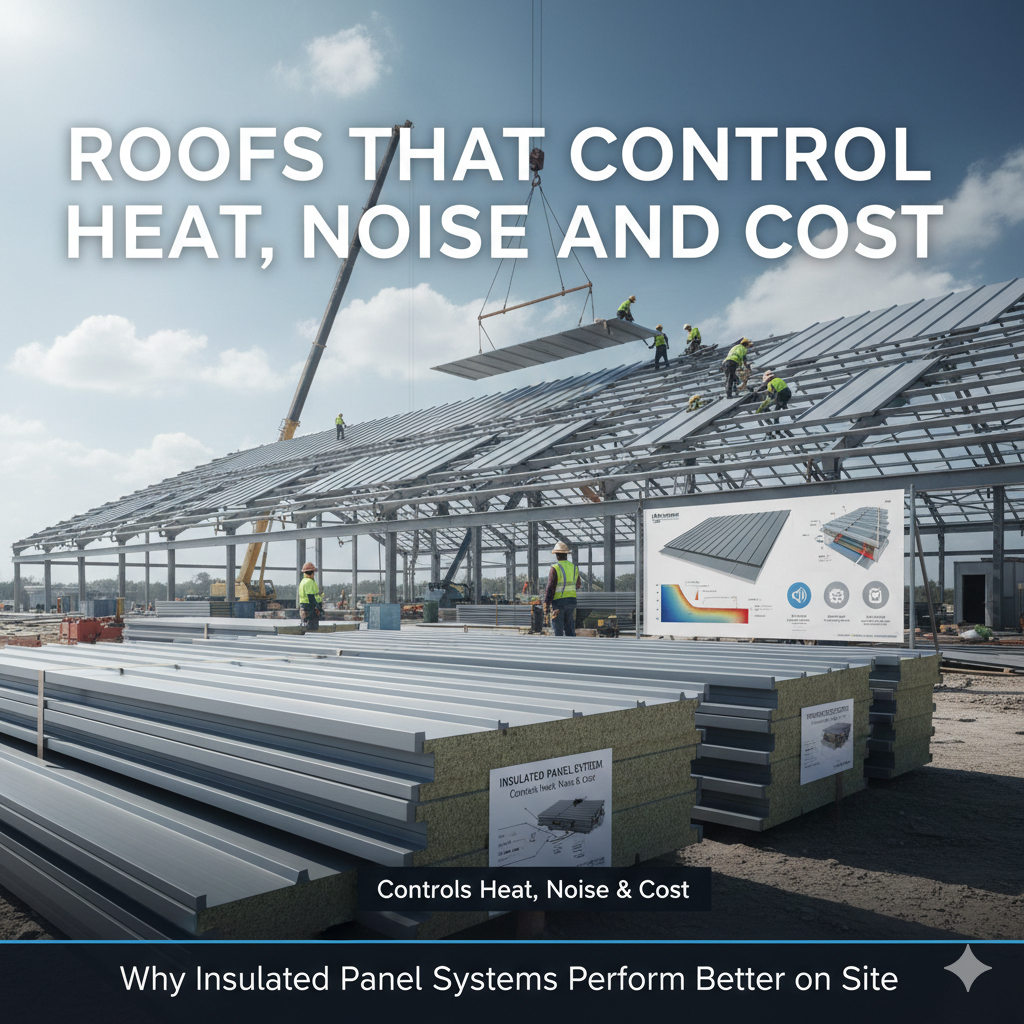
In projects supplied by HONCH, insulated roofing panels are typically installed with:
-
Matched ridge caps and flashing to maintain thermal continuity
-
Controlled joint design to reduce air leakage
-
Panel thickness selected according to climate zone and building use
This system-level approach ensures insulation performance is preserved after installation.
Procurement Reality: What Buyers Must Evaluate Early
Thermal performance must align with supply capability.
Based on HONCH’s project-oriented supply practice:
-
MOQ: Generally aligned with project size rather than fixed container quantities
-
Lead time: Standard insulated panel specifications follow stable production schedules; custom cores or thicknesses require early coordination
-
Customization: Core type, thickness, panel length, and surface finish adjusted based on climate and energy targets
An Insulated Roofing Panels Manufacturer with controlled production supports these needs without disrupting construction timelines.
Common Buyer Questions
Q: When should insulated roofing panels be specified instead of single-layer roofing?
A: When indoor temperature stability or energy cost matters. Insulated roofing systems typically reduce roof-related energy loss by 40–55% over the building lifecycle.
Q: Do insulated panels increase structural load?
A: Slightly, depending on core type. Proper profile design and structural planning offset this impact.
Q: When should insulation customization be discussed?
A: During design or early procurement. Early alignment allows the Insulated Roofing Panels Manufacturer to integrate material selection and production planning efficiently.
Final Guidance for Project Owners and Contractors
Choosing an Insulated Roofing Panels Manufacturer is a long-term energy and comfort decision. In industrial and agricultural buildings, insulation performance, joint integrity, and system compatibility determine whether roofs deliver consistent thermal control or ongoing operational cost.
HONCH supplies insulated roofing panels as integrated systems designed for energy-sensitive environments. With controlled manufacturing, compatible accessories, and project-based customization, HONCH helps projects reduce energy consumption and achieve predictable thermal performance.
To explore insulated roofing solutions and application experience, visit the HONCH homepage:
https://www.honchroof.com/
If you are evaluating insulated roofing for a specific project and need guidance on core selection, MOQ, lead time, or customization feasibility, contact the technical team via Contact Us:
https://www.honchroof.com/contact-us