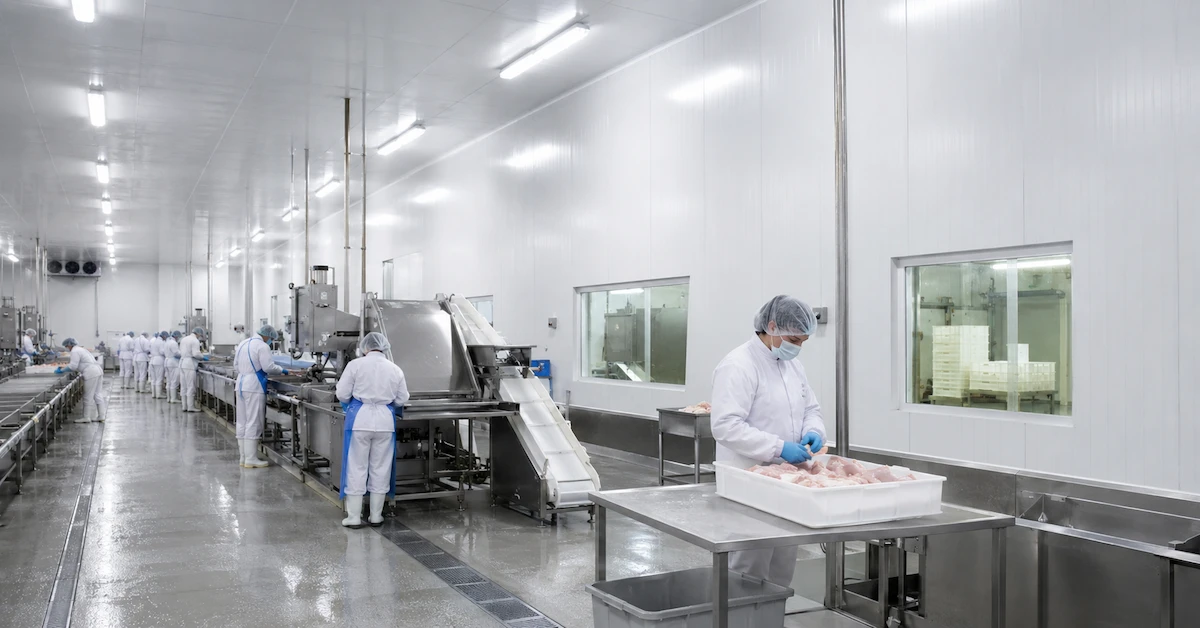
Many international buyers are not purchasing wall panels for only one project.
Common customers include:
Building-material distributors
Construction contractors
Engineering companies
Private-label brands
Regional suppliers
These customers often require customization such as:
Custom panel dimensions
Special colors
Product branding
Packaging design
Private label solutions
Project-specific specifications
A capable wall panels supplier for food processing plant projects should support OEM/ODM cooperation.
HONCH provides customized solutions for different project requirements, helping distributors and contractors develop suitable wall panel systems for specific markets.
Bulk Purchasing and Export Supply Capability
International buyers should evaluate whether the supplier can support long-term supply.
Important factors include:
Production capacity
Minimum order quantity
Container loading efficiency
Export packaging
Shipping coordination
Delivery planning
For large food processing projects, delays in wall panel supply can affect:
Construction schedules
Equipment installation
Factory commissioning
Production startup
A professional supplier should understand project timelines and coordinate production accordingly.
How Much Do Food Processing Plant Wall Panels Cost?
The cost of wall panels depends on multiple factors.
The main price factors include:
Factor
Impact on Cost
Panel structure
Insulated panels usually cost more than single-layer panels
Core material
Different insulation materials affect pricing
Thickness
Thicker panels generally require more material
Surface material
Corrosion-resistant surfaces may increase cost
Quantity
Larger orders usually improve purchasing efficiency
Customization
Special colors, sizes, and packaging affect cost
Accessories
Complete systems include additional components
Shipping distance
International logistics influence final cost
However, the lowest purchase price does not always provide the lowest project cost.
For food processing plants, buyers should consider:
Installation efficiency
Cleaning requirements
Maintenance frequency
Energy consumption
Replacement risk
Long-term durability
A slightly higher-quality wall system may reduce operational costs over the building lifecycle.
Common Mistakes When Buying Food Processing Wall Panels
Choosing Panels Only by Price
The cheapest product may not provide suitable performance for food production environments.
A low-cost panel may create problems such as:
Poor moisture resistance
Difficult cleaning
Higher maintenance
Reduced insulation performance
Ignoring Environmental Conditions
A seafood factory, cold storage facility, and dry warehouse should not use the same wall specification automatically.
Always consider:
Humidity
Temperature
Cleaning frequency
Chemical exposure
Production requirements
Focusing Only on the Panel and Ignoring Accessories
Wall performance depends on the complete system.
Important components include:
Corner profiles
Joint connections
Sealing solutions
Ceiling connections
Floor transitions
Incorrect detailing can reduce the performance of even high-quality panels.
Not Confirming Installation Requirements
Before ordering, buyers should confirm:
Building drawings
Wall dimensions
Openings
Door locations
Panel direction
Installation method
Accurate preparation helps reduce material waste and installation delays.
Why Choose HONCH as a Wall Panels Supplier for Food Processing Plant Projects?
HONCH provides building envelope solutions including:
Wall panels
Ceiling panels
Roofing systems
Insulation products
Accessories
The company focuses on applications where customers require:
Anti-corrosion performance
Thermal insulation
Moisture resistance
Weather resistance
Long-term durability
For food processing-related projects, HONCH wall panel solutions can support:
FAQ About Wall Panels Supplier for Food Processing Plant
1. What type of wall panels are suitable for food processing plants?
Food processing plants usually require wall panels with moisture resistance, easy-clean surfaces, corrosion resistance, and suitable insulation performance.
PVC wall panels and PVC + PU insulated wall panels are commonly considered for environments requiring hygiene and durability.
2. Why are insulated wall panels used in food factories?
Insulated wall panels help control heat transfer, improve temperature stability, reduce condensation risks, and support energy-efficient building operation.
They are especially useful for cold storage, frozen food facilities, and temperature-controlled production areas.
3. What should I look for in a wall panels supplier for food processing plant projects?
A qualified supplier should provide:
Suitable material recommendations
Technical specifications
Customization capability
Quality control
Export experience
Project support
The supplier should understand food-industry requirements rather than only selling standard panels.
4. Are PVC wall panels suitable for food processing environments?
PVC wall panels can be suitable for applications requiring moisture resistance, corrosion resistance, and easy cleaning.
The final selection depends on production conditions, temperature requirements, hygiene standards, and installation design.
5. Can food processing wall panels be customized?
Yes.
Many manufacturers provide customization options including:
Thickness
Length
Color
Surface design
Packaging
Branding
HONCH supports customized wall panel solutions according to project requirements.
6. What is the difference between PU insulated panels and standard wall panels?
PU insulated panels contain a polyurethane core that improves thermal insulation performance.
Standard wall panels may focus mainly on surface protection, partitioning, or moisture resistance.
The correct option depends on whether the project requires temperature control.
7. How do I calculate the required quantity of wall panels?
The calculation normally considers:
Total wall area
Panel effective width
Panel length
Openings
Installation waste
Required accessories
Professional suppliers can assist with quantity estimation based on drawings.
8. Are wall panels suitable for seafood processing plants?
Yes, but material selection should consider high humidity, salt exposure, cleaning procedures, and corrosion risks.
A corrosion-resistant wall system is often important for seafood-related environments.
9. Can HONCH supply wall panels for overseas projects?
Yes.
HONCH provides export-oriented building material solutions and supports international customers with customized specifications, bulk supply, and project requirements.
10. How can I request a quotation from HONCH?
Customers can provide:
Project type
Building drawings
Wall dimensions
Application environment
Required quantity
Custom requirements
HONCH can then recommend suitable wall panel solutions.
Selecting a wall panels supplier for food processing plant projects requires evaluating more than product price.
Food production environments demand wall systems that can support hygiene management, moisture protection, corrosion resistance, insulation performance, and long-term durability.
The right supplier should understand:
Food industry applications
Building envelope design
Material performance
Installation requirements
OEM/ODM needs
International project supply
HONCH provides PVC wall panels, PU insulated wall panels, roofing systems, and complete building envelope solutions for industrial and agricultural applications.
With experience in anti-corrosion and insulation materials, HONCH helps food processing companies, contractors, distributors, and project developers select wall systems suitable for demanding environments.