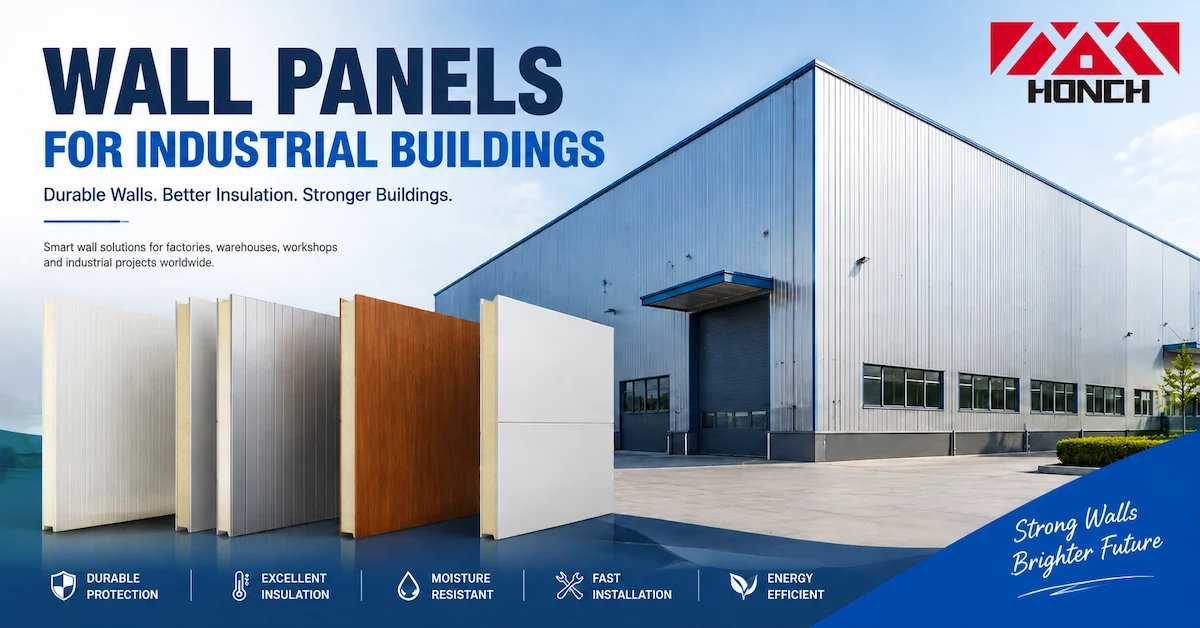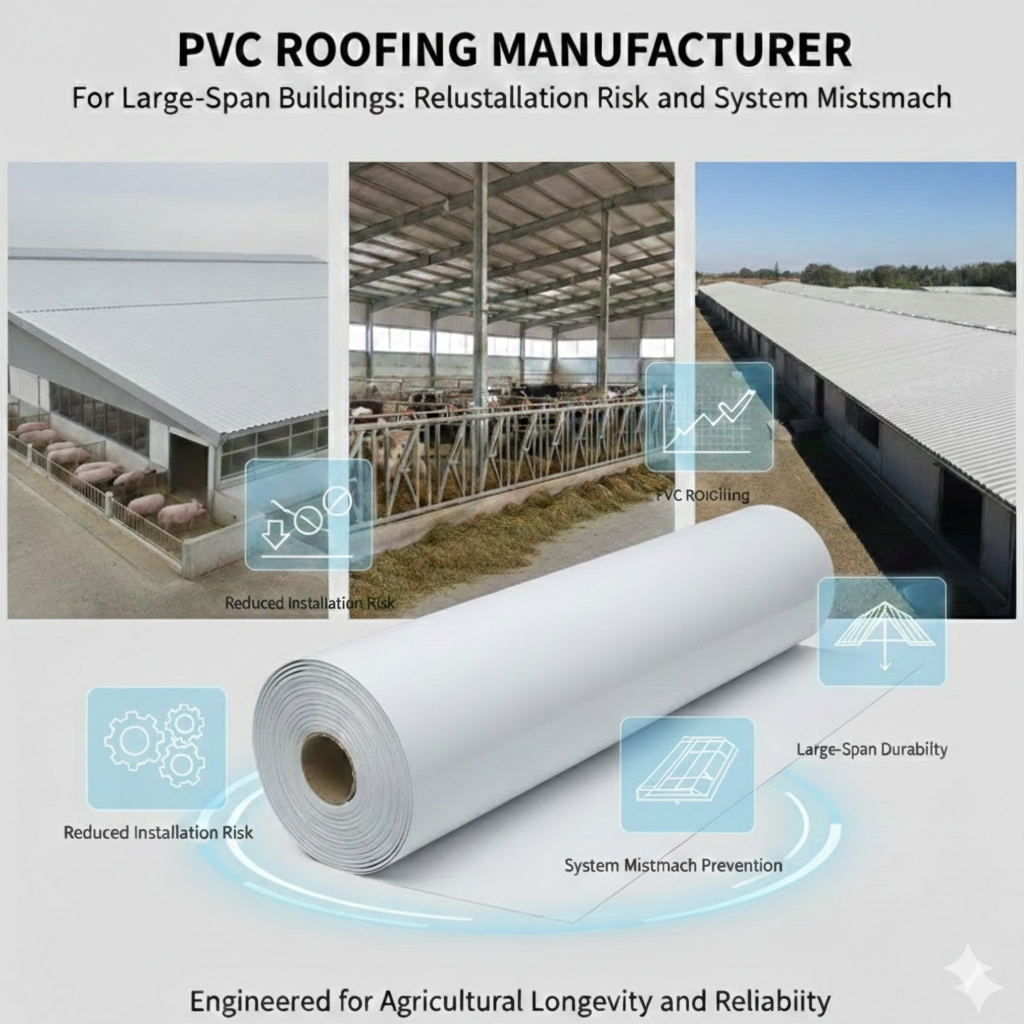
In large-span industrial and agricultural buildings, roofing failures are rarely caused by a single defect. More often, they result from cumulative installation deviations, structural movement over long distances, and incompatible roofing system combinations. As roof areas expand into thousands or tens of thousands of square meters, minor errors multiply into persistent leakage risks.
In this context, selecting a PVC Roofing Manufacturer becomes a matter of system control—ensuring that membrane behavior, seam performance, and installation tolerance remain stable under real construction conditions.
Large-Span Roofs: Why Installation Risk Increases with Scale
Large-span roofs face challenges that smaller buildings simply do not.
Typical risk factors include:
-
Long-span steel structures with measurable deflection under load
-
Thermal expansion across uninterrupted roof fields
-
Multiple installation crews working in parallel
-
High density of penetrations for ventilation, skylights, and equipment
In several HONCH-supplied industrial warehouse projects exceeding 20,000 m², post-installation inspections showed that leakage risk concentrated not in membrane fields, but around seam transitions and interface zones—areas most sensitive to installation consistency.
A capable PVC Roofing Manufacturer designs systems that tolerate these realities rather than assuming ideal site conditions.
PVC Roofing vs Rigid Roofing Panels: Installation Tolerance in Practice
PVC roofing membranes behave differently during both installation and long-term service.
| Installation Factor | Rigid Metal Roofing | PVC Roofing Systems |
|---|---|---|
| Tolerance to structural movement | Low | High |
| Sensitivity to installer skill | High | Moderate |
| Seam formation | Mechanical overlap | Hot-air welded |
| On-site adjustment | Limited | Flexible |
| Repair during installation | Difficult | Easy |
In practice, HONCH has observed that PVC systems reduce installation-related defect rates by approximately 25–35% compared with rigid panel roofing on large-span projects, particularly where multiple crews operate simultaneously.
Seam Welding: Where Manufacturer Control Matters Most
Seams are the most common origin of roof failures, especially on large roofs.
A professional PVC Roofing Manufacturer focuses on:
-
Stable welding temperature windows under variable site conditions
-
Uniform membrane thickness at seam zones
-
Reinforced edge design to prevent peel stress
During commissioning of an agricultural processing facility supplied by HONCH, seam pull tests conducted after installation and thermal cycling showed over 85% retention of initial weld strength, even across long continuous seams. This level of performance is difficult to achieve with mechanically overlapped or adhesive-dependent systems.
Compatibility with Insulated Roof Assemblies
Modern large-span buildings increasingly use composite roof assemblies combining membranes with insulated panels.
PVC roofing systems integrate effectively with:
-
PIR and PU insulated roof panels
-
Mineral wool insulation systems
-
Steel and concrete roof decks
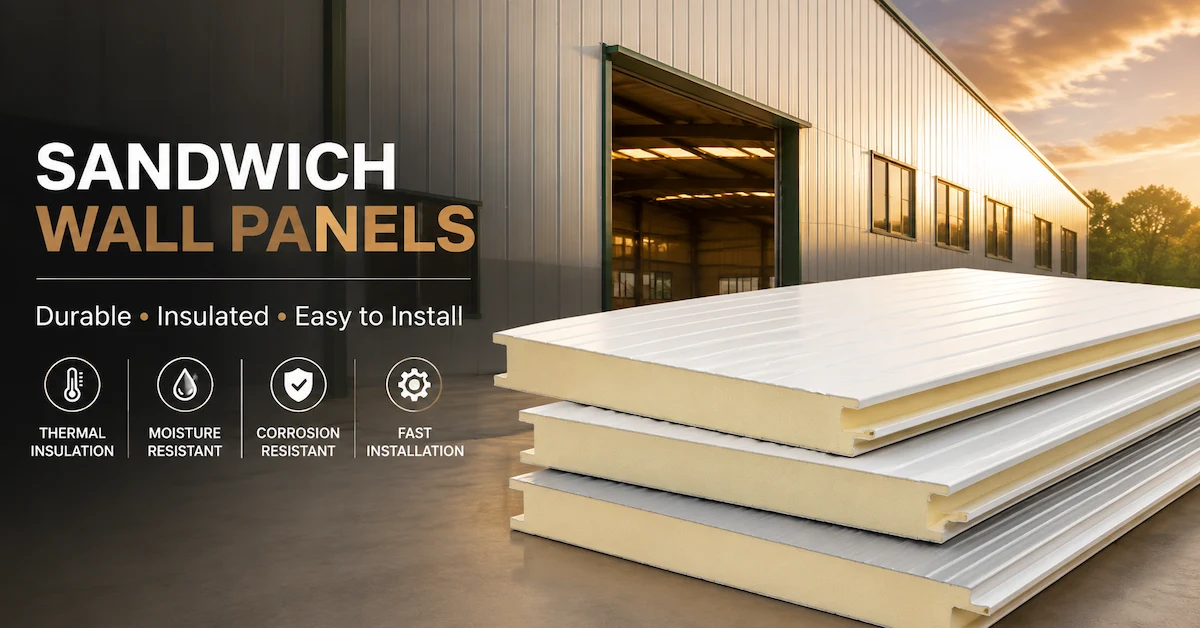
In one HONCH-supported logistics center project, PVC membranes were installed over insulated sandwich roof panels to manage differential movement between the metal deck and insulation layer. The result was a roof system that maintained waterproof integrity without introducing stress concentration at fasteners or panel joints.
A capable PVC Roofing Manufacturer evaluates insulation type, fastener layout, and roof slope together—rather than treating roofing as an isolated component.
Installation Speed and Schedule Control on Large Projects
Installation efficiency directly affects commissioning timelines.
PVC roofing systems typically allow:
-
Continuous seam welding without curing delays
-
Reduced weather dependency compared with torch-applied systems
-
Immediate visual and mechanical seam inspection
Contractors on HONCH-supplied projects reported 20–30% faster effective installation progress on large-span roofs, primarily due to fewer rework cycles and simplified detailing around penetrations.
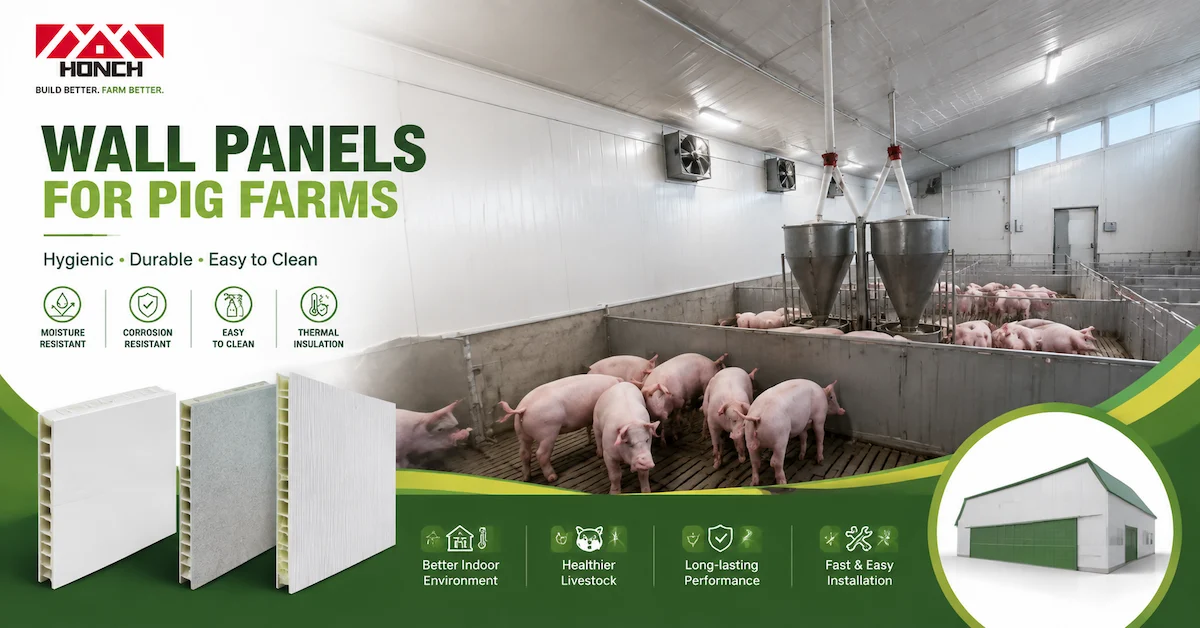
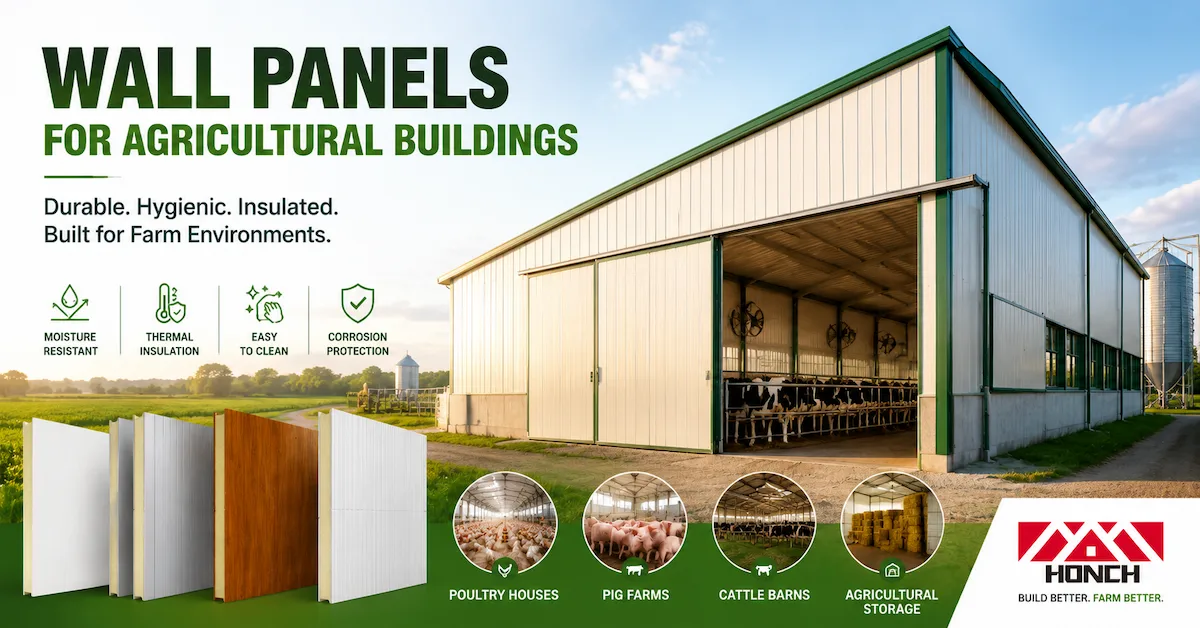
PVC Roofing Performance in Pig Pens, Pig Farms, and Cattle Sheds
Large-span livestock buildings place roofing systems under continuous chemical, humidity, and operational stress that differs significantly from standard industrial roofs. In pig pens, pig farms, and cattle sheds, roofing performance is shaped less by nominal membrane thickness and more by how well the system adapts to animal-driven environments.
For a PVC Roofing Manufacturer, these scenarios require targeted adjustments rather than generic specifications.
Pig Pen Sheds: High Ammonia Concentration and Condensation Risk
Pig housing generates persistent ammonia emissions combined with warm, moisture-laden air. The primary roofing challenges include:
-
Accelerated chemical aging near roof undersides
-
Condensation forming on cold roof surfaces
-
Increased seam stress due to frequent temperature fluctuation
In HONCH-supplied pig pen projects, PVC membranes were selected with enhanced chemical resistance formulation and paired with controlled ventilation layouts to reduce condensate accumulation. Seam layouts were optimized to minimize vapor pressure concentration at overlaps, improving long-term sealing reliability.
Pig Farms: Washdown Cycles and Structural Movement
Large pig farms typically involve:
-
Regular high-pressure washdown of interior surfaces
-
Large uninterrupted roof spans with measurable steel deflection
-
Dense roof penetrations for ventilation and feeding systems
To address these conditions, HONCH adjusted PVC membrane reinforcement and installation detailing to tolerate structural movement without seam fatigue. Wider membrane rolls were used where feasible to reduce seam density by approximately 20–25%, lowering potential leak points over the roof lifecycle.
Cattle Farms: Thermal Load and Mechanical Stress
Cattle sheds present different challenges:
-
Higher roof heights with stronger thermal gradients
-
Greater mechanical stress from ventilation equipment
-
Longer daily exposure to solar radiation
In these applications, PVC roofing systems supplied by HONCH were configured with UV-stable surface formulations and movement-accommodating attachment systems. This allowed the roof to absorb thermal expansion without transferring stress to fasteners or insulation layers.
Why Scenario-Based Roofing Matters
Across pig and cattle farming projects, HONCH has observed that roofs designed with scenario-specific adjustments show:
-
Lower maintenance intervention frequency
-
More stable seam performance under washdown and thermal cycling
-
Improved roof lifespan predictability compared with generic industrial roofing
For livestock facilities, the value of a PVC Roofing Manufacturer lies in understanding how animals, environment, and daily operations interact with roofing systems—and translating that understanding into material formulation, seam strategy, and installation optimization.
Common Buyer Questions
Q: Is PVC roofing suitable for very large industrial roofs?
A: Yes. PVC membranes perform well on large-span roofs due to flexibility, welded seams, and movement tolerance.
Q: Does PVC roofing reduce dependence on installer skill?
A: It offers greater tolerance than rigid systems, reducing—but not eliminating—the impact of workmanship variability.
Q: Can PVC roofing integrate with insulated roof panels?
A: Yes. PVC systems are commonly paired with insulated panels to manage thermal and structural movement.
Final Guidance for Large-Span Roofing Decisions
In large-span buildings, roofing success depends on controlling installation variability and system compatibility as much as material durability. A PVC Roofing Manufacturer that understands real construction conditions—rather than ideal assumptions—can significantly reduce leakage risk and lifecycle maintenance.
HONCH supplies PVC roofing systems engineered for large-span industrial and agricultural projects, drawing on real application experience, controlled manufacturing, and system-level coordination. This approach supports predictable roof performance even under complex installation conditions.
To explore large-span roofing system options and application experience, visit the HONCH homepage:
https://www.honchroof.com/
For consultation on roof span, insulation compatibility, or phased project supply, contact the technical team via Contact Us:
https://www.honchroof.com/contact-us