

How to Choose a Wall Panels Supplier for Food Processing Plant Projects
Food processing plants have some of the most demanding requirements among industrial buildings. Unlike ordinary warehouses or commercial facilities, food production environments must continuously manage moisture, temperature changes, cleaning procedures, hygiene standards, and long-term durability.
The wall system is not only a building surface. It plays an important role in maintaining a clean production environment, protecting insulation performance, reducing maintenance requirements, and supporting food safety management.
For project owners, contractors, and distributors, selecting the right wall panels supplier for food processing plant applications requires evaluating more than the appearance or initial purchase price of wall materials.
A professional supplier should understand:
- Food production environments
- Hygiene requirements
- Moisture and corrosion challenges
- Insulation needs
- Installation conditions
- Long-term maintenance costs
- Project customization requirements
HONCH provides PVC wall panels, PU insulated wall panels, roofing systems, and building envelope solutions for industrial, agricultural, livestock, and light construction projects. Its wall systems are designed for applications requiring corrosion resistance, thermal insulation, moisture protection, and efficient installation.
Learn more about HONCH building solutions:
https://www.honchroof.com/products
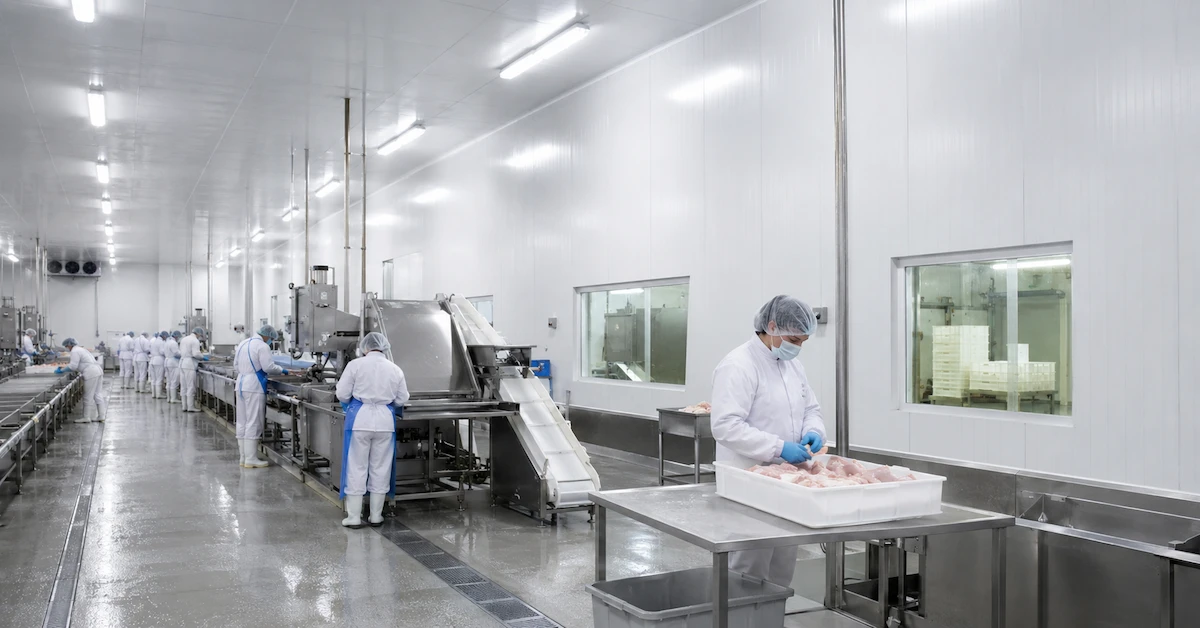
Why Food Processing Plants Need Specialized Wall Panel Systems
Food processing facilities operate under conditions that are very different from standard industrial buildings.
Typical environments include:
- High humidity
- Frequent washing and cleaning
- Temperature fluctuations
- Food residue exposure
- Chemical cleaning agents
- Strict hygiene management
- Continuous production schedules
Traditional wall materials may create challenges such as:
- Difficult cleaning surfaces
- Moisture absorption
- Corrosion risk
- Mold growth
- Higher maintenance requirements
- Difficult repair processes
A suitable food processing wall system should help create a smoother, more controllable indoor environment.
The main performance requirements usually include:
| Requirement | Why It Matters |
|---|---|
| Hygienic surface | Easier cleaning and contamination control |
| Moisture resistance | Prevents water damage and deterioration |
| Corrosion resistance | Handles cleaning chemicals and humid environments |
| Thermal insulation | Supports temperature-controlled production areas |
| Impact resistance | Reduces damage from daily operations |
| Easy installation | Reduces project construction time |
| Low maintenance | Improves long-term operating efficiency |
What Are Food Processing Plant Wall Panels?
Food processing plant wall panels are engineered wall materials designed for production areas where hygiene, durability, and environmental control are important.
Depending on the project requirements, wall panels may provide several functions:
- Exterior building enclosure
- Interior hygienic wall covering
- Insulated partition systems
- Temperature separation
- Moisture protection
- Corrosion-resistant surfaces
A complete wall system usually includes:
- Wall panels
- Connection profiles
- Corner components
- Fasteners
- Sealing solutions
- Interfaces with ceilings and floors
This means buyers should evaluate the supplier's complete system capability rather than purchasing individual panels without considering installation details.
Key Factors When Selecting Wall Panels for Food Factories
Hygiene Performance and Easy Cleaning
Food processing plants require wall surfaces that can be cleaned efficiently.
Production areas may experience:
- Water spray
- Steam
- Food particles
- Cleaning chemicals
- Frequent sanitation procedures
Wall panels should ideally provide:
- Smooth surfaces
- Low moisture absorption
- Easy cleaning characteristics
- Resistance to common industrial cleaning environments
For food factories, hygienic design is not only about the panel material itself. The entire wall system should minimize difficult-to-clean gaps, joints, and corners.
A professional wall panels supplier for food processing plant projects should understand how wall systems interact with sanitation processes.
Moisture and Corrosion Resistance
Water exposure is one of the most common challenges in food processing buildings.
Areas such as:
- Seafood processing plants
- Meat processing facilities
- Beverage factories
- Dairy production areas
- Frozen food plants
often require wall materials that can tolerate humid conditions.
Moisture problems may lead to:
- Surface deterioration
- Mold risks
- Insulation performance reduction
- Increased maintenance costs
HONCH PVC and PU composite wall panels are designed for environments where moisture resistance and corrosion protection are important.
The PU Insulation Wall Panel uses a PVC + PU + PVC structure:
- PVC surface layers provide protection and durability
- PU core provides thermal insulation
- Composite construction improves overall wall performance
Product details:
https://www.honchroof.com/product/pu-insulation-wall-panel-pvc-pu-pvc
Thermal Insulation Requirements in Food Processing Facilities
Temperature control is essential for many food production environments.
Examples include:
- Cold storage rooms
- Meat processing areas
- Frozen food facilities
- Beverage production areas
- Temperature-controlled workshops
Poor wall insulation can cause:
- Increased energy consumption
- Temperature instability
- Condensation problems
- Reduced production efficiency
Insulated wall panels help create a more stable building envelope by reducing heat transfer between indoor and outdoor environments.
The final insulation performance depends on:
- Panel structure
- Core material
- Thickness
- Joint design
- Installation quality
- Roof and wall integration
Therefore, buyers should select wall panels based on the complete building system rather than thickness alone.
PVC Wall Panels vs Traditional Wall Materials for Food Processing Plants
Different construction methods have different advantages.
| Material Type | Advantages | Considerations |
|---|---|---|
| PVC Wall Panels | Moisture resistance, easy cleaning, corrosion resistance | Select according to insulation requirements |
| PVC + PU Insulated Panels | Thermal insulation and hygienic surface | Requires correct specification selection |
| Metal Panels | Common industrial solution | Coating and corrosion protection require evaluation |
| Masonry Walls | Traditional and durable | May require additional finishing and insulation |
For food processing environments, buyers often prioritize:
- Hygiene performance
- Moisture resistance
- Cleaning efficiency
- Temperature control
- Maintenance cost
The best wall solution depends on the specific production environment.
Applications of Food Processing Wall Panel Systems
A reliable wall panels supplier for food processing plant should understand different food-industry applications.
Meat Processing Facilities
Common requirements:
- High hygiene standards
- Frequent cleaning
- Moisture resistance
- Temperature management
Wall panels should support easy sanitation and long-term durability.
Seafood Processing Plants
Seafood facilities often face:
- High humidity
- Salt exposure
- Frequent water contact
- Corrosion risks
Corrosion-resistant wall systems are especially important in these environments.
Dairy Processing Plants
Dairy production areas may require:
- Cleanable surfaces
- Temperature control
- Moisture resistance
- Long-term hygiene performance
Beverage Production Facilities
Beverage factories often require:
- Smooth wall surfaces
- Easy maintenance
- Moisture management
- Clean production environments
Frozen Food and Cold Storage Facilities
These projects typically require:
- High insulation performance
- Condensation control
- Stable temperature separation
Insulated wall panels are often integrated with complete cold-room and building envelope systems.
How HONCH Supports Food Processing Plant Wall Projects
HONCH approaches wall panels as part of a complete building envelope system.
The company provides:
- PVC wall panel solutions
- PU insulated wall panels
- Roofing systems
- Ceiling panels
- Building accessories
- OEM/ODM customization
For food-related industrial projects, customers can evaluate:
- Required panel structure
- Insulation needs
- Project dimensions
- Installation conditions
- Environmental requirements
- Export specifications
HONCH product range:
https://www.honchroof.com/products
Engineering applications:
https://www.honchroof.com/engineering-case
How to Select the Right Wall Panels Supplier for Food Processing Plant Projects
Choosing a supplier for a food processing plant requires a different evaluation process compared with ordinary construction-material purchasing.
A qualified wall panels supplier for food processing plant projects should provide not only products but also technical understanding, customization capability, quality control, and project support.
Before placing an order, buyers should evaluate several key factors.
Supplier Evaluation Checklist for Food Factory Wall Panels
Material Knowledge and Industry Experience
A reliable supplier should understand the difference between:
- Food processing plants
- Cold storage facilities
- Seafood factories
- Meat processing workshops
- Beverage production buildings
- Agricultural processing facilities
Each environment has different requirements.
For example:
A seafood factory may focus more on moisture and corrosion resistance.
A frozen food plant may prioritize insulation performance.
A meat processing facility may require easy cleaning and hygienic surfaces.
The supplier should recommend products based on the application rather than offering the same wall panel solution for every project.
Product Structure and Technical Specifications
Professional buyers should request detailed product information before purchasing.
Important specifications include:
| Specification | Why It Matters |
|---|---|
| Panel structure | Determines insulation and durability |
| Surface material | Affects hygiene and corrosion resistance |
| Core material | Influences thermal performance |
| Thickness | Related to insulation requirements |
| Width and length | Impacts installation efficiency |
| Connection method | Affects sealing and construction quality |
| Color options | Supports project requirements |
| Accessories | Ensures complete wall installation |
HONCH PU Insulation Wall Panels use a PVC + PU + PVC structure designed for insulation, moisture resistance, and corrosion protection.
The panel structure can be customized according to project requirements, including thickness, color, and length.
Product information:
https://www.honchroof.com/product/pu-insulation-wall-panel-pvc-pu-pvc
Manufacturing Capability and Quality Control
Food processing projects require stable product quality because wall panels are usually installed across large production areas.
A reliable manufacturer should have:
- Standardized production processes
- Material inspection procedures
- Product consistency control
- Packaging protection
- Export experience
- Technical documentation
Quality problems during installation can create additional costs, including:
- Replacement panels
- Installation delays
- Project downtime
- Additional labor costs
Therefore, buyers should evaluate the supplier's manufacturing capability before focusing only on price.
HONCH was founded in 2008 and provides anti-corrosion and insulation building solutions for industrial, livestock, agricultural, and light construction applications.
About HONCH:
https://www.honchroof.com/about-us
OEM and Custom Wall Panel Solutions
Many international buyers are not purchasing wall panels for only one project.
Common customers include:
- Building-material distributors
- Construction contractors
- Engineering companies
- Private-label brands
- Regional suppliers
These customers often require customization such as:
- Custom panel dimensions
- Special colors
- Product branding
- Packaging design
- Private label solutions
- Project-specific specifications
A capable wall panels supplier for food processing plant projects should support OEM/ODM cooperation.
HONCH provides customized solutions for different project requirements, helping distributors and contractors develop suitable wall panel systems for specific markets.
Bulk Purchasing and Export Supply Capability
International buyers should evaluate whether the supplier can support long-term supply.
Important factors include:
- Production capacity
- Minimum order quantity
- Container loading efficiency
- Export packaging
- Shipping coordination
- Delivery planning
For large food processing projects, delays in wall panel supply can affect:
- Construction schedules
- Equipment installation
- Factory commissioning
- Production startup
A professional supplier should understand project timelines and coordinate production accordingly.
How Much Do Food Processing Plant Wall Panels Cost?
The cost of wall panels depends on multiple factors.
The main price factors include:
| Factor | Impact on Cost |
|---|---|
| Panel structure | Insulated panels usually cost more than single-layer panels |
| Core material | Different insulation materials affect pricing |
| Thickness | Thicker panels generally require more material |
| Surface material | Corrosion-resistant surfaces may increase cost |
| Quantity | Larger orders usually improve purchasing efficiency |
| Customization | Special colors, sizes, and packaging affect cost |
| Accessories | Complete systems include additional components |
| Shipping distance | International logistics influence final cost |
However, the lowest purchase price does not always provide the lowest project cost.
For food processing plants, buyers should consider:
- Installation efficiency
- Cleaning requirements
- Maintenance frequency
- Energy consumption
- Replacement risk
- Long-term durability
A slightly higher-quality wall system may reduce operational costs over the building lifecycle.
Common Mistakes When Buying Food Processing Wall Panels
Choosing Panels Only by Price
The cheapest product may not provide suitable performance for food production environments.
A low-cost panel may create problems such as:
- Poor moisture resistance
- Difficult cleaning
- Higher maintenance
- Reduced insulation performance
Ignoring Environmental Conditions
A seafood factory, cold storage facility, and dry warehouse should not use the same wall specification automatically.
Always consider:
- Humidity
- Temperature
- Cleaning frequency
- Chemical exposure
- Production requirements
Focusing Only on the Panel and Ignoring Accessories
Wall performance depends on the complete system.
Important components include:
- Corner profiles
- Joint connections
- Sealing solutions
- Ceiling connections
- Floor transitions
Incorrect detailing can reduce the performance of even high-quality panels.
Not Confirming Installation Requirements
Before ordering, buyers should confirm:
- Building drawings
- Wall dimensions
- Openings
- Door locations
- Panel direction
- Installation method
Accurate preparation helps reduce material waste and installation delays.
Why Choose HONCH as a Wall Panels Supplier for Food Processing Plant Projects?
HONCH provides building envelope solutions including:
- Wall panels
- Ceiling panels
- Roofing systems
- Insulation products
- Accessories
The company focuses on applications where customers require:
- Anti-corrosion performance
- Thermal insulation
- Moisture resistance
- Weather resistance
- Long-term durability
For food processing-related projects, HONCH wall panel solutions can support:
- Food factories
- Cold storage buildings
- Agricultural processing facilities
- Industrial workshops
- Hygienic production spaces
HONCH product solutions:
https://www.honchroof.com/products
Engineering applications:
https://www.honchroof.com/engineering-case
FAQ About Wall Panels Supplier for Food Processing Plant
1. What type of wall panels are suitable for food processing plants?
Food processing plants usually require wall panels with moisture resistance, easy-clean surfaces, corrosion resistance, and suitable insulation performance.
PVC wall panels and PVC + PU insulated wall panels are commonly considered for environments requiring hygiene and durability.
2. Why are insulated wall panels used in food factories?
Insulated wall panels help control heat transfer, improve temperature stability, reduce condensation risks, and support energy-efficient building operation.
They are especially useful for cold storage, frozen food facilities, and temperature-controlled production areas.
3. What should I look for in a wall panels supplier for food processing plant projects?
A qualified supplier should provide:
- Suitable material recommendations
- Technical specifications
- Customization capability
- Quality control
- Export experience
- Project support
The supplier should understand food-industry requirements rather than only selling standard panels.
4. Are PVC wall panels suitable for food processing environments?
PVC wall panels can be suitable for applications requiring moisture resistance, corrosion resistance, and easy cleaning.
The final selection depends on production conditions, temperature requirements, hygiene standards, and installation design.
5. Can food processing wall panels be customized?
Yes.
Many manufacturers provide customization options including:
- Thickness
- Length
- Color
- Surface design
- Packaging
- Branding
HONCH supports customized wall panel solutions according to project requirements.
6. What is the difference between PU insulated panels and standard wall panels?
PU insulated panels contain a polyurethane core that improves thermal insulation performance.
Standard wall panels may focus mainly on surface protection, partitioning, or moisture resistance.
The correct option depends on whether the project requires temperature control.
7. How do I calculate the required quantity of wall panels?
The calculation normally considers:
- Total wall area
- Panel effective width
- Panel length
- Openings
- Installation waste
- Required accessories
Professional suppliers can assist with quantity estimation based on drawings.
8. Are wall panels suitable for seafood processing plants?
Yes, but material selection should consider high humidity, salt exposure, cleaning procedures, and corrosion risks.
A corrosion-resistant wall system is often important for seafood-related environments.
9. Can HONCH supply wall panels for overseas projects?
Yes.
HONCH provides export-oriented building material solutions and supports international customers with customized specifications, bulk supply, and project requirements.
10. How can I request a quotation from HONCH?
Customers can provide:
- Project type
- Building drawings
- Wall dimensions
- Application environment
- Required quantity
- Custom requirements
HONCH can then recommend suitable wall panel solutions.
Contact HONCH:
https://www.honchroof.com/contact-us
Conclusion
Selecting a wall panels supplier for food processing plant projects requires evaluating more than product price.
Food production environments demand wall systems that can support hygiene management, moisture protection, corrosion resistance, insulation performance, and long-term durability.
The right supplier should understand:
- Food industry applications
- Building envelope design
- Material performance
- Installation requirements
- OEM/ODM needs
- International project supply
HONCH provides PVC wall panels, PU insulated wall panels, roofing systems, and complete building envelope solutions for industrial and agricultural applications.
With experience in anti-corrosion and insulation materials, HONCH helps food processing companies, contractors, distributors, and project developers select wall systems suitable for demanding environments.
Explore HONCH products:
https://www.honchroof.com/products
Discuss your food processing plant wall panel requirements:
https://www.honchroof.com/contact-us