

Poultry Farm Roofing Sheets and Pig Farm Roofing Sheets: A Complete Buyer Guide for Corrosion, Cleaning and Long-Term Farm Performance
Choosing a roof for a poultry house or pig barn is a building-envelope decision, an animal-environment decision and a long-term operating-cost decision at the same time. The roof must cope with ammonia, humidity, dust, condensation, disinfectants, pressure washing, strong sunlight and frequent maintenance access. It must also coordinate with fans, ridge ventilation, insulation, gutters, heaters and electrical penetrations. A buyer who only compares price per square metre can miss the details that determine whether the building is easy to clean, comfortable to operate and economical to maintain.
This guide presents a nine-step purchasing method for farm owners, agricultural contractors, integrators, distributors and project engineers. It is written for buyers who need more than a generic product brochure. Each step converts a practical farm question into information that a supplier can use to recommend a model, prepare a complete bill of materials and quote the same duty as competing manufacturers.
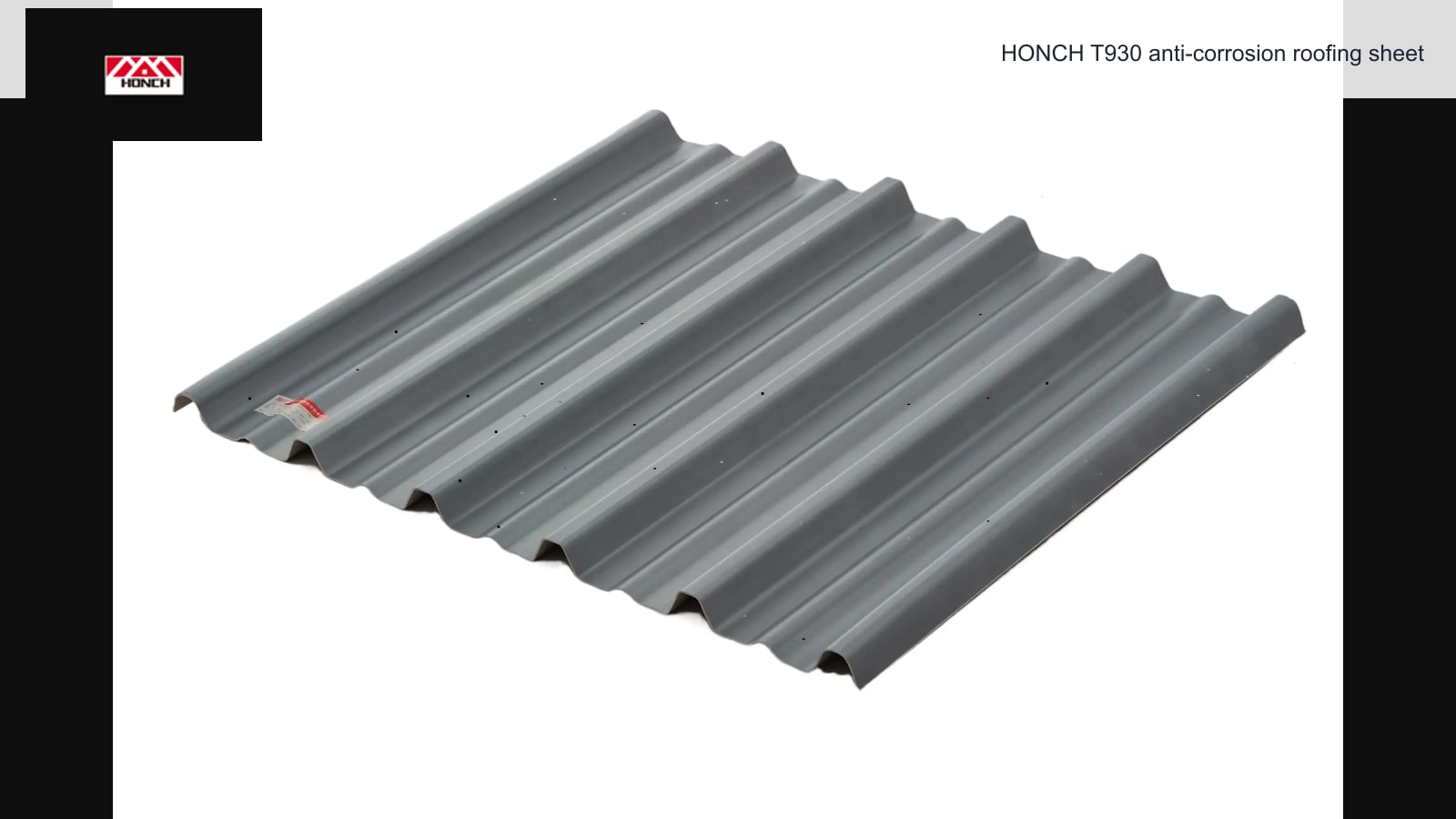
HONCH provides PVC, UPVC and APVC roofing solutions for agricultural, industrial and mixed-use buildings. The linked terms in this article are not empty keyword placements; they point to product references that can support a technical RFQ. Buyers can review T930 and related profiles, compare a farm-oriented specification, and then send the building dimensions, environmental conditions and delivery requirements to the factory for a written response.
The method covers the farm environment, material selection, geometry, ammonia and cleaning validation, ventilation coordination, supplier evaluation, ownership cost, sample approval and a complete RFQ. It also includes a comparison table, a receiving checklist and questions that help a buyer avoid hidden assumptions before animals or equipment enter the building.
1. Map the farm environment, animal cycle and cleaning routine
A farm roof works inside a living environment. The building may contain ammonia, moisture, dust, disinfectant, feed residue, heat, condensation and frequent wash-down water. The roof must also support ventilation equipment, lighting, access and sometimes insulation. Begin by recording the animal type, stocking density, building length, ventilation strategy, washing routine, disinfectant products, local climate, roof slope and replacement access. A poultry house and a pig barn should not be treated as identical applications simply because both are agricultural buildings.
Ammonia is a key part of the exposure map. It can be stronger near manure channels, pits, fans and areas with poor air movement. Humidity and condensation can intensify the maintenance burden, especially where dust adheres to the underside of the roof. The buyer should identify where the most aggressive conditions occur and whether the proposed sheet, fastener and flashing materials are suitable for those zones. Ask the supplier to state the boundaries of its recommendation rather than relying on a generic farm label.
Cleaning is another design input. Note whether the building is dry-cleaned, pressure-washed, foamed, disinfected between flocks or cleaned while equipment remains in place. Record water temperature, pressure, chemical concentration and the direction of spray. A material can perform well in air but be damaged by an aggressive cleaning chemical or repeated mechanical impact. A written cleaning instruction helps the farm team maintain the roof and avoids accidental use of a product that was never approved.
Connect roof performance to animal performance without making unsupported claims. The roof does not replace ventilation, insulation, shading or climate control. It can, however, influence condensation, maintenance, daylight, heat gain and the cleanliness of the enclosure. The project team should evaluate the whole building envelope, including inlets, fans, ridge ventilation, wall panels, doors and drainage. The roofing supplier should receive enough information to coordinate with the agricultural building designer.
Create a farm roof duty sheet with the building dimensions, support spacing, expected wind and snow load, temperature range, humidity, ammonia exposure, wash-down practice, color, insulation requirement, delivery route and installation date. Add photos of the existing or proposed structure. This simple document lets a buyer compare suppliers on the same assumptions and makes it easier to explain why a product selected for a poultry house may need a different detail in a pig facility.
2. Select a roofing material that fits corrosion and hygiene priorities
The second step is to compare roofing materials by how they behave in the farm environment. Conventional metal can be familiar and structurally useful, but corrosion risk increases when moisture, ammonia, fertilizer residue, cleaning chemicals and damaged coatings are present. PVC-based roofing products are often considered where rust-free surfaces, easier cleaning and reduced corrosion maintenance are priorities. The buyer still needs exact formulation, thickness, profile, load guidance and installation requirements for the selected model.
Do not confuse a smooth appearance with a complete hygiene solution. The roof is part of a building system, and hygiene depends on drainage, ventilation, sealing, wall interfaces and cleaning practice. Ask whether the surface is compatible with the intended detergent and disinfectant. Confirm how cut edges, overlaps, ridge pieces and penetrations are closed. A clean sheet can still allow moisture problems if the roof pitch, ventilation or flashing is poorly designed.
For a practical product conversation, compare the T930 through the UPVC Roofing Sheet Supplier and APVC Roofing Sheet Manufacturer references. Buyers looking at Poultry Farm Roofing Sheets or Pig Farm Roofing Sheets should ask for the exact model and accessories recommended for ammonia, humidity and wash-down. A project may also review Corrugated PVC Roofing Sheets for a different agricultural building, while confirming the profile, support spacing and exposure suitability with the factory.
If the visual appearance of a farm office, visitor building or mixed-use agricultural structure matters, an ASA-capped tile style may be appropriate. Review ASA Synthetic Resin Roof Tiles and the capabilities of a Synthetic Resin Roof Tile Manufacturer. The tile appearance should not distract from the technical questions: load, ventilation, roof pitch, overlap, flashing, fastener compatibility and cleaning access still control long-term performance.
Use a material comparison that includes replacement and downtime. A low initial cost may be offset by frequent coating repairs, corroded fasteners or difficult cleaning. A slightly higher-quality roof may be justified where a failure would disrupt a flock cycle, require moving animals or contaminate feed and equipment. The farm owner should decide the acceptable level of risk, while the supplier provides the evidence and limits needed to make that decision responsibly.
3. Match profile, thickness and roof geometry to the farm structure
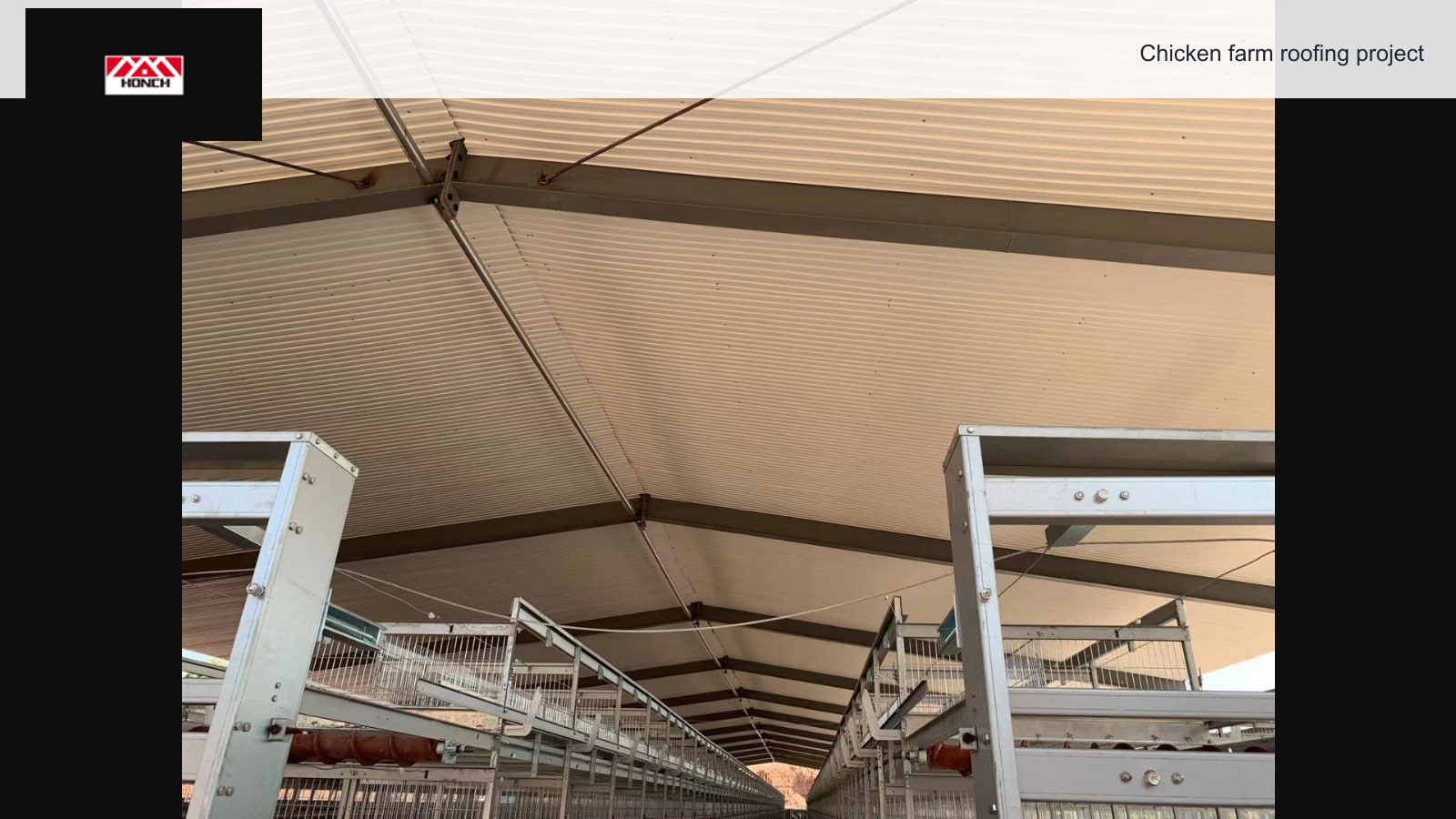
Profile and thickness affect drainage, support spacing, walking restrictions, lap design and the amount of dirt that can accumulate. A corrugated profile may suit a conventional agricultural roof, while a tile-like profile may suit an office or farm entrance. Request the effective cover width, not just the overall width, and use it in the quantity calculation. Side laps, end laps, ridge pieces and valley details can change both material usage and cleaning access.
Confirm the minimum slope and support spacing for the exact model. A low-slope roof has less tolerance for an incorrectly installed lap or blocked gutter. A long poultry house may need a roof run that exceeds standard transport lengths, creating a decision between longer panels and additional joints. The supplier should state how length, temperature movement and end-lap location are handled. The buyer should then coordinate the answer with the structural and agricultural building teams.
Farm roofs often have more penetrations than a simple warehouse roof. Fans, air inlets, ridge ventilation, heaters, light fixtures, feed lines and service hatches all require openings or support points. Make a penetration schedule before ordering. Each opening should have a flashing detail, sealant or closure method and a clear responsible trade. Unplanned cutting is a common source of leaks and weak edges, particularly when the site is under pressure to finish before animals arrive.
The roof should be designed around safe maintenance access. Do not assume that a sheet selected for a farm building is a walkway. Provide designated walkways, platforms or temporary boards where technicians need to reach fans and ridge equipment. Mark no-step areas and include the instruction in the handover pack. A safe access plan protects both workers and the roof surface, reducing accidental punctures and warranty disputes.
Ask for a dimensioned profile drawing and a simple installation sketch. The drawing should show crest or valley fixing, overlap direction, cover width, sheet thickness and accessory fit. Use it to check that the purlin layout supports the lap and that the ridge and eave details align with the ventilation design. A small drawing review before production is much less expensive than correcting a roof after the house has been commissioned.
4. Validate ammonia, moisture, UV, cleaning and fire requirements
Ask the supplier to relate performance data to the farm exposure. A claim such as anti-corrosion should be supported by a description of the environment considered and the limitations of the product. Identify ammonia, disinfectants, salt, UV, high humidity, condensation and pressure washing in the request for technical guidance. If the product is recommended for both poultry and pig facilities, ask whether the same cleaning and ventilation assumptions apply to both.
Condensation deserves a building-level assessment. Warm, humid air from animals and cleaning can meet a cool roof underside, especially in winter or during ventilation changes. The solution may include insulation, vapor control, ridge ventilation, air movement and operational settings. A roofing sheet can be durable and still show condensation if the enclosure is not designed correctly. Include the roof supplier in the coordination meeting, but keep responsibility for the whole hygrothermal design with the project engineer.
Cleaning compatibility should be documented. Ask which detergents, foams, disinfectants and water temperatures are allowed, and whether the supplier recommends rinsing or drying steps. Avoid assuming that a chemical used on equipment is safe for a roof surface. Keep the cleaning guidance where farm staff can access it. A clear instruction protects the surface and helps the owner demonstrate consistent maintenance when a warranty or insurance question arises.
UV and color stability matter where the roof is exposed to intense sun or where a clean, bright interior is part of the management plan. Discuss the outer layer, color choice and expected surface temperature. A light color may help solar management, but it should be evaluated with the ventilation and insulation strategy. The supplier should distinguish a visual color statement from a quantified test or warranty term and should identify how the buyer can inspect the delivered batch.
Fire, hot work and electrical safety must be included. Farm buildings often contain heaters, fans, wiring, feed dust and combustible materials. Confirm the relevant local requirements, test documents and installation restrictions for the exact product. Keep hot work away from installed sheets unless a written procedure is approved. Coordinate penetrations around heaters and exhausts carefully. The roof selection is one part of a broader farm safety plan and should be reviewed by the responsible professionals.
5. Coordinate ventilation, insulation, drainage and installation
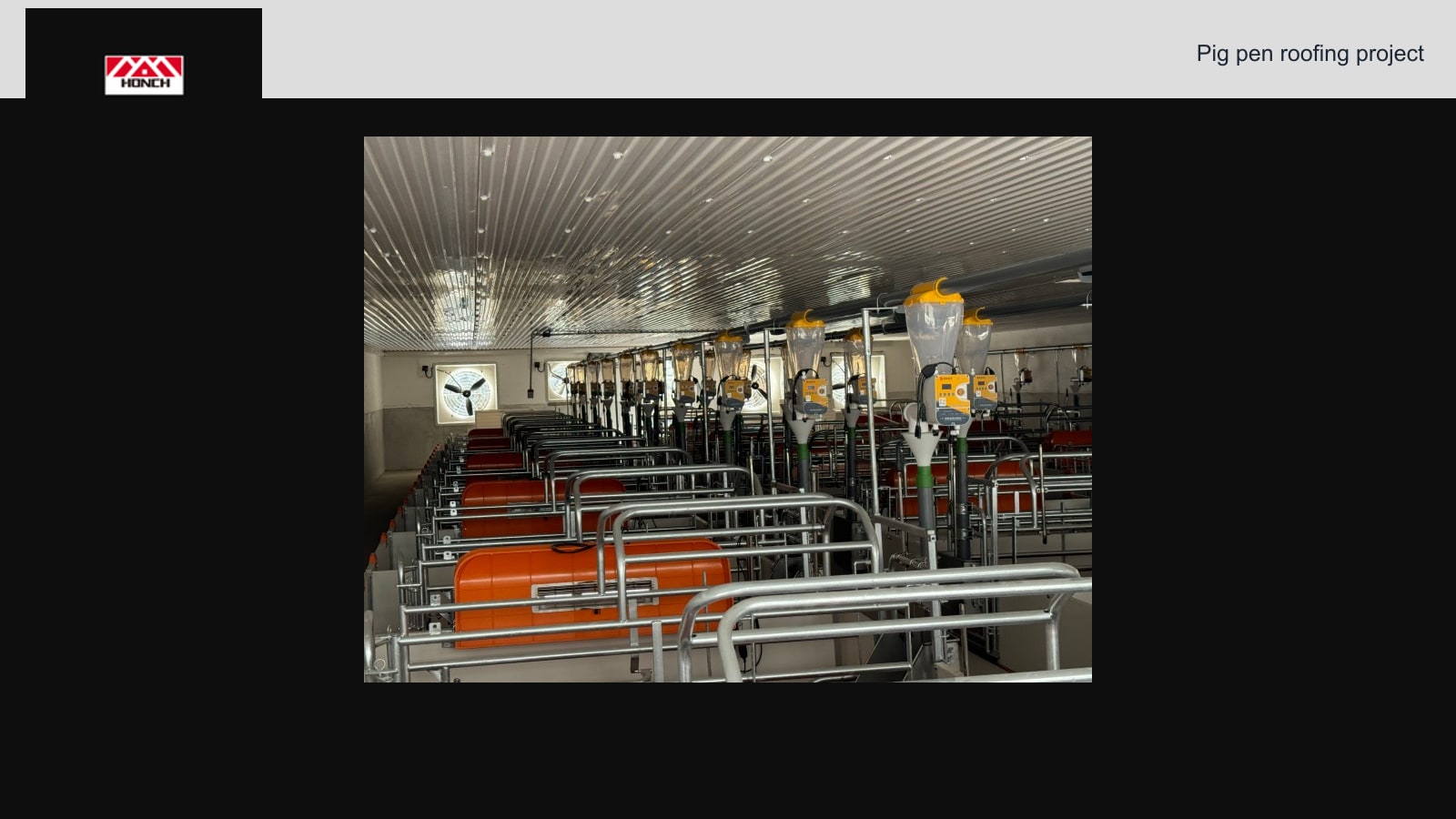
Ventilation is central to farm roof performance. The roof must coordinate with ridge outlets, fans, air inlets and any insulation or ceiling system. A sealed roof without adequate air movement can trap moisture; an overly open detail can reduce climate control. Share the roof profile and accessory drawings with the ventilation designer. The goal is a coordinated enclosure where air, water and maintenance routes are controlled rather than improvised.
Fasteners, washers and flashing must tolerate the farm environment. Ask for a corrosion-compatible fastener schedule and confirm whether each item is designed for the purlin material. Include ridge closures, eave closures, side-lap seal, penetrations, flashing, gutters and downpipes in the bill of materials. A durable sheet cannot compensate for a washer that loses elasticity or a flashing that leaves an open path for wash-down water.
Storage and handling are especially important on an active farm site. Keep bundles dry, level and protected from traffic, feed dust and contact with chemicals. Lift them with adequate support and do not drag panels over one another. Schedule roof installation before animals or sensitive equipment enter the building where practical. If installation must occur beside an operating house, define barriers, cleaning controls and a safe route for materials.
The installer should receive a method statement that covers drilling, cutting, fixing torque, lap direction, ridge ventilation, penetrations, cleaning and damage reporting. A short mock-up at the eave, ridge and a typical fan opening can expose coordination issues before the entire building is covered. Photograph the approved details and use them as the site standard. This creates a common reference for the contractor, owner and supplier.
Drainage should be checked after installation and after the first significant wash-down or rainfall event. Confirm that gutters fall correctly, outlets are clear, laps face the correct direction and water does not run toward animal areas or electrical equipment. Record the inspection and repair any detail that creates standing water. Farm maintenance teams benefit from a simple seasonal checklist covering gutters, fasteners, penetrations, surface damage and ventilation openings.
6. Evaluate the farm roofing supplier and delivery plan
A reliable Farm Roofing Sheet Supplier should be able to discuss the farm environment in technical terms. Ask how the factory controls raw materials, thickness, profile, color, surface layer and batch identification. Request a current datasheet, profile drawing, installation guide, sample and warranty wording. The supplier should explain which product is recommended and why, including any conditions that would require a different model or accessory.
Lead time matters because agricultural projects are often tied to animal placement, harvest, weather windows or financing milestones. Confirm production time, packing date, shipping route, unloading responsibility and delivery sequence. Ask whether standard and special lengths will be bundled separately and whether each bundle has a clear label. A missed delivery can create more than a construction delay if it affects the planned animal cycle, so the schedule should be realistic and visible to all parties.
Check packaging for long, lightweight panels. Edge protection, bundle support and moisture control help prevent damage before installation. Agree how visible damage will be recorded and how claims will be handled. Keep photographs of the load and bundle labels when the shipment arrives. This evidence is useful for resolving transport damage without confusing it with an installation issue.
For repeat farm groups or integrators, ask whether the supplier can maintain a standard profile, color and accessory package across multiple buildings. Consistency reduces training time, simplifies spares and supports a common maintenance instruction. Keep the approved drawings and sample in the owner database. If a different product is proposed later, treat it as a technical change that requires review rather than an automatic substitution.
Communication should include the farm manager as well as the contractor. The manager knows cleaning, ventilation and access routines that may not appear on architectural drawings. A short technical meeting can prevent a mismatch between the roof detail and daily operations. The best supplier relationship is one in which the factory receives the real operating brief and the buyer receives a clear, written response with assumptions and exclusions.
7. Compare total ownership cost, hygiene and operational risk
Compare installed cost rather than sheet price alone. Include effective cover, waste, fasteners, ridge and eave details, flashing, gutters, sealants, insulation interfaces, labor, access equipment, delivery and unloading. A quote that excludes farm-specific closures or penetration flashing may look attractive but leave the owner with an incomplete roof. Normalize every supplier's offer to the same building area and the same accessory schedule.
Ownership cost includes cleaning, inspection and repair. A roof that resists rust can reduce certain maintenance tasks, but it still needs gutters cleared, penetrations checked and damage repaired. Ask for recommended inspection intervals and replacement procedures. Consider the labor needed to access the roof safely and the cost of moving animals or equipment if a major repair is required. These operational costs often matter more than a small difference in unit price.
Hygiene risk can be expressed in practical terms. Does the detail shed water away from animal areas? Can the surface and underside be cleaned according to the farm protocol? Are there ledges or open laps where dust and moisture can accumulate? Can a damaged panel be replaced without dismantling a large area? This is not a request for a generic hygiene certificate; it is a checklist of how the roof interacts with the farm's actual routine.
Energy and comfort should be evaluated with the whole building. Roof color, insulation, ceiling panels, ventilation, inlet settings and local climate all affect temperature and humidity. Do not credit a roofing sheet with savings that belong to the entire design. Instead, ask the project engineer to compare realistic options and include the roof's contribution. A clear model helps the owner choose the right balance between initial cost, climate control and maintenance.
Use a risk-weighted comparison for the final decision. Score technical fit, corrosion suitability, cleaning compatibility, structural coordination, supplier documentation, lead time, warranty, landed cost and after-sales support. Identify the three assumptions that would most change the result and request clarification before award. This method makes the purchasing decision transparent and helps the owner defend a recommendation that is not simply the cheapest line on a spreadsheet.
8. Approve samples, mock-ups and farm-specific receiving checks
Approve a full-size sample that shows the actual profile and surface. Check thickness, cover width, color, edge condition and layer appearance against the submitted drawing. If the supplier offers multiple formulations, label the approved sample clearly. Do not rely on a small color card for a roof where profile and overlap behavior are also critical.
Build a mock-up around a real farm detail, such as an eave, ridge vent, fan opening or wash-down interface. Confirm that the closure, flashing, gasket and fastener fit together. Ask the farm manager to review cleaning access and the installer to review handling. The mock-up creates a shared reference and exposes practical issues before the main work starts.
Set receiving checks for quantity, bundle labels, visible damage, moisture, profile, thickness, color and documents. Photograph any concern before cutting. Keep damaged or uncertain pieces separate and contact the supplier through the agreed process. Do not install questionable sheets in a critical area simply to keep the crew moving; that can turn a manageable claim into a much more expensive repair.
Record the approved installation details with photographs and a short written note. Include the screw position, washer seating, lap direction, ridge closure, penetration flashing and gutter interface. Use the record during toolbox talks and final inspection. A consistent detail is easier to clean, inspect and repair than a roof assembled from several informal decisions.
After completion, inspect during the first rain and after the first planned wash-down. Look for leakage, standing water, loose accessories, damaged surfaces, blocked closures and unexpected condensation. Review the result with the farm manager, contractor and supplier. The handover should include the cleaning instruction, maintenance checklist, spare material information and the exact product reference for future orders.
9. Send an RFQ that lets the supplier quote the real farm duty
State the animal type, building use, location, dimensions, roof area, slope, purlin spacing, design loads, climate, ammonia exposure, cleaning routine, ventilation equipment, insulation, color, lengths, quantity and delivery date. Attach plans, sections, photos and a penetration schedule. If the building is an expansion, include the existing roof profile and any compatibility requirement. A complete RFQ prevents the supplier from pricing a generic agricultural sheet that does not fit the actual duty.
Ask the supplier to provide the recommended model, an optional alternative and the reason for each recommendation. Require the quote to state profile, thickness, effective width, length, accessories, fasteners, packing, shipping term, lead time, warranty, documentation and exclusions. If the buyer needs a product that can tolerate ammonia or wash-down, ask for the supplier's written guidance rather than leaving the requirement as an unverified keyword.
Use the product pages as reference points for the conversation. A buyer can compare Poultry Farm Roofing Sheets and Pig Farm Roofing Sheets for livestock buildings, while reviewing Anti Corrosion Roofing Sheets and Industrial PVC Roofing Sheets for other agricultural or industrial zones. When the buyer needs a factory with the right experience, the Farm Roofing Sheet Supplier should receive the full exposure and cleaning brief before recommending a model.
Request a sample and a technical submittal before volume production. The submittal should show the profile, thickness, support guidance, overlap, fixing pattern, ridge and eave details, cleaning limitations, fire information and warranty scope. For a large farm group, ask the supplier to maintain a controlled revision and to identify any change in formulation, color or accessory design before shipment.
End the RFQ with a clear decision path. State the target delivery window, technical review date, inspection point, commercial validity and the documents required for payment or handover. Invite questions in writing. A farm owner can move quickly when the information is organized, and the supplier can protect quality because it knows exactly what must be delivered and approved.
Practical specification notes for project buyers
1. Animal type, stocking pattern and building use. Put this item in the technical schedule and ask the supplier to answer it directly. A clear answer is easier to compare than a broad promise, and it gives the project team a written basis for approval, negotiation and future maintenance. Keep the response with the approved drawing and purchase order, then check it again when the shipment arrives. This simple record links the original requirement to the delivered material, installation method and handover information. It also makes repeat orders more accurate because a future buyer can see the actual profile, accessory package, environmental assumptions and inspection criteria instead of rebuilding the specification from memory.
2. Location, climate, roof area, slope and support spacing. Put this item in the technical schedule and ask the supplier to answer it directly. A clear answer is easier to compare than a broad promise, and it gives the project team a written basis for approval, negotiation and future maintenance. Keep the response with the approved drawing and purchase order, then check it again when the shipment arrives. This simple record links the original requirement to the delivered material, installation method and handover information. It also makes repeat orders more accurate because a future buyer can see the actual profile, accessory package, environmental assumptions and inspection criteria instead of rebuilding the specification from memory.
3. Ammonia, humidity, condensation and wash-down exposure. Put this item in the technical schedule and ask the supplier to answer it directly. A clear answer is easier to compare than a broad promise, and it gives the project team a written basis for approval, negotiation and future maintenance. Keep the response with the approved drawing and purchase order, then check it again when the shipment arrives. This simple record links the original requirement to the delivered material, installation method and handover information. It also makes repeat orders more accurate because a future buyer can see the actual profile, accessory package, environmental assumptions and inspection criteria instead of rebuilding the specification from memory.
4. Cleaning agents, pressure, water temperature and frequency. Put this item in the technical schedule and ask the supplier to answer it directly. A clear answer is easier to compare than a broad promise, and it gives the project team a written basis for approval, negotiation and future maintenance. Keep the response with the approved drawing and purchase order, then check it again when the shipment arrives. This simple record links the original requirement to the delivered material, installation method and handover information. It also makes repeat orders more accurate because a future buyer can see the actual profile, accessory package, environmental assumptions and inspection criteria instead of rebuilding the specification from memory.
5. Profile, thickness, color, length and effective cover width. Put this item in the technical schedule and ask the supplier to answer it directly. A clear answer is easier to compare than a broad promise, and it gives the project team a written basis for approval, negotiation and future maintenance. Keep the response with the approved drawing and purchase order, then check it again when the shipment arrives. This simple record links the original requirement to the delivered material, installation method and handover information. It also makes repeat orders more accurate because a future buyer can see the actual profile, accessory package, environmental assumptions and inspection criteria instead of rebuilding the specification from memory.
6. Fans, ridge vents, heaters, insulation and penetration schedule. Put this item in the technical schedule and ask the supplier to answer it directly. A clear answer is easier to compare than a broad promise, and it gives the project team a written basis for approval, negotiation and future maintenance. Keep the response with the approved drawing and purchase order, then check it again when the shipment arrives. This simple record links the original requirement to the delivered material, installation method and handover information. It also makes repeat orders more accurate because a future buyer can see the actual profile, accessory package, environmental assumptions and inspection criteria instead of rebuilding the specification from memory.
7. Fastener, flashing, closure, gutter and sealant requirements. Put this item in the technical schedule and ask the supplier to answer it directly. A clear answer is easier to compare than a broad promise, and it gives the project team a written basis for approval, negotiation and future maintenance. Keep the response with the approved drawing and purchase order, then check it again when the shipment arrives. This simple record links the original requirement to the delivered material, installation method and handover information. It also makes repeat orders more accurate because a future buyer can see the actual profile, accessory package, environmental assumptions and inspection criteria instead of rebuilding the specification from memory.
8. Sample, mock-up, test documents and receiving inspection. Put this item in the technical schedule and ask the supplier to answer it directly. A clear answer is easier to compare than a broad promise, and it gives the project team a written basis for approval, negotiation and future maintenance. Keep the response with the approved drawing and purchase order, then check it again when the shipment arrives. This simple record links the original requirement to the delivered material, installation method and handover information. It also makes repeat orders more accurate because a future buyer can see the actual profile, accessory package, environmental assumptions and inspection criteria instead of rebuilding the specification from memory.
9. Packing, shipping term, delivery sequence and unloading plan. Put this item in the technical schedule and ask the supplier to answer it directly. A clear answer is easier to compare than a broad promise, and it gives the project team a written basis for approval, negotiation and future maintenance. Keep the response with the approved drawing and purchase order, then check it again when the shipment arrives. This simple record links the original requirement to the delivered material, installation method and handover information. It also makes repeat orders more accurate because a future buyer can see the actual profile, accessory package, environmental assumptions and inspection criteria instead of rebuilding the specification from memory.
10. Cleaning manual, maintenance checklist, warranty and spare stock. Put this item in the technical schedule and ask the supplier to answer it directly. A clear answer is easier to compare than a broad promise, and it gives the project team a written basis for approval, negotiation and future maintenance. Keep the response with the approved drawing and purchase order, then check it again when the shipment arrives. This simple record links the original requirement to the delivered material, installation method and handover information. It also makes repeat orders more accurate because a future buyer can see the actual profile, accessory package, environmental assumptions and inspection criteria instead of rebuilding the specification from memory.
Buyer comparison table
| Decision area | What to request | Why it matters |
|---|---|---|
| Farm exposure | Animal type, ammonia, humidity, UV, disinfectant and wash-down routine | Defines corrosion, cleaning and surface compatibility requirements |
| Roof geometry | Profile, effective width, slope, support spacing, laps and length | Controls drainage, quantities, stiffness and leak risk |
| Building systems | Fans, ridge vents, insulation, heaters, penetrations and gutters | Prevents conflicts between roof, climate control and maintenance |
| Supplier evidence | Sample, profile drawing, datasheet, cleaning guidance and warranty | Makes the recommendation traceable to the installed product |
| Operation | Inspection, spares, delivery, replacement and safe access | Reduces downtime and protects the animal cycle |
RFQ checklist
- Animal type, stocking pattern and building use
- Location, climate, roof area, slope and support spacing
- Ammonia, humidity, condensation and wash-down exposure
- Cleaning agents, pressure, water temperature and frequency
- Profile, thickness, color, length and effective cover width
- Fans, ridge vents, heaters, insulation and penetration schedule
- Fastener, flashing, closure, gutter and sealant requirements
- Sample, mock-up, test documents and receiving inspection
- Packing, shipping term, delivery sequence and unloading plan
- Cleaning manual, maintenance checklist, warranty and spare stock
Frequently asked questions
What makes a poultry house roof different from a general warehouse roof?
A poultry house can have higher humidity, ammonia, dust, condensation and frequent cleaning. The roof must be coordinated with ventilation, insulation, fans, ridge openings and hygiene routines. The supplier should receive those conditions before recommending a model. A general warehouse specification should not be copied without checking the farm exposure.
Are PVC-based roofing sheets maintenance-free in a livestock building?
No roofing material is maintenance-free. PVC-based sheets can avoid rust-related maintenance, but the building still needs gutter cleaning, penetration inspection, fastener checks, surface cleaning and safe access. The buyer should request a maintenance and cleaning instruction for the exact product and keep it with the farm handover documents.
How do I compare a farm roofing quote from two suppliers?
Normalize the offers to the same effective area, profile, thickness, accessory list, packing, delivery term and installation assumptions. Check whether each quote includes ridge and eave closures, flashing, fasteners, sealant, ventilation interfaces and cleaning guidance. A lower sheet price is not a lower installed cost when farm-specific details are missing.
Should ammonia resistance be written into the RFQ?
Yes. State the animal type, ventilation condition, humidity, cleaning routine and any known chemical exposure. Ask the supplier to identify the exact model and the limits of its recommendation. The RFQ should also request compatibility guidance for fasteners, flashing, sealants and cleaning chemicals, because the roof is a complete assembly.
Ready to compare your project with a factory quotation?
Request a Quote